A hidden-gem fireworks festival? A record of seeing the Shinmei Fireworks by bus tour
Last updated: 24 Aug. 2026
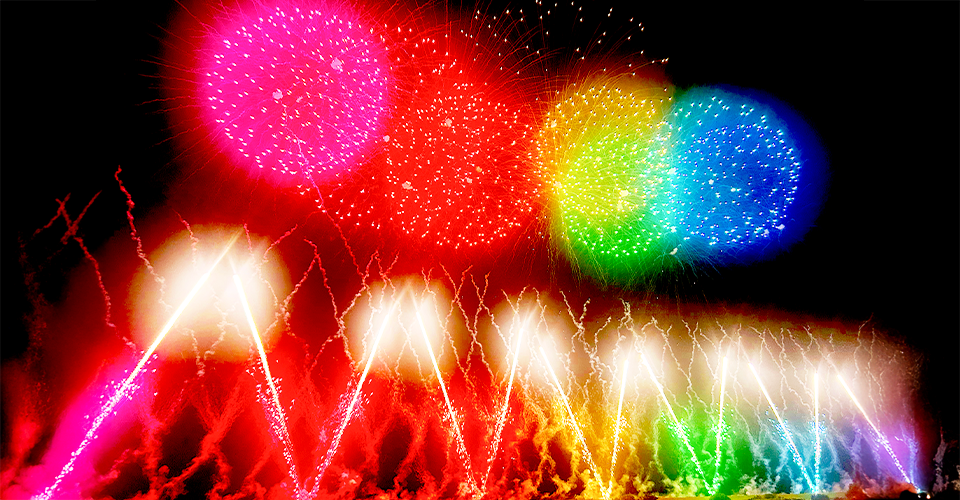
フィナーレの花火(イメージ)
日本の夏を代表するイベントのひとつが、花火大会です。日本の花火には長い歴史があり、時代とともに進化しながら、現在も多くの人々を魅了しています。
日本では夏になると、全国各地でさまざまな花火大会が開催されます。そのため、「どの花火大会に行けばいいのかわからない」という方もいるのではないでしょうか。
今回は、数ある花火大会の中から、山梨県で開催される「神明の花火」をご紹介します。美しい花火を間近で楽しめる注目の花火大会へ、クラブツーリズムのバスツアーで実際に行ってきました!
*This article was created for travelers planning to visit Japan, but readers in Japan may also find it useful.
-
Have you heard of the Shinmei Fireworks? Little known, but 20,000 shells strong
-
Why an overnight day trip with no hotel stay
-
[Arrival] How many minutes is it really from the bus to the viewing area?
-
[At the venue] Folding chairs, no umbrellas, and what to pack for a comfortable evening
-
[The main event] 19:30-21:10, shaku shells and wide star mines bursting right in front of you
-
[The trip home] A 25:20 arrival, and the moment the difference from an overnight tour hit home
-
The verdict: is the Shinmei Fireworks a hidden gem, or too much trouble?
-
Frequently asked questions (FAQ)
-
Summary
Have you heard of the Shinmei Fireworks? Little known, but 20,000 shells strong
What kind of festival is the Furusato Summer Festival in Ichikawamisato, Yamanashi?
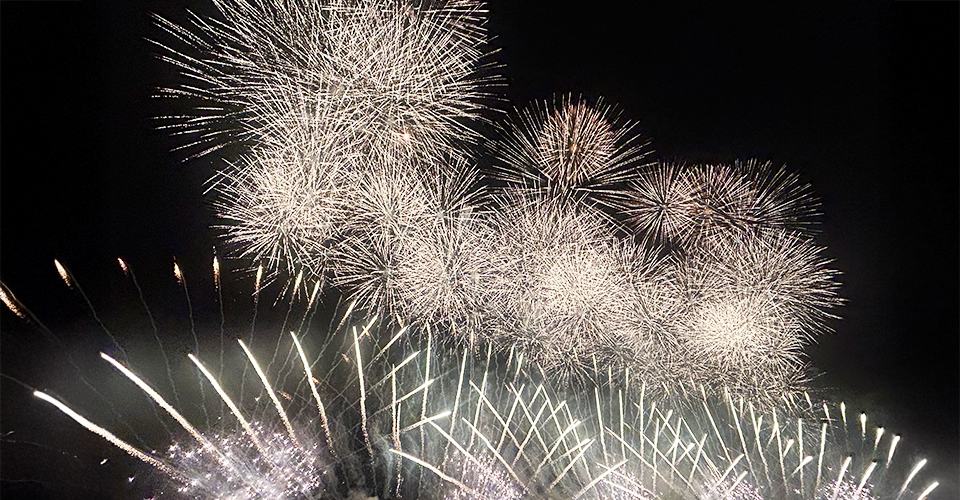
甲州花火と動きの融合
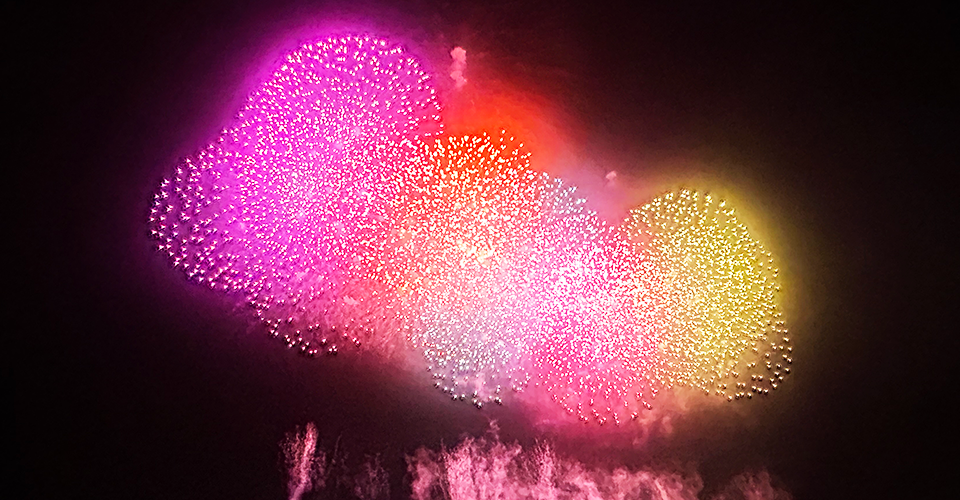
カラフルな花火
The Furusato Summer Festival, held in Ichikawamisato Town, Yamanashi Prefecture, is the largest festival in the prefecture, and its main event is the Shinmei Fireworks. Some 20,000 shells light up the night sky, drawing close to 200,000 spectators each year.
Ichikawamisato has long been known as a "town of fireworks." It is home to one of the few fireworks museums in Japan, and two of the country's leading pyrotechnic companies, Saiki Enka Honten Co., Ltd. and Marugo Co., Ltd., are still based there.
Saiki Enka Honten is a historic firm often described as the originator of Koshu fireworks. Its work appears not only at the Shinmei Fireworks and other Yamanashi displays such as the Lake Kawaguchi Lake Festival, but at events across Japan.
In other words, the Shinmei Fireworks takes place on the home ground of the company behind the displays you see around Lake Kawaguchi and Mt. Fuji. Experiencing that same craftsmanship from closer up and on a larger scale is what makes this festival special.
Marugo, meanwhile, is known for vivid color and inventive movement. Reds, blues, yellows, purples and pinks are graded across the night sky, and some effects appear to travel sideways.
The precise choreography of fireworks to music is another highlight.
Fireworks carrying centuries of tradition, and fireworks built on new techniques. Being able to see both in one evening is a large part of the appeal of the Shinmei Fireworks.
Why we chose a bus tour
Some categories of viewing seats for the Shinmei Fireworks can be bought online through platforms such as Ticket Pia and CN Play Guide, and they also appear on platforms familiar to overseas travelers, such as KKday. Some additional releases, however, are sold only by telephone in Japanese, and popular seat categories often sell out soon after they go on sale.
Even once you have a ticket, getting to the venue is a separate problem. You have to string together connections from the nearest station and arrange your own way back through the crowds. When a display ends after 21:00, as this one does, and the last train is out of reach, that means finding a late-night taxi or another option on your own.
A bus tour with a reserved seat covers all of it: the ticket, the round trip, and the ride home after midnight. If you are uneasy about handling things in Japanese, or this is your first Japanese fireworks festival, it takes most of the planning off your hands.
Why an overnight day trip with no hotel stay
The display ends at 21:10, an awkward hour to pair with sightseeing the next morning
The Shinmei Fireworks finishes around 21:10. Moving on to a hotel afterwards and starting your sightseeing the next morning is an inefficient use of the day once you factor in travel and check-in times.
That is why the overnight day trip works so well: you stay to the last shell, then ride the bus straight back. There is no separate hotel to book, the night hours are put to use on the road, and travelers based in Tokyo who are staying several nights at the same hotel can join without changing their booking.
A rare format among fireworks tours, where overnight itineraries are the norm
Bus tours to a fireworks festival usually include a hotel stay after the display. Well-known events such as the Nagaoka Fireworks Festival and the Tsuchiura All Japan Fireworks Competition are mostly sold with accommodation, which pushes the price up, and the popular departures often sell out early.
This tour to the Shinmei Fireworks, by contrast, is an overnight day trip with no hotel stay. There is no hotel to arrange and the price stays low, which makes it something of a hidden gem.
[Arrival] How many minutes is it really from the bus to the viewing area?
The official estimate was "15 minutes, or 30 to 40 when crowded." Here is how it actually went
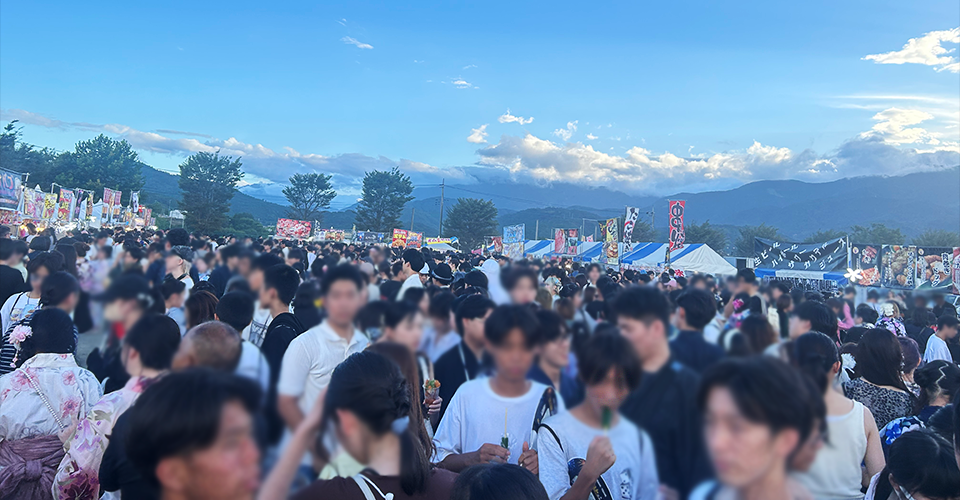
混雑のリアル写真
The walk from the bus drop-off point to the designated viewing area took about 20 minutes. The food stall area, which visitors in the free seating can also use, was extremely crowded, and a single lap of the small field took roughly 20 minutes.
The reserved viewing seats and the food stalls are also about a 10-minute walk apart at a normal pace. There is an entrance gate to the reserved seating on the way, and getting through it takes time, so the round trip from buying food at a stall to sitting back down runs to about 20 minutes, by which point shaved ice has melted.
Comfortable walking shoes really were essential (from experience)
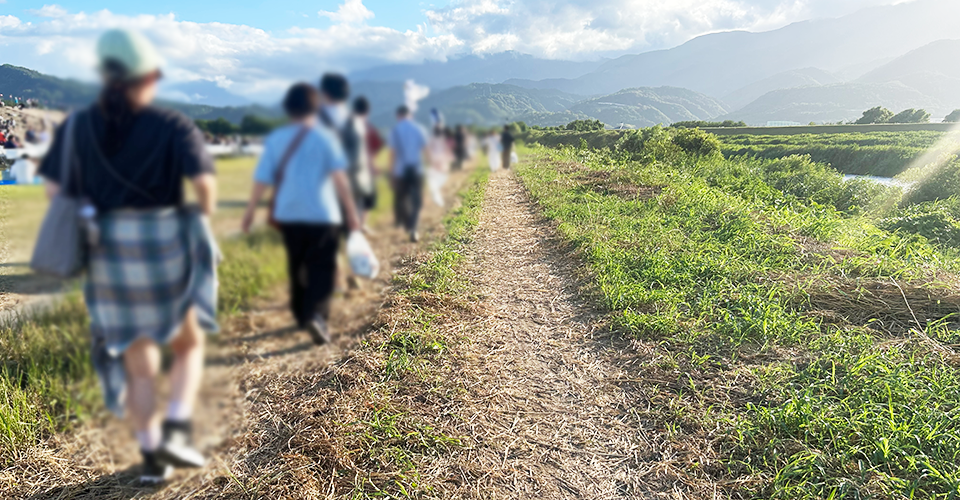
観覧席までの河川敷の道
The area around the venue is a riverbank, covered in dry grass that can jab your feet if you are wearing sandals. What stood out on the walk, though, was not the grass but the grasshoppers.
With every step, small grasshoppers leapt out from underfoot, and now and then one would work its way between my foot and my sandal. I had to keep watching where I stepped to avoid treading on them.
For safety and comfort, skip open sandals and wear sneakers that cover the whole foot.
[At the venue] Folding chairs, no umbrellas
What to pack for a comfortable evening
A mat is essential: what we were glad we packed, and what we regretted
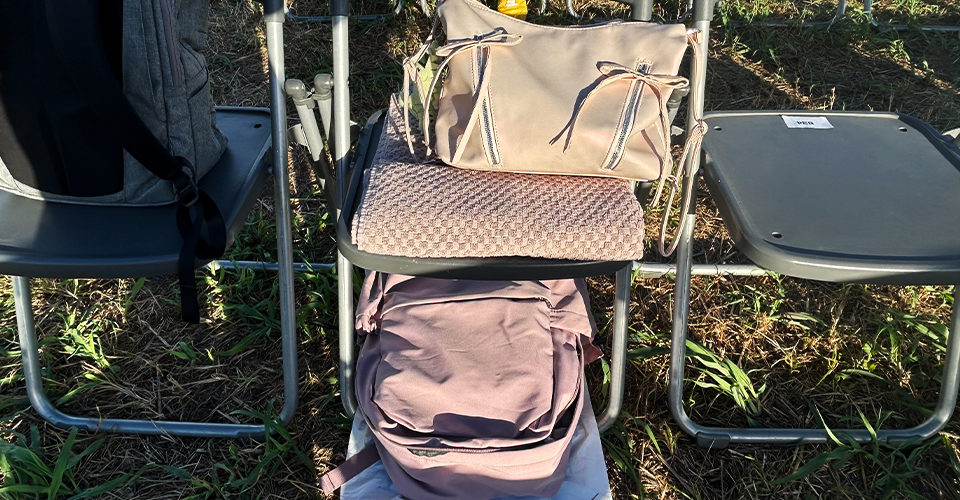
置ける荷物はリュック一つ分
What we were glad we packed
□ Picnic mat
□ Insect repellent spray
□ Cash
A single seat in the designated viewing area leaves room at your feet for about one backpack. A small picnic mat to spread underneath it saves you from putting your things straight on the ground.
Insect repellent is essential too. The riverbank is full of mosquitoes and grasshoppers, so a spray you can use on skin and clothing is reassuring to have.
Almost every food stall takes cash only. If you are used to paying without it, withdraw some before you set off.
What you can leave at home
□ Towel
□ Trash bag
□ Uchiwa fan
The towel and the trash bag went almost unused. A towel is too thin to work as a seat cushion, so it makes little difference. And because the seats are by the river, the evening never got hot enough to need it for wiping sweat.
As for trash bags, volunteers handed them out at the venue, so the one we brought stayed in the bag. How they are distributed may change from year to year, though, so a small spare bag is worth packing just in case.
A hand fan is not recommended: seats are close together, and fanning during the display will very likely hit the person next to you. If you want something for the heat, bring a handheld electric fan instead.
Why a raincoat is the only option even when rain is forecast
Rain gear is especially important. You cannot use an umbrella at the venue because it could obstruct your view or bump into people in crowded areas. If rain is expected, be sure to bring a raincoat or poncho that you can wear while seated, leaving both hands free.
Since your feet and belongings are likely to get wet, it's a good idea to have waterproof shoes or rain boots, and a large plastic bag to wrap your belongings in. It's also recommended to put your raincoat in an easily accessible place beforehand so you don't have to rush when you arrive at the venue.
[The main event] 19:30-21:10
Shaku shells and wide star mines bursting right in front of you
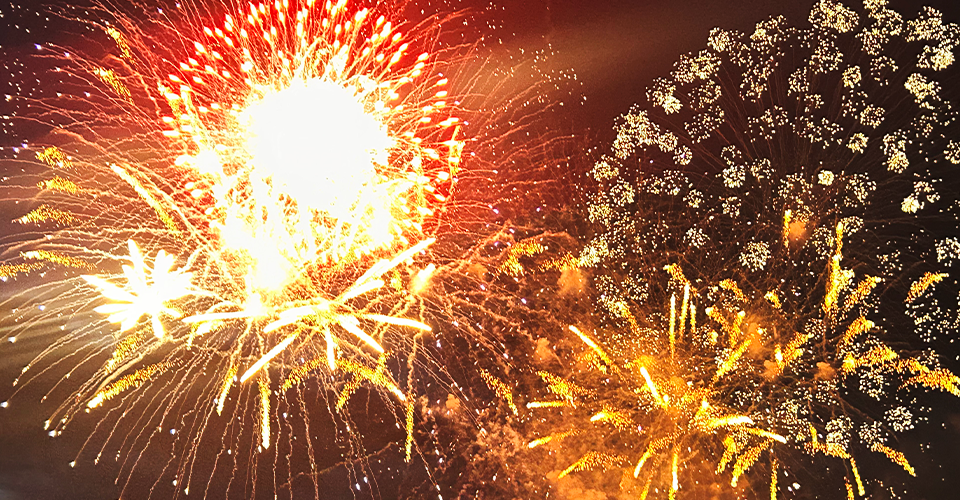
目の前で開く尺玉
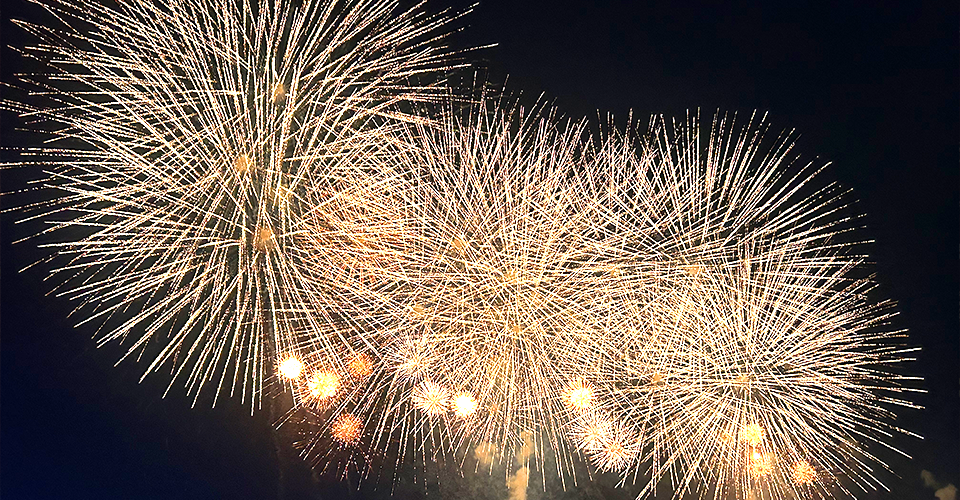
目の前で開く尺玉
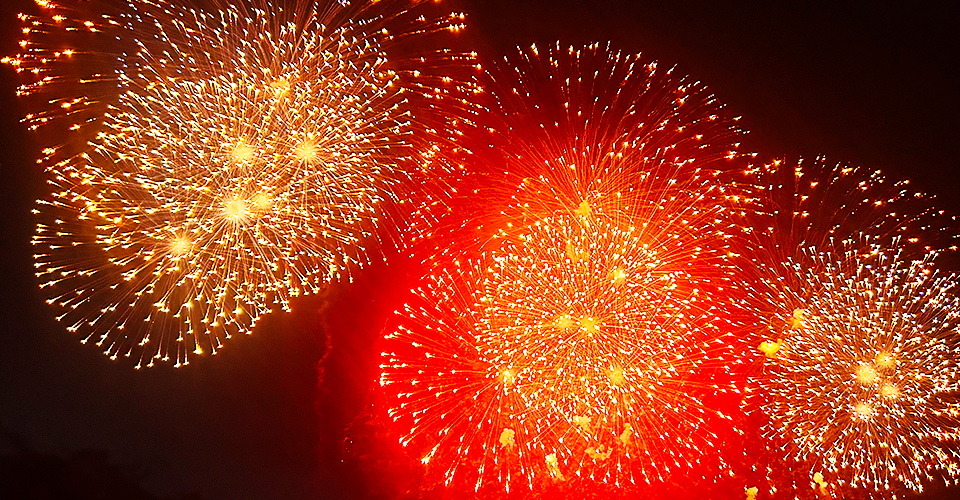
目の前で開く尺玉
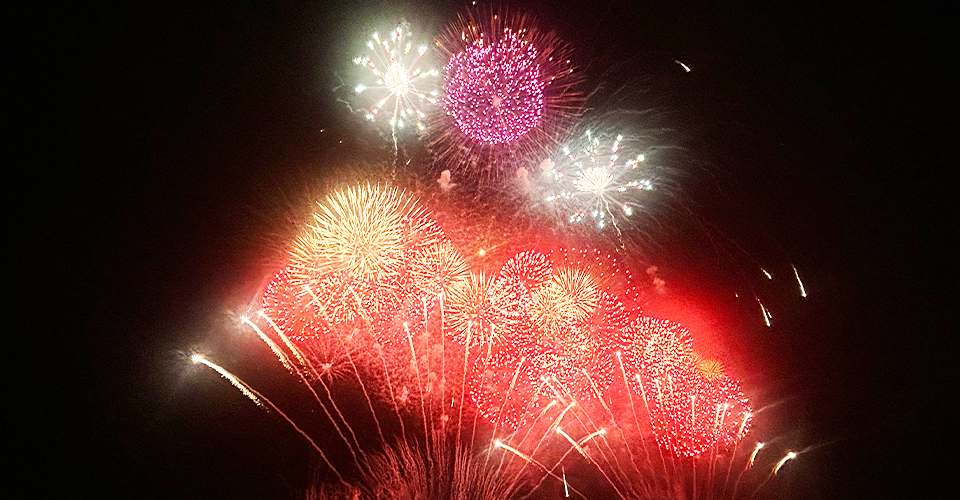
目の前で開く尺玉
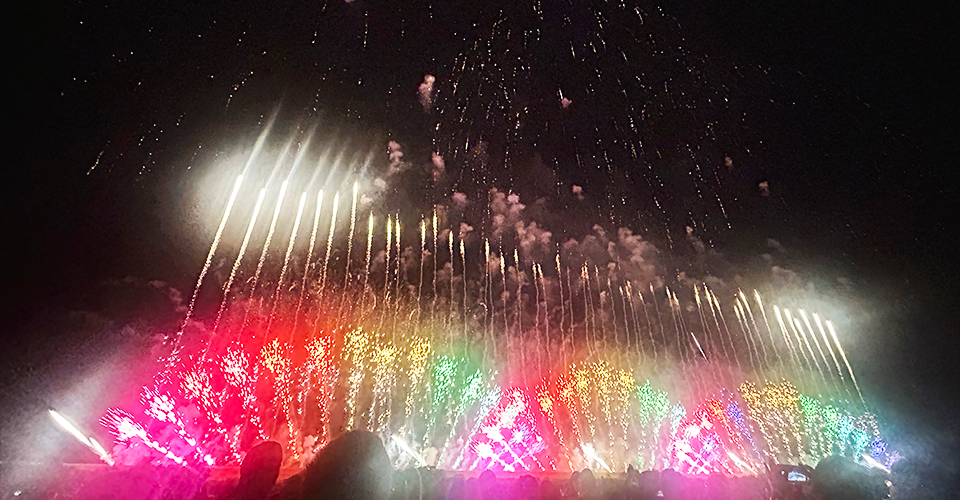
目の前で開く尺玉
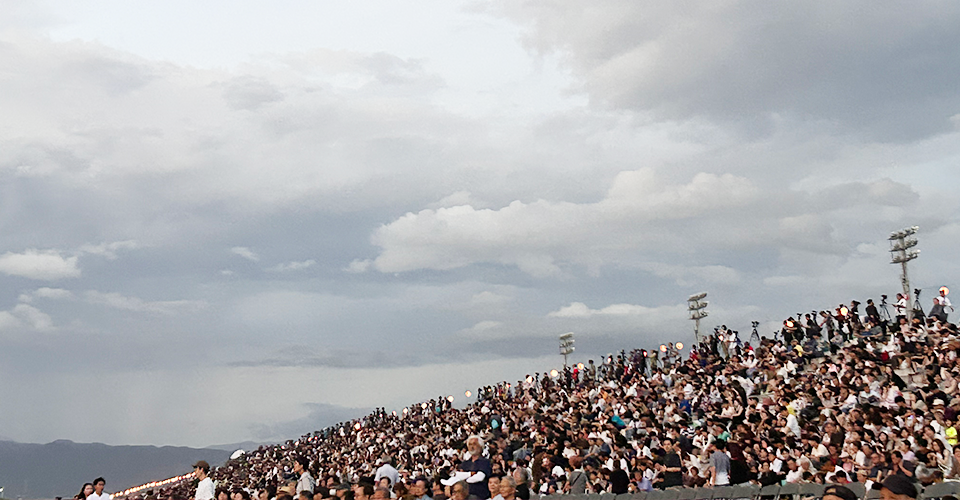
鑑賞席混雑のリアル
The view from the designated viewing area, and where to take photos
The tour seats are in the designated viewing area, well over on the right-hand side of the venue. That means you cannot see the stage where the announcer works.
With the stage out of sight, though, you can give the fireworks bursting in front of you your full attention, which is what makes these seats special. You can listen to the announcements while taking in the display filling the night sky.
Being at the edge of the venue also makes the restrooms relatively easy to reach. They get extremely crowded on the day of the festival, and a shorter walk from your seat takes some of the strain out of it.
From the far-right seats you get a sweeping view of not just the fireworks but the whole viewing area and the crowd filling it. If you want a photo that captures the atmosphere of the venue, this vantage point over the seating is the one to choose.
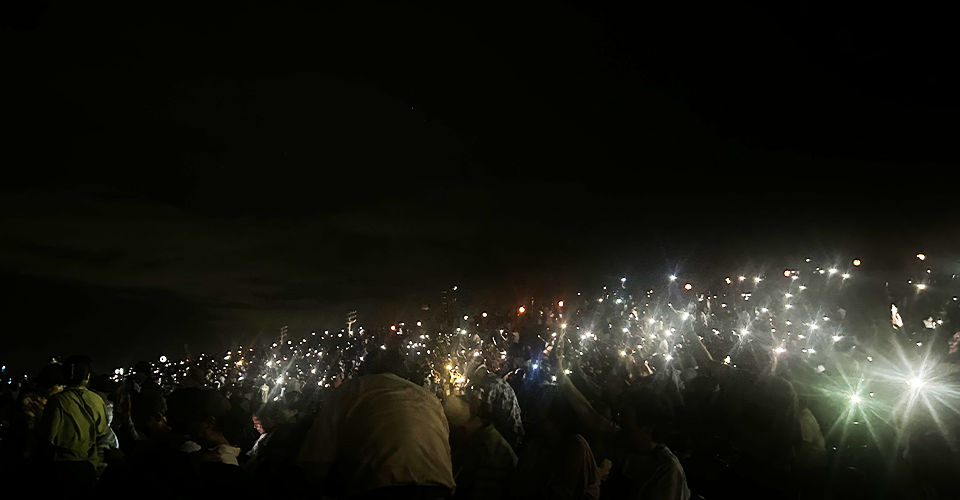
スマホのライトで応援
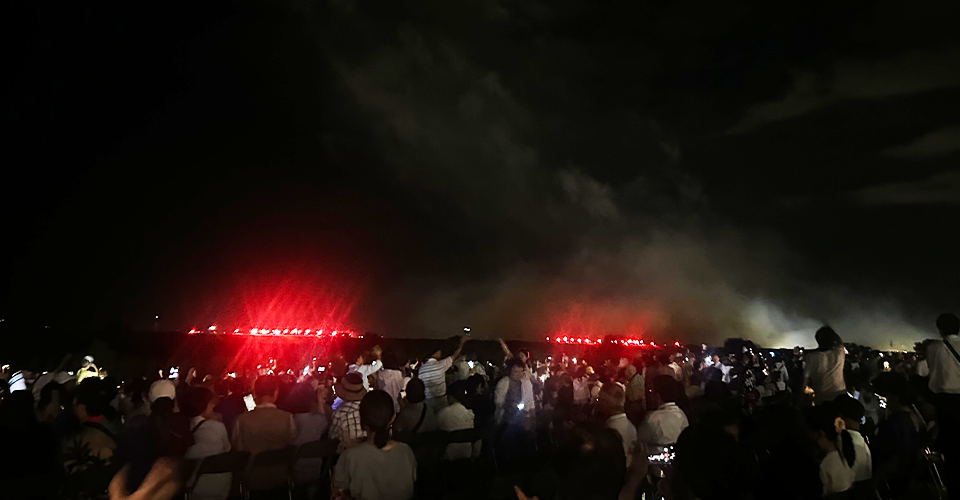
花火師からの返事
The finale is the most striking moment of the whole festival. As the display closes, the audience raises smartphones and lights to thank and applaud the pyrotechnicians on the far bank of the river. No shared language is needed: the lights carry the message, "thank you for such wonderful fireworks." It is a genuine exchange between the makers and the crowd.
From a seat on the far right you can watch countless points of light spread across the viewing area. Unlike the fireworks overhead, this is the whole venue bathed in light, and it is a moment well worth capturing on camera or video.
Putting the sound, the light and the sheer force into words, where photos fall short
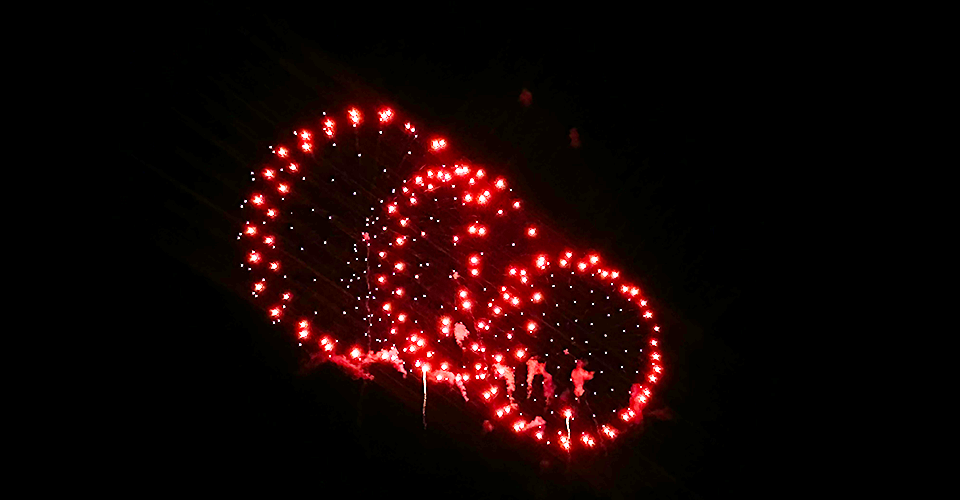
色が変わる花火
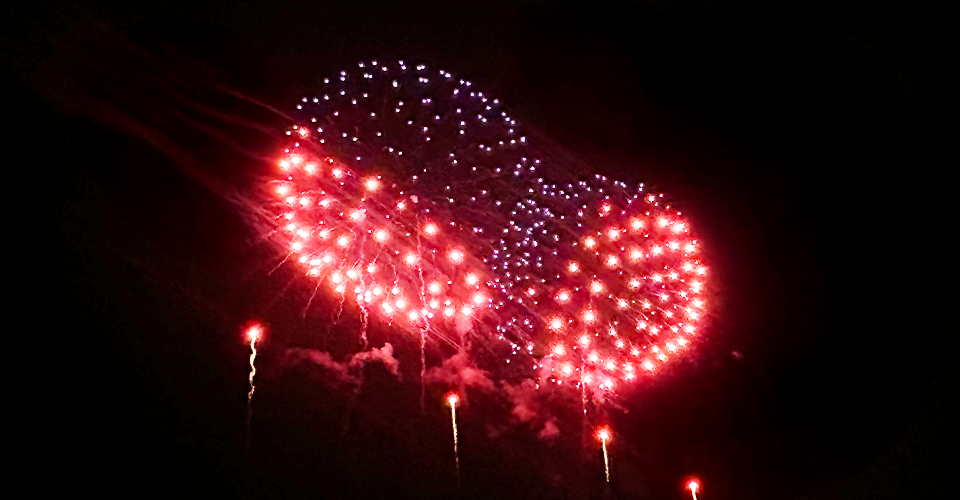
下から変わっていく
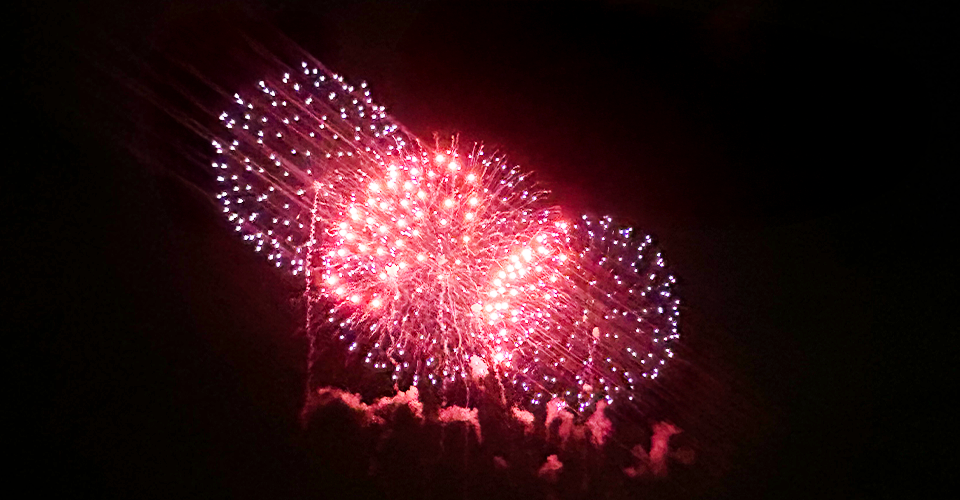
強く光る
The shining lights and Fireworks that seem to melt into the night sky are so beautiful that you can't help but gaze at them. There are also many performances where Fireworks are launched in time with the music, and the color, shape, and tempo of the light change according to the melody and rhythm.
There are collaborations with various themes and works, and the excitement of what will start next never stops.
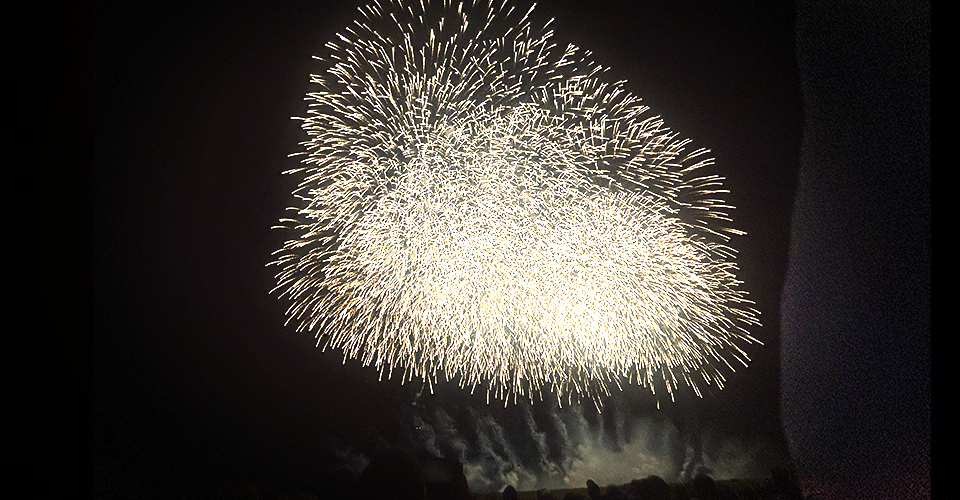
二尺玉
The one to watch for is the nishakudama, the two-shaku shell that is the signature of the Shinmei Fireworks. Also known as a "No. 20 shell," it measures roughly 58 to 60 cm across before it is even launched. It bursts at an altitude of about 450 to 500 m, and the burst itself is said to reach 450 to 500 m in diameter. It is far larger than the shells used at a typical fireworks festival, so powerful that it will not fit inside your field of view.
[The trip home] A 25:20 arrival, and the moment the difference from an overnight tour hit home
The trains have stopped: getting back from Ueno and Shinjuku after midnight
After the last shell of the display, the bus heads back to Tokyo through the night. The scheduled arrival is 25:20 in Japanese timetable notation, or about 1:20 a.m. the following day. Trains have all but stopped by then, so plan ahead for how you will get from the drop-off point to your hotel.
In Ueno and Shinjuku, taxis are relatively easy to find even late at night. A taxi stand near the station or a ride-hailing app will get you to your hotel smoothly.
Some departures also start and finish at locations other than Ueno and Shinjuku. When you book, look beyond the tour price and check how far the arrival point is from where you are staying. Choosing the stop closest to your hotel shortens the late-night taxi ride and keeps both the fare and the fatigue down.
What does "insurance treated as one night and two days" actually mean?
This tour is an overnight day trip with no hotel stay, but because the itinerary spans two calendar days, insurance treats it as "up to one night and two days" rather than a day trip.
Club Tourism domestic travel accident insurance covers you from the moment you leave home for the trip until you return. Coverage includes injuries from accidents during the trip, theft or damage to personal belongings, and liability if you injure someone else or damage their property.
The verdict: is the Shinmei Fireworks a hidden gem, or too much trouble?
Highly recommended if this sounds like you
We recommend this tour above all to travelers based in Tokyo who want to experience a large-scale Japanese fireworks festival.
Because a seat in the designated viewing area and round-trip bus transportation are both included, the tour is easy to join even if you are uneasy about buying tickets in Japanese or about changing trains to reach the venue. You can take part while staying put at the same Tokyo hotel, and it is easier on the budget than a tour that includes a hotel night.
It is also ideal if you want to see fireworks choreographed to music, or to feel the sheer force of a two-shaku shell filling your field of view. And if you are looking for an event a little off the usual list, one that overseas travelers have yet to discover, it should become a memorable part of your trip to Japan.
The return is late at night, but if you can take a taxi from the drop-off point to your hotel and keep the next morning free, this is a convenient and highly rewarding tour.
Think twice if this sounds like you (stamina, hours on the road, and overnight bus travel)
This tour conveniently bundles a seat in the designated viewing area with round-trip transportation, but it will not suit everyone. Two points deserve particular attention: the long hours on the road and the late-night return.
The bus ride is long, and you spend the fireworks display seated on a folding chair. If you find long journeys or holding the same posture difficult, the trip may feel physically demanding. The same goes for anyone who struggles to stay up past midnight or cannot rest well on a bus. If you are traveling with young children or older family members, check in advance that the schedule is manageable.
The venue is outdoors, so you will need to handle the heat and any sudden rain on your own. If changes in the weather tend to affect you, come prepared with a raincoat and something to help you stay cool.
The bus also gets back to Tokyo in the small hours, by which time the trains have most likely stopped running. If you would rather not take a taxi from the drop-off point to your hotel, or if you have sightseeing or a long journey planned early the next morning, this tour may be a difficult fit. Keeping the following day light, with time to rest, makes the trip far more comfortable.
Frequently asked questions (FAQ)
About the tour
Q: Can children and seniors join?
A: Children of elementary school age and above, and senior travelers, are welcome. Preschool children cannot join the overnight day-trip itinerary. Please also note that children of elementary school age pay the adult fare.
This tour involves walking at the venue. From the bus drop-off point to the designated viewing area takes about 15 minutes on foot (30 to 40 minutes when crowded). The venue is a riverbank and the footing is uneven in places, so please wear shoes you can walk in comfortably. Seating is on folding chairs, and you remain seated for about one hour and 40 minutes during the display.
The tour also returns late at night, so if you are traveling with young children or older family members, please check in advance that the schedule is manageable.
Meeting and departure
Q: After booking, how do I check the meeting point and time?
A: Once you have booked, you can check the meeting point, meeting time and emergency contact details on My Page. Your travel guide is also available online before departure.
About luggage
Q: Can I bring a suitcase?
A: Yes. Luggage space is reserved on the bus, so suitcases are fine. Please limit large suitcases to two per person as a guideline.
Regarding language support
Q: Can I join if I do not speak Japanese?
A: Yes. The tour is conducted in Japanese, but key information is provided in English and Traditional Chinese using AI translation devices and printed materials. The tour conductor and driver also use translation apps, so language is not a barrier.
About payment
Q: How do I pay, and in what currency?
A: Payment is made online in Japanese yen by credit card. Exchange rates follow your card issuer's terms. Payment is taken immediately at the time of booking.
Tour operation
Q: What happens if it rains?
A: The fireworks festival goes ahead rain or shine as a rule. It may still be canceled or postponed in severe weather, or at the request of national or local authorities.
Umbrellas may not be used at the venue. If rain is forecast, be sure to bring a raincoat or a poncho.
Q: What if the fireworks festival is canceled?
A: It depends on when the cancellation is decided.
If it is canceled before the tour departs: the tour is canceled as well, and we contact the lead traveler on the booking (if you hear nothing, assume the tour is running). Note that the decision is sometimes made locally on the day itself, in which case notice may not go out until that morning. If notice does not reach you in time and you travel to the meeting point, we are unable to refund transportation or other costs.
If it is canceled or postponed after the tour departs: we refund the value of the viewing seat and run the day as an alternative day-trip itinerary.
If you are traveling from overseas, please take this into account when planning your itinerary.
Support in Japan
Q: Do you have physical stores in Taiwan or overseas?
A: In Taiwan, KNT Taiwan is the exclusive distributor for Club Tourism. For local consultations, please contact KNT Taiwan.
Travelers from Taiwan can register via the Taiwan General Agent Taiwan Kansai International Travel Agency.
Online Registration https://www.knt-taiwan.com/contact.php
Call to register: 02-87717551 (Mon~Fri 09:15~18:00 [excluding holidays])
Email info@knt-taiwan.com
Summary
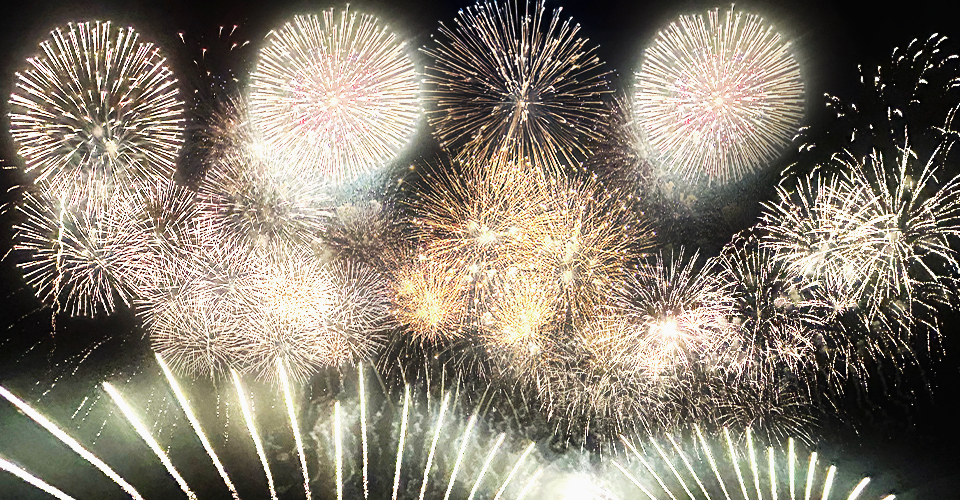
(イメージ)
The Shinmei Fireworks is a display worth traveling for, with dazzling sequences choreographed to music and two-shaku shells that fill your field of view. It is not yet widely known among overseas travelers, and buying tickets and reaching the venue both take some effort.
On a bus tour that includes a seat in the designated viewing area, you do not have to arrange tickets or transportation yourself. You can join while staying put at your Tokyo hotel, and it costs less than a tour with a hotel night included. For anyone uneasy about handling arrangements in Japanese or navigating complicated transfers, it is a convenient and reassuring option.
Come prepared, and experience what only a Japanese fireworks festival delivers: music, light and a boom you feel in your chest, all at once.
Club Tourism official LINE, WhatsApp, Facebook, Instagram
Follow us to get tips for traveling in Japan




-
The content is current as of the time of publication. Please check the official website for the latest information.
 Related articles
【山梨・勝沼】9月が旬!シャインマスカット狩り食べ放題&3種ブドウ食べ比べ|東京発日帰りバスツアー完全レポート
日本旅行の中でも、フルーツ狩り食べ放題は特に人気のある体験型観光の1つです。特に秋は、日本が誇る最高…
Complete Guide to a One-Day Tour of Mt. Fuji | A classic model course from Tokyo to Lake Kawaguchi, Oshino Hakkai, and Arakurayama Sengen Park
Planning a day trip to the Mt. Fuji area from Tokyo? Which spots should you visit, and in what order? The Mt. Fuji area...
Japanese Peach Picking Guide: All-You-Can-Eat Yamanashi Day Trip from Tokyo
One of the seasonal delicacies you can only experience during a summer trip to Japan is "Peach picking."
The nation's highest peach production volume...
Eiji Mitooka Designed More Than Trains! A Luxury Bus Trip to Mt. Fuji and Lake Kawaguchi [Field Report]
When thinking of luxury trains in Japan, many people will likely think of the "Seven Stars in Kyushu" that runs through Kyushu. It's luxurious and warm…
Search by area
Domestic
Search by keyword
- Solo Travel
- Girls' trip
- family trip
- Couple's trip
- Goshuin (temple stamp)
- history
- Shrines and temples
- Pilgrimage
- art
- music
- famous castle
- Spectacular views
- world heritage
- Entertainment
- Gourmet
- hot spring
- island trip
- Cycling and skiing
- Festival
- History and Roads
- souvenir
- museum
- power spot
- Night view
- Railway
- Mountain climbing and hiking