Mt. Fuji Day Trip Complete Guide: A Classic Route from Tokyo to Lake Kawaguchi, Oshino Hakkai, and Arakurayama Sengen Park
Updated: Jul. 29, 2026
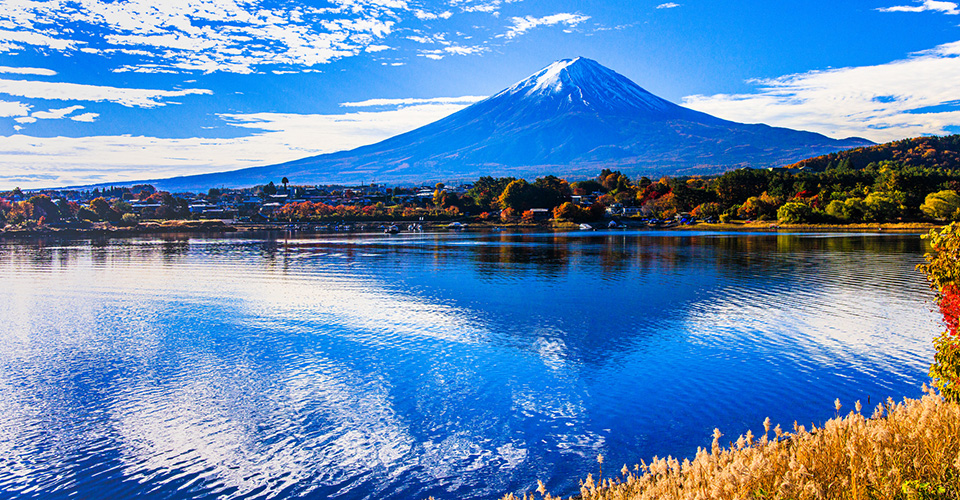
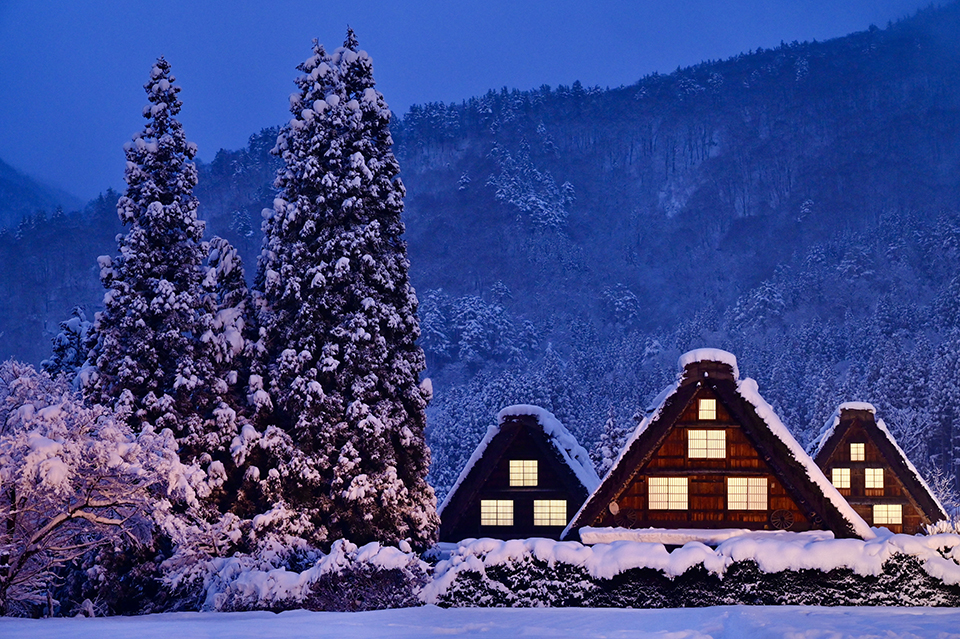
富士山(イメージ)
東京から日帰りで富士山エリアを観光するなら、どこを、どの順番でめぐればよいのでしょうか。富士山エリアには、湖越しの富士山を望める河口湖、富士山の伏流水から生まれた池をめぐる忍野八海、忠霊塔と富士山を一緒に撮影できる新倉山浅間公園など、魅力の異なる観光スポットが点在しています。
ただし、限られた一日で複数のスポットをめぐるには、立ち寄る順番と移動方法、各地での過ごし方を事前に決めておくことが重要です。この記事では、東京を出発して河口湖、忍野八海、新倉山浅間公園をめぐる王道ルートを紹介します。山梨の郷土料理や季節のフルーツ狩りも加えながら、一日を無理なく楽しむためのポイントを解説します。
*This article was created for travelers planning to visit Japan, but readers in Japan may also find it useful.
From Tokyo to the Mt. Fuji Area |
A Classic One-Day Route
This model course assumes the use of efficient transportation such as a chartered car or bus tour. If you plan to travel by public transportation only, please also check the transportation comparison table in section 4
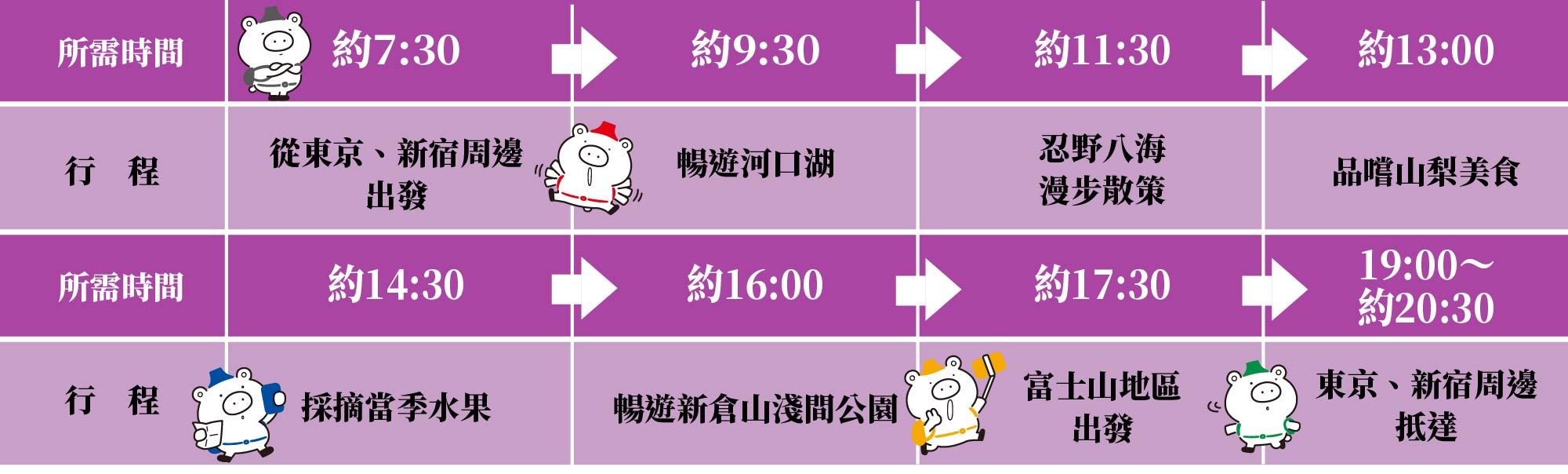
王道ルート(イメージ)
Departing from the Tokyo/Shinjuku Area for the Mt. Fuji Area
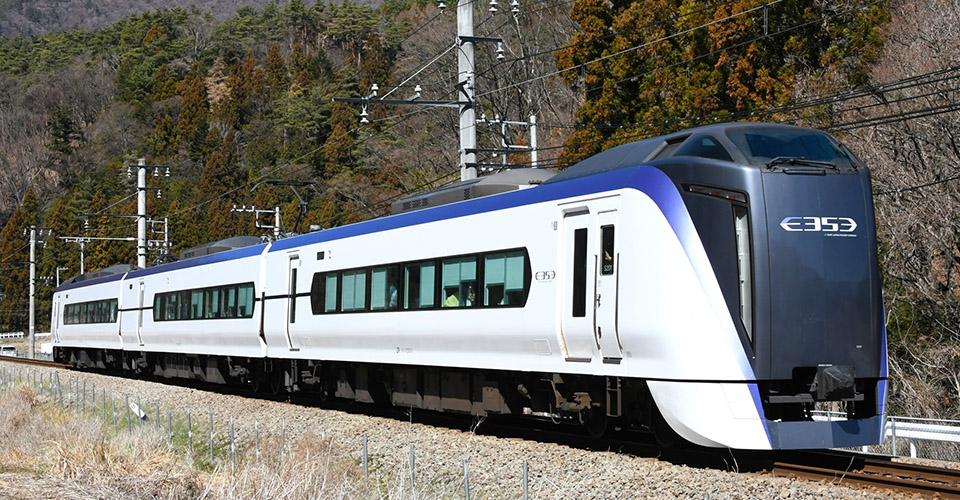
直通特急「富士回遊」(イメージ)
From Shinjuku to Kawaguchiko Station, you can take the direct limited express "Fuji Excursion" or a highway bus. The fastest travel time on the Fuji Excursion from Shinjuku Station to Kawaguchiko Station is about 1 hour 53 minutes. If you are traveling by public transportation, check in advance not only your outbound trip but also how you'll get around the Mt. Fuji area and how you'll return to Tokyo. Especially when using highway buses or trains with all reserved seats, it's best to secure your return seats before planning your itinerary in the area. If you plan to visit several places in one day, it's also important not to delay your morning departure. A late start affects not only how long you can stay at each sightseeing spot but also your trip back.
Lake Kawaguchi | Enjoy Scenery Where the Lake, Flowers, and Mt. Fuji Come Together
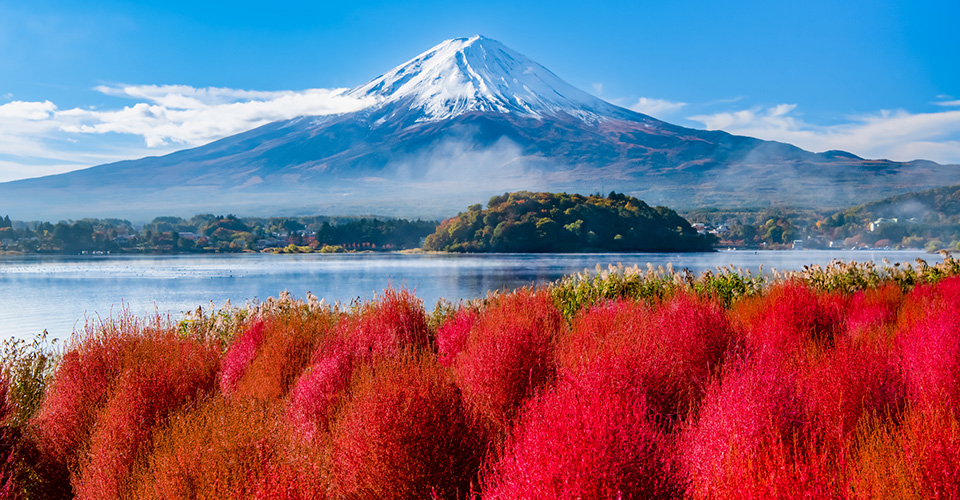
河口湖・大石公園から望む富士山(秋のイメージ)
Your first destination is Lake Kawaguchi. The area around the lake has a variety of tourist facilities, including lakeside walking paths, a ropeway, museums, and cafes. When visiting several places in one day as on this route, it's best to narrow down where you go, focusing on a lakeside stroll and photographing Mt. Fuji.
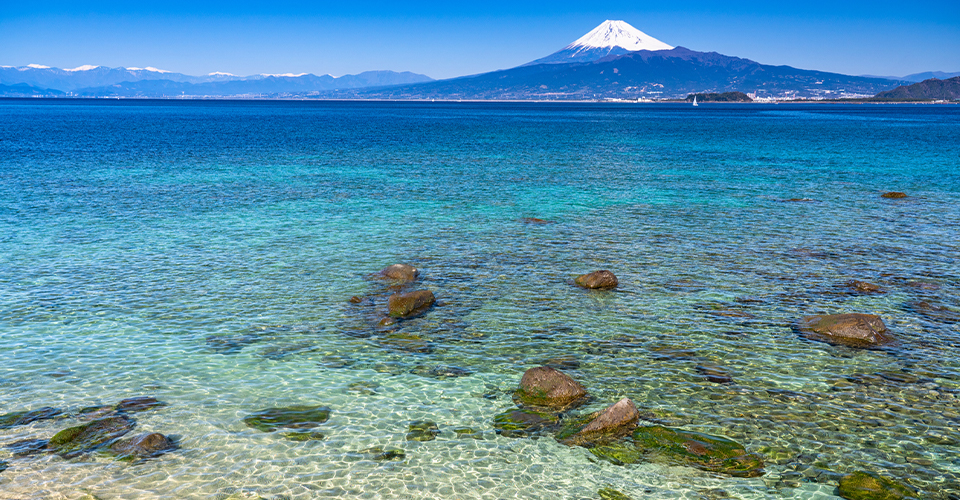
If you want to photograph Mt. Fuji and Lake Kawaguchi together, Oishi Park on the north shore of the lake is a classic spot. With few obstructions, it offers views of Mt. Fuji across Lake Kawaguchi. You can enjoy scenery that combines seasonal flowers with Mt. Fuji, such as lavender in early summer and kochia that turns red in autumn. The park has a flower path about 350 m long and benches, so you can take a leisurely stroll while enjoying the view. At the adjacent Kawaguchiko Natural Living Center, you can also enjoy souvenirs and light meals unique to Yamanashi.
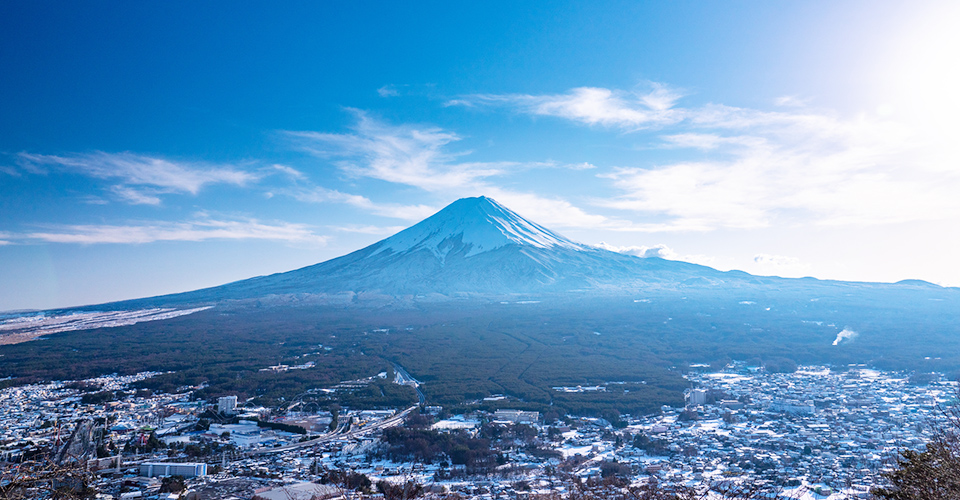
河口湖・天上山公園から望む富士山(イメージ)
Another popular spot is Tenjozan Park, which you reach by the Lake Kawaguchi Mt. Fuji Panoramic Ropeway. From the observation deck, a spectacular view opens up, looking down on Mt. Fuji across Lake Kawaguchi and offering a different perspective from Oishi Park. If you take the ropeway, allow about 30–40 minutes including waiting time; if you walk around Tenjozan Park, you'll need even more time. If you visit together with Oishi Park, setting aside about 90–120 minutes at Lake Kawaguchi will let you sightsee without rushing. When Mt. Fuji is clearly visible, take photos first thing after you arrive. If you wait until after strolling or shopping, clouds may make the summit hard to see. If you focus on a lakeside stroll and photos, plan to stay about 60–90 minutes. If you also want to enjoy the ropeway, a sightseeing cruise, or museums, it's better to spend more time at Lake Kawaguchi and cut back on other stops so you can enjoy it at a relaxed pace.
If you have extra time, we also recommend heading up to Mt. Fuji 5th Station. Located at an altitude of about 2,300 m, Fuji Subaru Line 5th Station is one of the most popular sightseeing spots on Mt. Fuji, and in good weather you can see majestic mountain ranges and a sea of clouds. There are also sights unique to the 5th Station, such as the Mt. Fuji 5th Station Post Office and Komitake Shrine.
However, a round trip to the 5th Station adds a lot of travel time, making it difficult to combine with the classic route covered here: Lake Kawaguchi, Oshino Hakkai, and Arakurayama Sengen Park. If you want to visit the 5th Station, either switch to a plan that lets you take your time around Lake Kawaguchi, or choose a dedicated tour that includes the 5th Station so you can enjoy sightseeing without worrying about travel time.
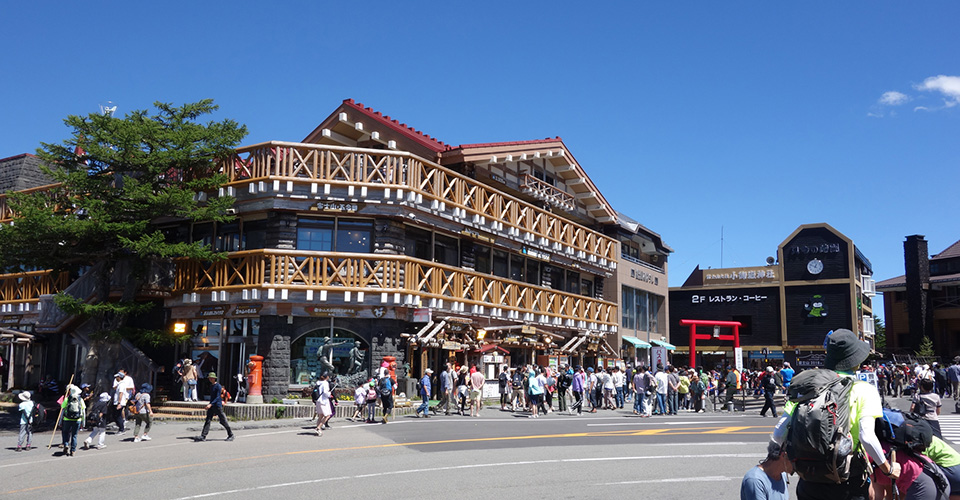
富士スバルライン五合目(イメージ)
Oshino Hakkai | Discover Eight Ponds and the History of Mt. Fuji Worship
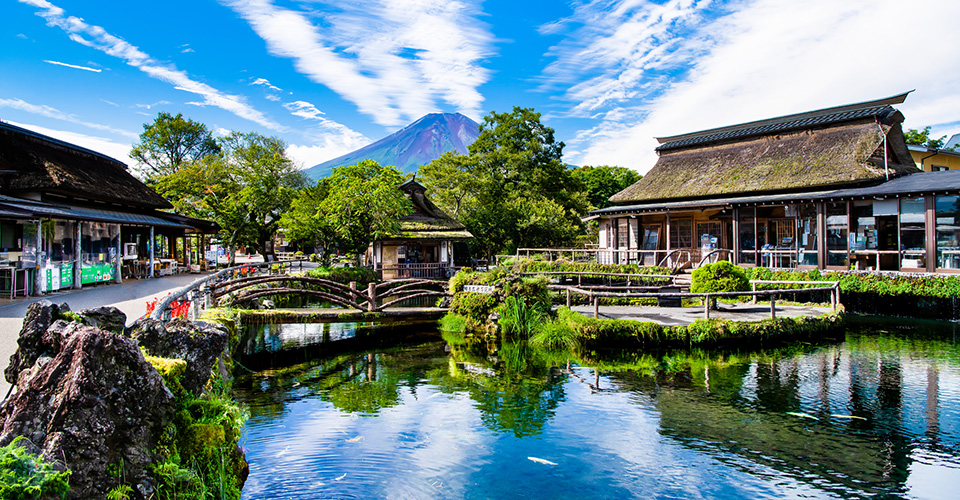
忍野八海(イメージ)
After Lake Kawaguchi, head to Oshino Hakkai. Oshino Hakkai is a group of eight spring-fed ponds whose water comes from Mt. Fuji's underground springs. They are designated a National Natural Monument and are also a component of the World Cultural Heritage Site "Mt. Fuji." When visiting Oshino Hakkai, keep in mind that not every pond you see in the central area, where many tourists gather, is one of the eight ponds that make up the World Heritage component. The eight ponds that officially make up Oshino Hakkai are Deguchi Pond, Okama Pond, Sokonuke Pond, Choshi Pond, Waku Pond, Nigori Pond, Kagami Pond, and Shobu Pond. If you're short on time, rather than rushing around all the ponds, decide in advance which ones you want to see, such as Waku Pond or Kagami Pond. Kagami Pond ("Mirror Pond") is said to have gotten its name because Mt. Fuji is reflected in it when the wind is light and the water is calm. Oshino Hakkai is more than just a place to photograph waterside scenery with Mt. Fuji in the background. Learning about its history as a sacred site where people purified themselves before climbing Mt. Fuji will give you a deeper understanding of what it means to visit the ponds. If you include snacking and shopping, plan to stay about 60 minutes. If you want to visit all eight ponds carefully, allow more time.
Enjoy Yamanashi Cuisine | Hoto and Yoshida Udon
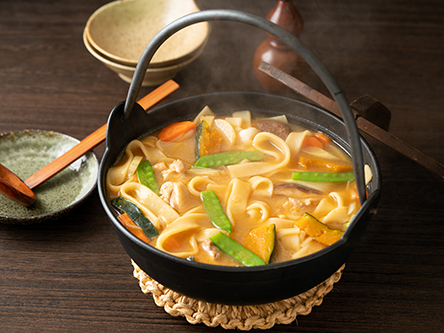
ほうとう(イメージ)
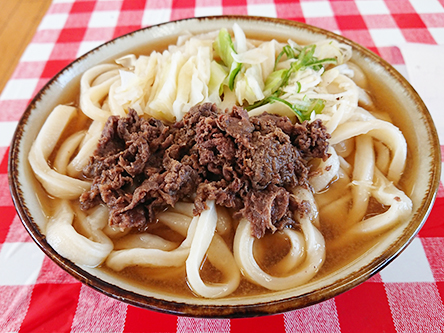
吉田うどん(イメージ)
For lunch, enjoy Yamanashi cuisine unique to the Mt. Fuji area.
One of the signature dishes is hoto. Wide, flat noodles and vegetables such as pumpkin are simmered in a miso-based broth, letting you enjoy the ingredients and broth together.
Another option is Yoshida udon, a local favorite around Fujiyoshida City. It is known for its firm, very chewy noodles, and some restaurants top it with cabbage or horse meat. Yamanashi Prefecture's official tourism information also introduces hoto and Yoshida udon as the two signature noodle dishes of Yamanashi.
On a day trip, if you look for a place to eat lunch on the day, a full restaurant or waiting for your food can delay your afternoon schedule. Check business hours, whether reservations are accepted, and how many seats are available for groups in advance, and plan on about 60 minutes for lunch.
Seasonal Add-On Experience |
Enjoy In-Season Fruit Picking in Yamanashi
If you want to add one more experience to classic sightseeing in the Mt. Fuji area, we recommend fruit picking in Yamanashi Prefecture. Yamanashi is blessed with an environment ideal for growing fruit, including long hours of sunshine, large temperature differences between day and night, and well-drained land. It is one of Japan's leading producers of both peaches and grapes, and you can enjoy a variety of fruit picking each season.
Winter to Spring | Strawberry Picking
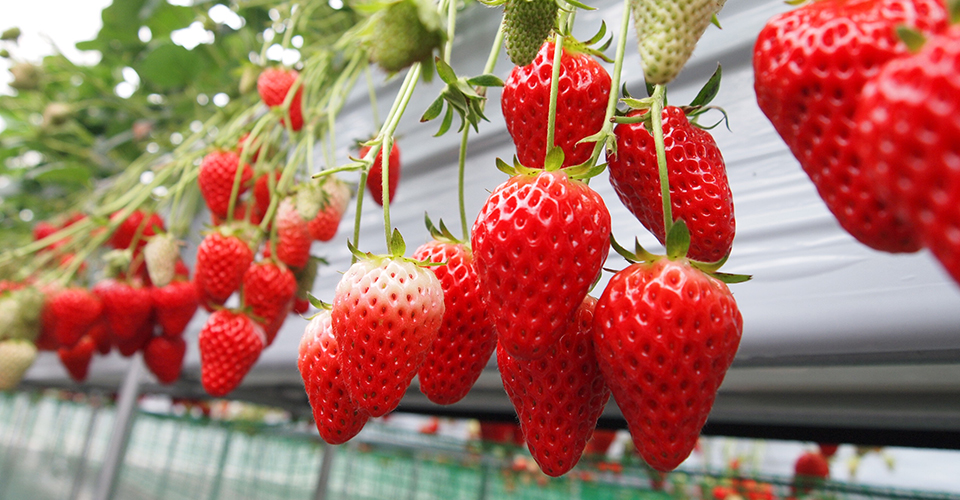
イチゴ狩り(イメージ)
From winter to spring, you can enjoy strawberry picking in greenhouses. Some farms grow several varieties, such as Beni Hoppe, Akihime, and Yotsuboshi, so you can compare differences in sweetness, tartness, aroma, and texture. Some farms use raised-bed cultivation and wide aisles, making them easy to visit with strollers or wheelchairs. The start and end of the strawberry picking season vary by farm and may change depending on how the fruit is growing. Many farms require reservations, so check their operating season and availability before you visit.
Early Summer | Cherry Picking
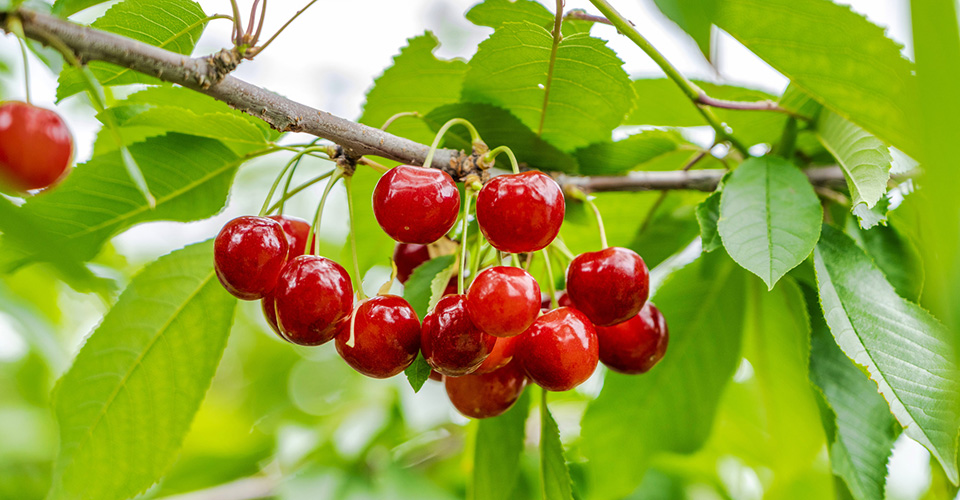
サクランボ狩り(イメージ)
In early summer, some orchards let you enjoy cherries such as Sato Nishiki and Takasago. Since varieties differ from orchard to orchard, being able to taste and compare several varieties is part of the appeal of cherry picking. At orchards with rain shelters, the experience is less affected by the weather and may be available even on rainy days.
Summer | Peach Picking
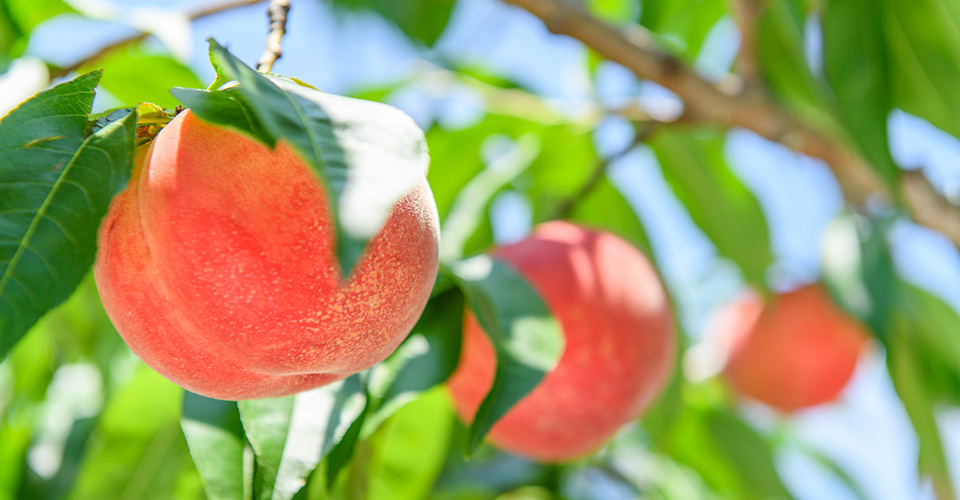
桃狩り(イメージ)
Peaches are Yamanashi's signature summer fruit. Yamanashi Prefecture has an environment well suited to growing peaches, including its hours of sunshine, temperature differences between day and night, and well-drained alluvial fans. Peach picking is not only about harvesting peaches yourself; some farms also let you taste peaches that are ready to eat. Peaches freshly picked from the tree are not always soft right away, so ask the farm staff when they'll be ready to eat and how to take them home.
Summer to Autumn | Grape and Shine Muscat Picking
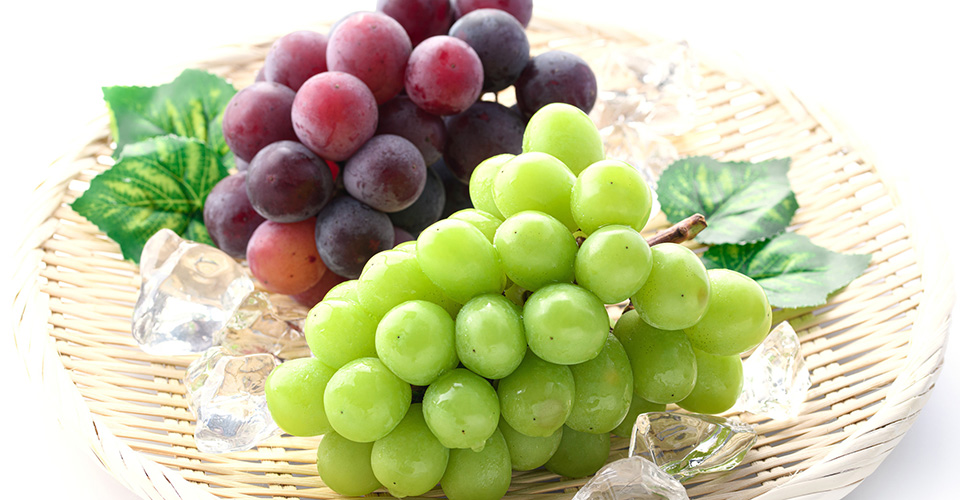
ブドウ(イメージ)
From summer to autumn, you can enjoy picking grapes such as Kyoho, Pione, and Shine Muscat. Yamanashi Prefecture ranks among the top in Japan for grape harvests, and a wide range of varieties is grown there. Shine Muscat in particular is popular because it is easy to eat skin and all and has an intense sweetness and aroma. However, not every vineyard offers Shine Muscat picking. Before booking, check the varieties, harvest season, prices, and whether it's all-you-can-eat or you pay for what you pick.
Tips for Adding Fruit Picking to Your Itinerary
(イメージ)
Harvest seasons vary depending on the weather, growing conditions, region, and variety. Even for the same fruit, operating periods differ from farm to farm, so you need to check the latest information online or elsewhere.
Also, fruit farms are not necessarily located near Lake Kawaguchi, Oshino Hakkai, or Arakurayama Sengen Park. Many farms are in areas that take time to reach from the Mt. Fuji area, such as Yamanashi City, Fuefuki City, Koshu City, and Minami-Alps City, so don't simply assume you can "drop by along the way"; plan your trip including the route.
On an independent trip, you'll need to arrange the farm reservation, transportation to the farm, and travel after the experience separately. One advantage of a bus tour is that it can combine sightseeing spots and a farm that accepts visitors in that season into a single itinerary.
Arakurayama Sengen Park | Capture the Chureito Pagoda and Mt. Fuji in One Shot
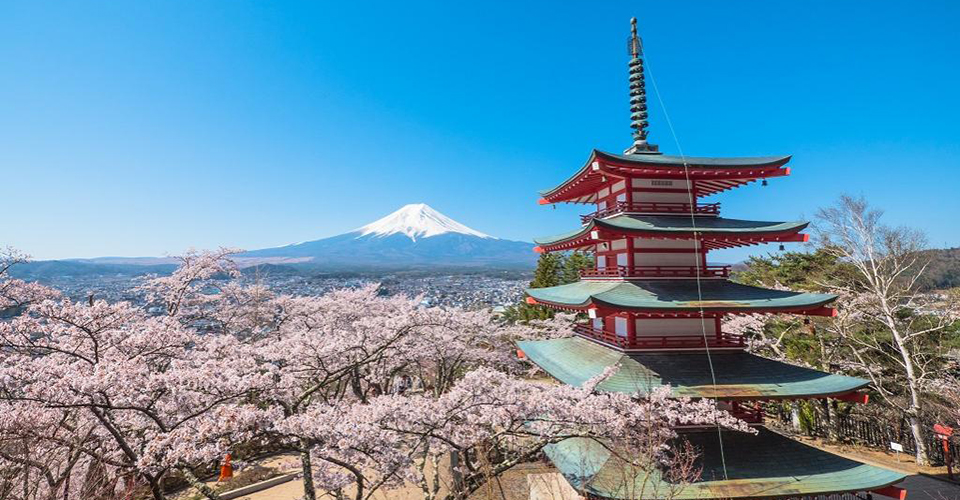
新倉山浅間公園(写真提供:やまなし観光推進機構)
End your day with a visit to Arakurayama Sengen Park. Located partway up Mt. Arakura, the park overlooks Mt. Fuji and the city of Fujiyoshida. From the observation deck in the park, you can see Mt. Fuji, the Chureito Pagoda, and the city all at once. To see this iconic view, you need to walk from the foot of the mountain to the observation deck. The Sakuyahime Stairs have 398 steps, so wear comfortable shoes and clothes that are easy to move in. If it's hard to climb the stairs all at once, take breaks along the way. Allowing about 60–90 minutes, including photo time and the walk up and back, will give you peace of mind. The roads around the park are narrow, and buses and microbuses cannot enter the parking lots near the park. Tour buses drop off and pick up passengers in front of Shimoyoshida Station, so your itinerary needs to include the time to walk to the park after getting off the bus. Even if you come by car, you may not be able to park near the park entrance. Depending on the municipal parking lot, it can take about 5–10 minutes on foot to reach the park entrance. Heavy crowds are expected especially during the cherry blossom and autumn foliage seasons, so allow more time than usual.
Visiting in Spring? We Also Recommend This Way to Enjoy the Area
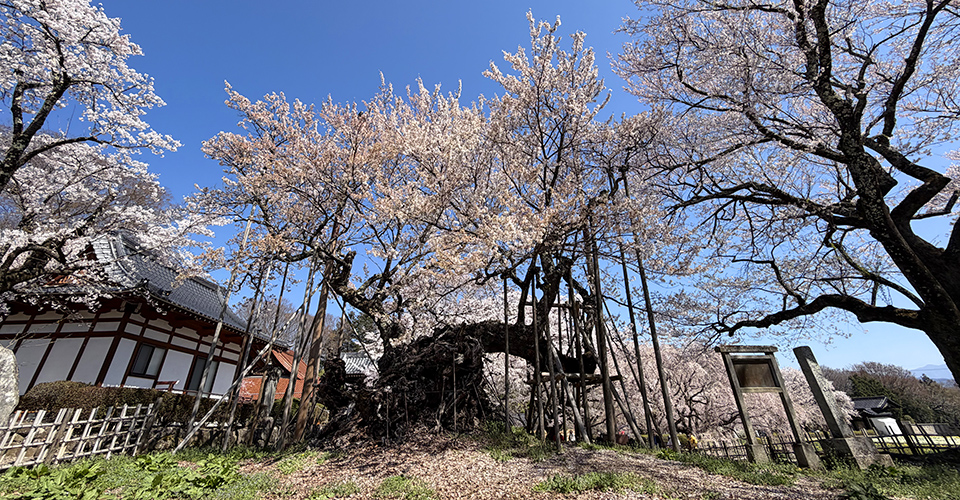
山高神代桜(イメージ)
The route introduced here is a classic Mt. Fuji area route you can enjoy year-round. In spring, when the cherry blossoms are at their best, we also recommend a model course that makes cherry blossoms the star of your trip. We introduce a route that takes you to spectacular spring-only views in a single day, including Yamataka Jindai Zakura, said to be 2,000 years old; the Wanizuka Cherry Tree, a lone cherry tree beautifully framed with Mt. Fuji; and Jinroku Sakura Park, where you can enjoy views of trains and cherry blossoms.
Mt. Fuji Day Trip from Tokyo |
Comparing 4 Ways to Get There
The main ways to visit Lake Kawaguchi, Oshino Hakkai, and Arakurayama Sengen Park from Tokyo in a single day are by rental car, public transportation, chartered car, and bus tour.
Which option is best depends on your budget, group size, driving experience, desired flexibility, and any concerns about language.
| Transportation | Shinjuku → Lake Kawaguchi Travel Time (One Way, Approx.) |
Estimated Fare (One Way, Approx.) |
Advantages |
|---|---|---|---|
| Limited Express (Fuji Excursion) |
Approximately 1 hour and 53 minutes |
Approx. 4,200 yen (fare ticket + reserved-seat limited express ticket) |
Direct service with no transfers. Travel time is predictable as it's unaffected by traffic jams. All seats are reserved, guaranteeing a seat. There are also sections where you can see Mount Fuji from the train window. |
| Highway Bus |
Approximately 1 hour 40-45 minutes |
Approximately 2,000 to 2,200 yen |
Low fares. Frequent departures from Busta Shinjuku (40–50+ per day), making it easy to fit your schedule. Many buses have Wi-Fi and restrooms. |
| Rental Car (Own Car) |
Approximately 1 hour 50 minutes to 2 hours |
From approx. 12,000 yen (rental fee + expressway tolls of approx. 2,600–3,800 yen + fuel, etc.; varies by vehicle type and number of days) |
You can explore at your own pace. It's easy to access places far from the station, such as fruit farms. You can freely load and unload your luggage. |
| Chartered Car |
Approx. 1 hour 50 minutes to 2 hours (varies depending on pick-up location and stops) |
Approx. 60,000–100,000 yen / about 10 hours (per vehicle, day trip estimate; tolls, admission fees, and meals extra) |
Leave the driving to the driver and plan your itinerary freely. Some companies offer multilingual service, so no Japanese is required. Large luggage and multiple suitcases are easy to accommodate. |
| Bus Tour |
About 2 hours from meeting in Shinjuku to arrival at Lake Kawaguchi |
7,000円~12,000円 |
Combines travel between sightseeing spots and arrangements for experiences such as fruit farms into a single itinerary. A tour conductor accompanies the group, so no Japanese is needed, and cards issued overseas are accepted. Up to one large suitcase can be stored on the bus. |
*Based on research as of Jul. 2026. For detailed prices and times, please check the websites of each operator.
Rental Car | Highly Flexible, but a Heavy Burden on the Driver
A rental car lets you stop wherever you like and travel at your own pace. Another advantage is easy access to places far from train stations, such as fruit farms. On the other hand, you'll have to deal with road congestion during peak tourist seasons, finding parking, and Japanese traffic rules. At Arakurayama Sengen Park, the roads around the park are narrow and on-street parking is prohibited. Also keep in mind that the driver may find it hard to enjoy the scenery.
Public Transportation | Convenient to Lake Kawaguchi, but Getting Around Beyond Takes Planning
From Shinjuku to Lake Kawaguchi, you can take a direct train or a highway bus. However, to visit all of Lake Kawaguchi, Oshino Hakkai, and Arakurayama Sengen Park, you'll need to combine local buses, trains, and walking. If you choose public transportation, narrowing your stops down to about two, or staying overnight in the Mt. Fuji area and splitting the trip over 2 days, will make it easier to enjoy each spot at a relaxed pace.
Chartered Car | For Families and Groups Who Want to Explore Freely
A chartered car lets you plan your itinerary around your wishes without worrying about public transportation timetables. It is also well suited to trips with older travelers or children, or with multiple suitcases. However, costs can be high once vehicle charges and expressway tolls are included. When booking, check the languages supported, number of passengers, amount of luggage, hours of use, and extension fees.
Bus Tour | An Easy Way to Combine Classic Spots and Seasonal Experiences in One Day
A bus tour makes it easy to combine travel from the meeting point to sightseeing spots, travel between spots, and reservations for experiences such as fruit farms into a single itinerary. Club Tourism's tours for international visitors include day trip plans from Tokyo that combine Lake Kawaguchi, fruit picking, hot springs, and more.
Who Should Choose a Bus Tour
for a Mt. Fuji Day Trip
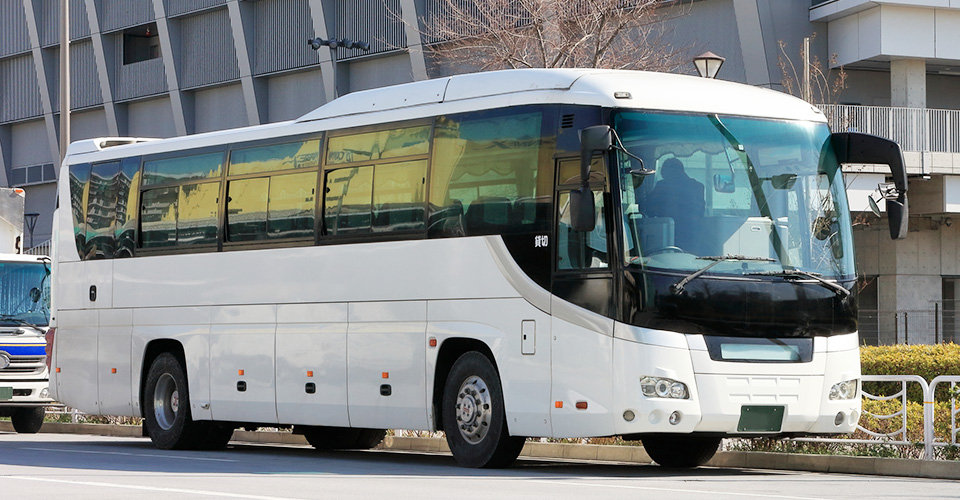
バスツアー(イメージ)
People Traveling to Japan for the First Time
In an unfamiliar place, it's not easy to arrange trains, local buses, and facility reservations all on your own. On a tour, you just check the meeting point and time and join, which reduces the burden of combining multiple modes of transportation yourself.
People Worried About Transfers and Procedures in Japanese
On Club Tourism's tours for international visitors, a Japanese tour conductor accompanies the group, and important information is provided in writing in multiple languages. Bookings can be made in English or Chinese, and travelers without a Japanese address or phone number can also book. Credit cards issued overseas are also accepted.
Groups and Families Who Want to Enjoy the Same Itinerary
In group travel, coordinating transportation and tickets for all participants can be a hassle. With a tour, everyone generally travels in the same vehicle and on the same itinerary, reducing the risk of getting separated at the destination or getting separated during transfers.
People Traveling with Large Luggage
On Club Tourism's tours for international visitors, each participant can store up to one large suitcase in the bus's luggage compartment. Since you don't have to carry your luggage around Lake Kawaguchi or Arakurayama Sengen Park, it's a convenient option even on days when you're moving between hotels in Tokyo.
People Who Want to Enjoy Mt. Fuji Area Sightseeing and Fruit Picking in One Day
If you add fruit picking to an independent trip, you'll need to look into the farm reservation, transportation to the farm, and the route from sightseeing spots separately. Some tours offer courses that combine Mt. Fuji sightseeing with fruit picking, making it easy to add a seasonal experience to your day.
Book a Mt. Fuji Day Trip

予約(イメージ)
We've introduced the classic day trip route from Tokyo, but the Mt. Fuji area offers different attractions each season.
From cherry blossoms and Mt. Fuji in spring, highlands and fruit picking in summer, and autumn leaves in autumn to snow-capped Mt. Fuji in winter, there are many ways to enjoy the area depending on when you visit.
Club Tourism offers recommended seasonal plans, from day trips to overnight tours. Find the Mt. Fuji area trip that's perfect for you based on the length of your trip, departure point, and travel style.
Mt. Fuji Day Trip FAQ

(イメージ)
Q. Is Mt. Fuji suitable for a day trip?
A. Classic spots such as Lake Kawaguchi, Oshino Hakkai, and Arakurayama Sengen Park are easy to access, just under 2 hours from Shinjuku by limited express train, making them well suited to a day trip. However, if you try to squeeze in the 5th Station, hot springs, and fruit picking as well, travel time increases and you may not be able to see everything in one day. To make the most of a day trip, it's important to prioritize your stops.
Q. Can you get around Lake Kawaguchi, Oshino Hakkai, and Arakurayama Sengen Park using only public transportation?
A. It is possible to get around using only public transportation, but you will need to combine local buses, trains, and walking. Depending on transfer times and the frequency of services, it may not be possible to see everything properly in one day. Check the latest timetables and plan your trip to make sure you catch your return train or highway bus.
Q. How many days should I spend around Mt. Fuji?
A. If you're only visiting classic spots such as Lake Kawaguchi, Oshino Hakkai, and Arakurayama Sengen Park, a day trip is enough to enjoy them. On the other hand, if you want to include the 5th Station, Lake Yamanaka, a hot spring stay, and fruit picking, 2 days/1 night or more will let you tour at a comfortable pace. The 5th Station in particular takes extra travel time from Lake Kawaguchi and Oshino Hakkai, so we recommend not cramming too much into a day trip and narrowing down the places you want to visit.
Q. When is the best time to visit Mt. Fuji?
A. Mt. Fuji itself is easiest to see clearly from late autumn to winter (around Nov. to Feb.), when the air is dry. However, winter temperatures are low, so dressing warmly is essential. If you want to enjoy cherry blossoms and Mt. Fuji together, go around Apr.; for fresh greenery and a refreshing highland climate, early summer; and to combine your visit with autumn leaves, the best time is around mid-Oct. to Nov. Since the "chance of seeing Mt. Fuji" and the "best time for the surrounding scenery" don't always coincide, choose your timing based on the purpose of your trip.
Q. Can I follow the same itinerary during cherry blossom season?
A. During the cherry blossom season, Arakurayama Sengen Park is expected to be crowded and traffic restrictions may be enforced. Since travel and sightseeing take longer than usual, it is recommended to reduce the number of places to visit or to prioritize Arakurayama Sengen Park in your itinerary.
Q. Will I definitely be able to see Mt. Fuji?
A. Whether or not you can see Mt. Fuji depends on the weather and cloud conditions on the day. Even if the forecast is sunny, Mt. Fuji may be hidden by clouds, so take your photos as soon as you can see it.
Q. Can I still enjoy the trip on a rainy day?
A. Around Lake Kawaguchi, there are tourist facilities such as museums that are easy to enjoy even in rainy weather. However, Arakurayama Sengen Park involves a lot of walking outdoors as well as stairs, so watch your step in the rain. It's a good idea to have rainy-day alternatives ready so you can change your stops depending on the weather.
Summary | Enjoy the Best of the Mt. Fuji Area
on a Day Trip from Tokyo
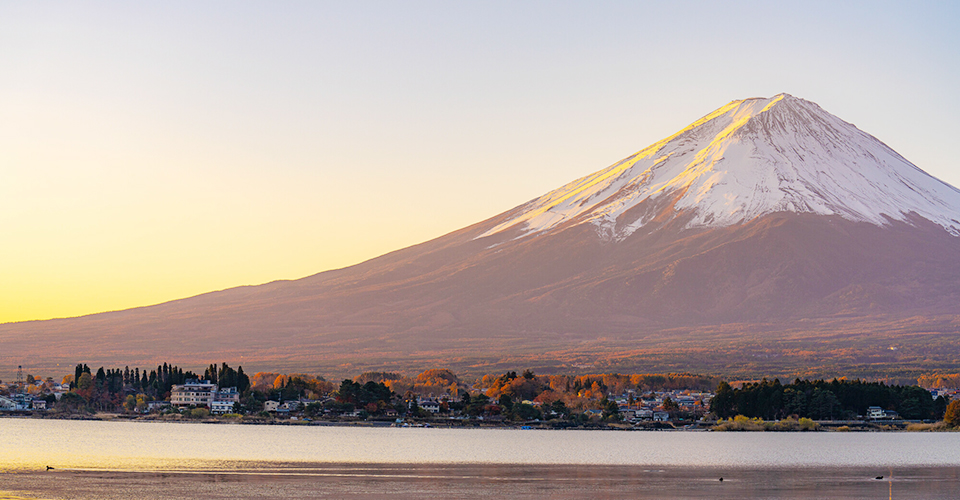
富士山(イメージ)
If you want to enjoy the Mt. Fuji area on a day trip from Tokyo, the route through Lake Kawaguchi, Oshino Hakkai, and Arakurayama Sengen Park is a classic course offering a well-balanced mix of nature, culture, and photography. On the other hand, adding fruit picking on top of several sightseeing spots means more transfers and waiting time on public transportation. If flexibility is your priority, consider a rental car or chartered car; if ease and efficiency matter most, consider a bus tour, and plan your Mt. Fuji trip in the way that suits you best.
Club Tourism official LINE, WhatsApp, Facebook, Instagram
Follow us to get tips for traveling in Japan




-
The content is current as of the time of publication. Please check the official website for the latest information.
 Related articles
Day Trip from Tokyo! Spectacular Autumn Leaves in Kiyosato and Yatsugatake | Mt. Fuji from Higashizawa Bridge and Seisenryo, the Koumi Line, and Fruit Souvenirs: A Travel Report
Autumn in Japan is the season when mountains and trees turn red and yellow, offering beautiful autumn leaves. Among the destinations you can visit on a day trip from the Tokyo area…
[Katsunuma, Yamanashi] In Season in September! All-You-Can-Eat Shine Muscat Grape Picking & a Tasting of 3 Grape Varieties | Full Report on a Day Bus Tour from Tokyo
Among the many experiences in Japan, all-you-can-eat fruit picking is one of the most popular hands-on activities. Especially in autumn, Japan's finest…
A hidden gem of a fireworks festival? A report from a bus tour to the Shinmei Fireworks
Fireworks festivals are one of the most iconic summer events in Japan. Japanese fireworks have a long history and have evolved over time...
Best Peach Experiences in Japan: Complete Guide to an All-You-Can-Eat Yamanashi Peach Picking Day Trip from Tokyo
One of the seasonal delicacies you can only enjoy on a summer trip to Japan is peach picking.
Japan's top peach-producing…
Search by area
Domestic
Search by keyword
- Solo Travel
- Girls' trip
- Family Trips
- Couple's trip
- Goshuin (temple stamp)
- History
- Shrines and temples
- Pilgrimage
- Art
- Music
- Famous Castles
- Spectacular views
- World Heritage
- Entertainment
- Gourmet
- Hot Springs
- Island Trips
- Cycling and skiing
- Festival
- History and Roads
- Souvenirs
- Museums
- Power Spots
- Night view
- Railway
- Mountain climbing and hiking