[Before You Book] How to Choose a Shikoku Pilgrimage Tour | Recommended Itineraries, How to Pick a Travel Agency, and What to Bring
Updated: September 29, 2026
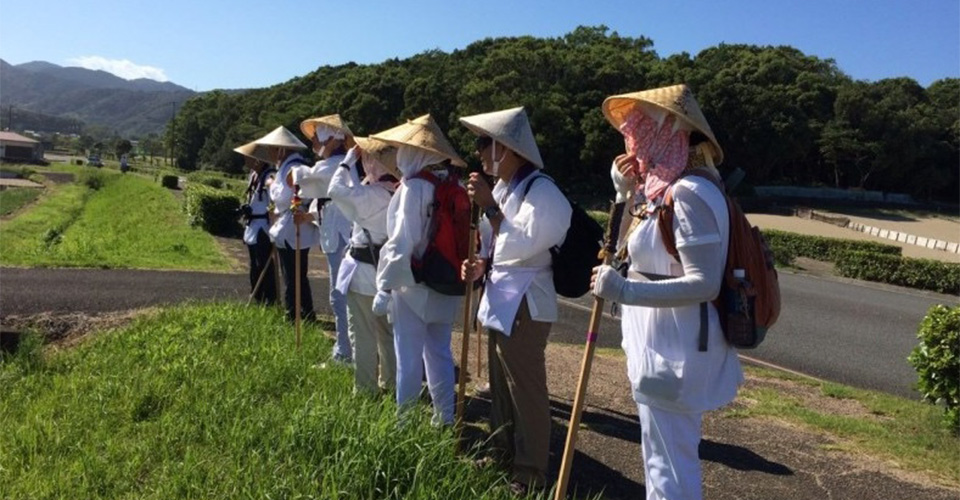
四国遍路(イメージ)
四国遍路(おへんろ)に興味を持ち、「行ってみよう」と思っても、「どの旅行会社やツアーを選べばいいのか」「参加前は何を準備すればいいのか」など、分からないことだらけ。
海外からの四国遍路のツアー選びを失敗しない為には、自分に合った行程の選び方と信頼できる旅行会社の見極めが非常に重要です。
本記事では、四国遍路の旅行会社・ツアー選びで失敗しないためのチェックポイントから、参加前の準備リストまで徹底解説します。
For details on what kind of pilgrimage the Shikoku Pilgrimage is, as well as typical costs and number of days, see "A Complete Guide to Choosing a Shikoku Pilgrimage Tour."
*This article was created for travelers planning to visit Japan, but readers in Japan may also find it useful.
-
What You Should Know Before Choosing a Shikoku Pilgrimage Tour
-
5 Checkpoints for Choosing a Shikoku Pilgrimage Travel Agency
-
How to Choose a Shikoku Pilgrimage Itinerary: First-Timers Should Start with Kugiri-uchi (Section-by-Section)
-
Preparation Checklist Before Joining a Shikoku Pilgrimage Tour
-
Summary: Why Travelers Choose Club Tourism
-
Frequently Asked Questions (FAQ)
-
In Closing: With the Shikoku Pilgrimage, the Best Day to Start Is the Day You Decide
What you should know
before choosing a Shikoku Pilgrimage tour
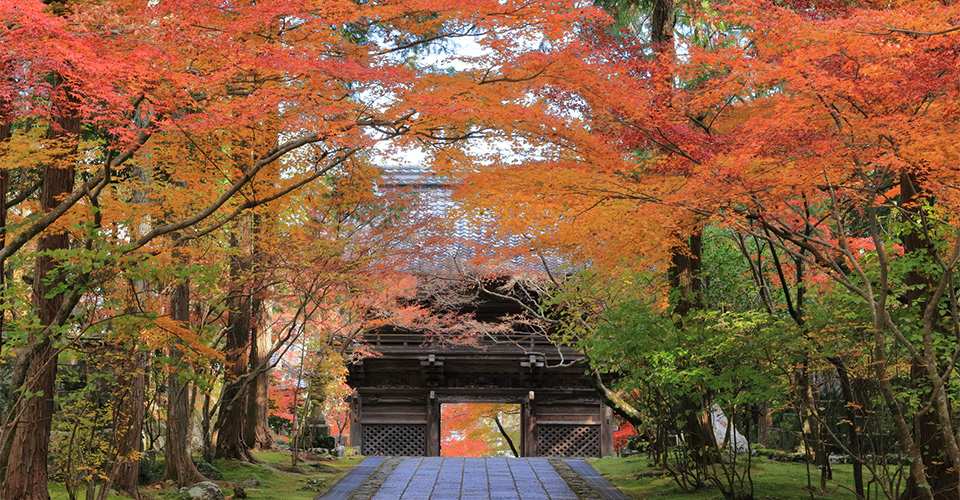
四国第31番札所「竹林寺」(イメージ) ※紅葉の見頃は例年11月中旬~12月上旬
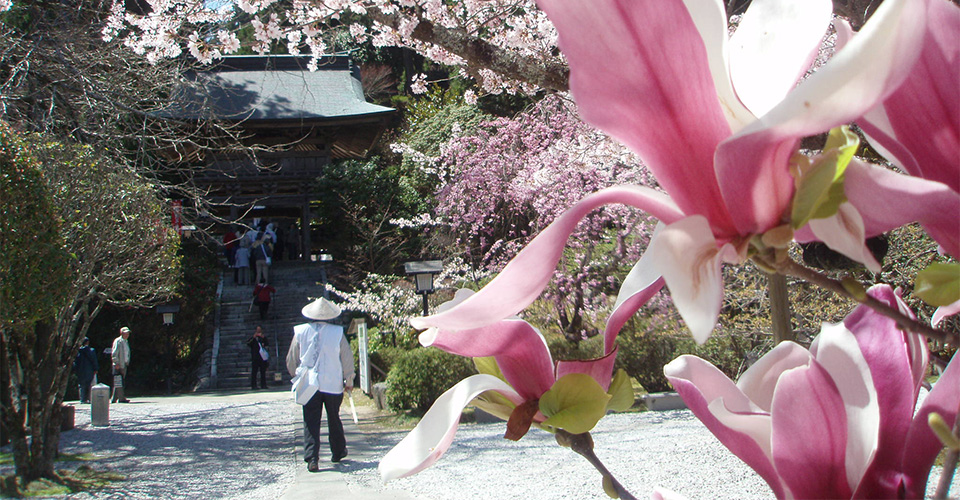
四国第21番札所「太龍寺」(イメージ)※花の見頃は例年3月下旬~4月上旬
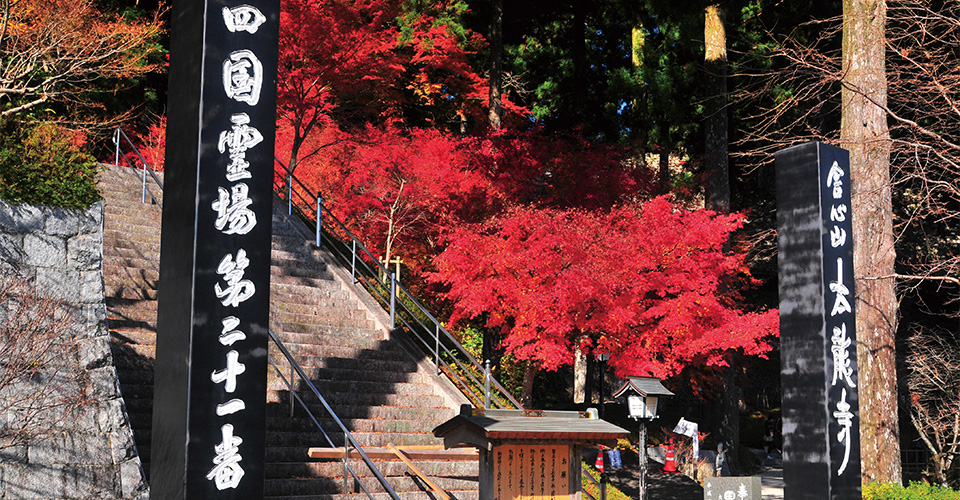
四国第21番札所「太龍寺」(イメージ)※紅葉の見頃は例年11月下旬~12月上旬
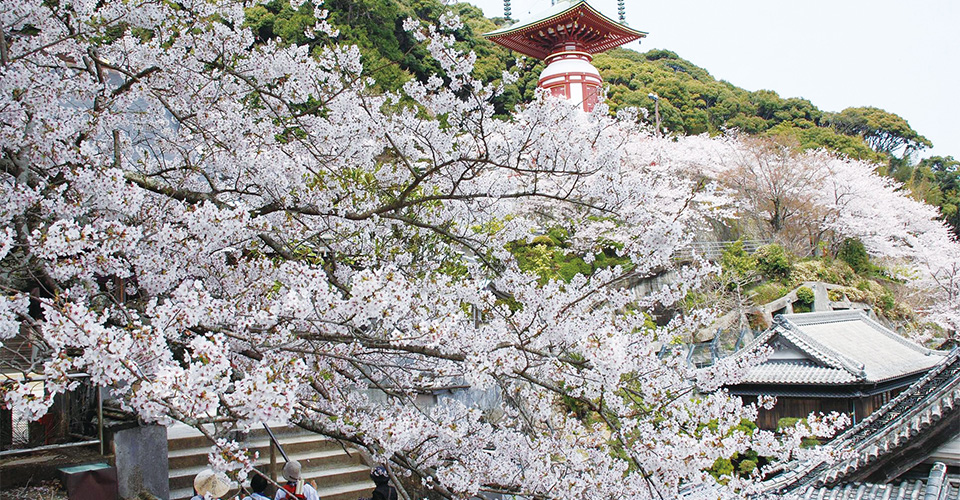
四国第23番札所「薬王寺」(イメージ)※桜の見頃は例年3月下旬~4月上旬
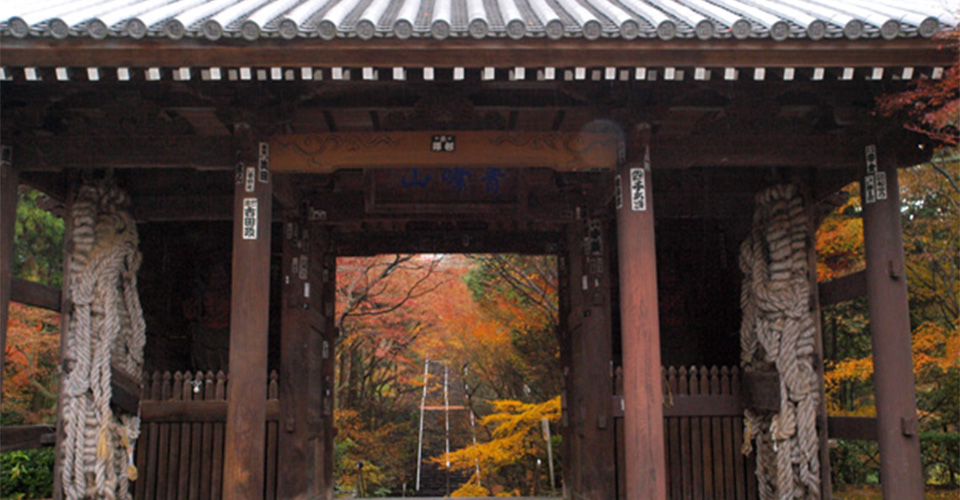
四国第82番札所「根香寺」(イメージ)※紅葉の見頃は例年11月中旬~下旬
Full Circuit or Kugiri-uchi: Which Should You Choose?
There are two ways to do the Shikoku Pilgrimage: the full circuit, visiting all 88 temples in one trip, and kugiri-uchi, visiting them area by area over several trips.
For travelers from overseas, those who can take a long vacation generally choose the full circuit, while those who want to repeat short stays of 2–3 days because of work generally choose kugiri-uchi.
When Is the Best Season? Why Spring and Autumn Are Recommended
The best seasons for the Shikoku Pilgrimage are spring (March–June) and autumn (September–December), when the climate is mild. They are very popular because, in addition to comfortable walking temperatures, you can enjoy seasonal flowers and spectacular autumn leaves at the same time.
Many people may also want to go during the Lunar New Year (Chinese New Year in February) holiday. Shikoku is cold in February, but the air is crisp and clear and there are relatively few tourists and worshippers, so there is a hidden benefit: you can "face yourself calmly in the silence." If you prepare well for the cold, a winter pilgrimage can be very rewarding.
How Do You Decide the Number of Days?
For the full circuit, even a bus tour takes about 10–14 days. Kugiri-uchi, on the other hand, can be done in about 3 days and 2 nights to 5 days and 4 nights.
Decide the number of days by considering "how many days won't be too physically demanding." Planning a comfortable schedule is the biggest key to enjoying the trip.
5 checkpoints for choosing
a Shikoku Pilgrimage travel agency

チェックポイント(イメージ)
When you search for Shikoku Pilgrimage tours in Japan from overseas, many travel agencies and plans come up. However, there are quite a few stories of disappointment, such as "the worship time was too short" or "the local guidance was insufficient."
So that you don't regret your long-awaited Shikoku Pilgrimage, be sure to check the following five criteria when comparing and choosing tours and travel agencies.
Check 1: Does a Certified Shikoku Pilgrimage Sendatsu Accompany the Tour?
The biggest key to a successful Shikoku Pilgrimage is whether you are accompanied by an official sendatsu (pilgrimage guide) certified by the Shikoku 88 Temple Pilgrimage Association.
A sendatsu is not just a tour guide. They are "pilgrimage professionals" who have made the circuit many times and been recognized after repeated examinations and training. With a sendatsu, you don't just tour the temples; they carefully teach you the long-standing pilgrimage etiquette (how to offer incense and candles, how to deposit osamefuda name slips, and how to put your hands together in prayer), how to worship, the meaning of the sutras and the history of the pilgrimage.
Check 2: Is the Language Support Clearly Stated?
With a "Japanese only" tour, you won't understand the local guidance or historical explanations, which becomes stressful. Choose a company that clearly presents its support system, such as whether a government-licensed guide-interpreter accompanies the tour and whether dedicated materials in Traditional or Simplified Chinese are provided.
Check 3: Are Hotel and Meal Ranks Clearly Stated in Advance?
The Shikoku Pilgrimage is a journey that takes more stamina than you might expect. After worshipping, "sleep quality" and "daily meals" are very important factors that greatly affect how satisfying the trip is.
Comfortable accommodation and delicious meals are essential for recovering from the fatigue of a long journey. Tours that clearly state in advance the name of the accommodation, the room type and meals featuring Shikoku's local cuisine are more reliable and more satisfying.
Major travel agencies often clearly define their hotel ranks and criteria. Checking the hotel rank before applying is the safe and sure way to go.
Check 4: No Forced Stops at Duty-Free Shops
Some typical budget sightseeing tours take you to duty-free shops or particular souvenir stores for long periods. Being forced to shop or having precious worship time cut short would defeat the purpose.
To focus purely on the pilgrimage and worship, it is safest to choose a tour whose itinerary includes no forced shopping or unnecessary duty-free stops.
Check 5: Is It a Major Travel Agency?
Considering the ability to respond to unexpected trouble or schedule changes and safety management standards developed over many years, choosing a tour organized by a major Japanese travel agency with a strong track record is an important point.
Rather than choosing on "low price" alone, choosing a tour from a travel agency with history, experience and a thorough support system is the surest way to a safe and comfortable pilgrimage.
How to choose a Shikoku Pilgrimage itinerary:
First-timers should start with kugiri-uchi (section-by-section)
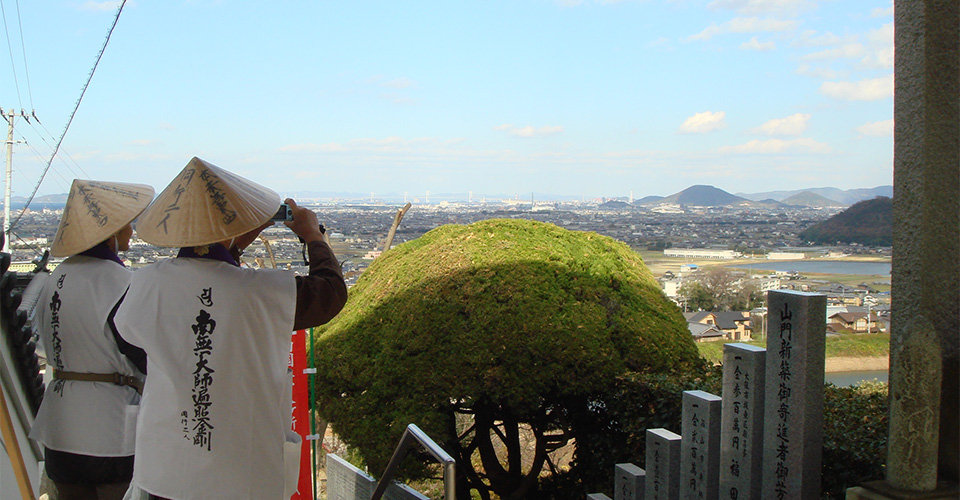
四国第73番札所「出釈迦寺」(イメージ)
Who Is the Full Circuit (All 88 Temples) For?
• Those who can take a long vacation of about two weeks
• Those who want to visit all 88 temples in one trip and feel a sense of achievement
• Those who have done kugiri-uchi before and want to try the full circuit
Who Is Kugiri-uchi (Visiting Area by Area) For?
• Those who find it hard to take long vacations
• Those who aren't confident in their stamina and want to try a short schedule first
• Those who want to enjoy Shikoku's charms many times in different seasons
An Option Perfect for Beginners: The 2-Day Trial Plan
For those worried "Can I really do this?", we recommend Club Tourism's "trial plan" tour, which lets you first experience the Shikoku Pilgrimage in 2 days and 1 night. A professional sendatsu and a licensed guide-interpreter support you, so even with no prior knowledge you can experience authentic pilgrimage culture with peace of mind.
The key point is that you can easily enjoy the Shikoku Pilgrimage through a variety of special experiences while visiting places associated with Kobo Daishi (Kukai).
▼Very popular with first-timers! See details of the 2-day Kochi tour here
Preparation checklist
before joining a Shikoku Pilgrimage tour
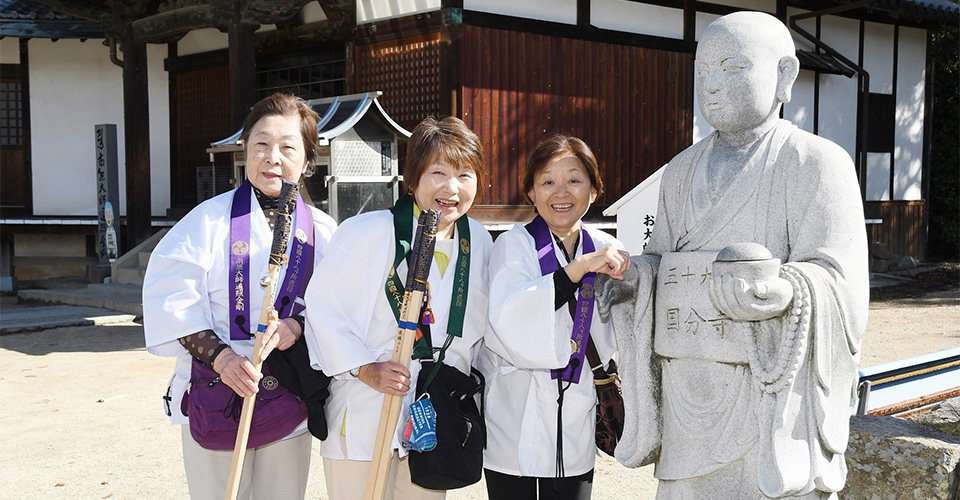
四国遍路の服装(イメージ)
Clothing and Items to Bring (Hakue Robe, Wagesa Stole, Prayer Beads, Incense, etc.)
• Clothing: Clothes that are easy to move in (long pants recommended) and sneakers you are used to.
• Hakue: A white jacket worn as pilgrimage attire.
• Wagesa: A stole-like cloth hung from the neck, which serves as formal attire for worship.
• Prayer beads, incense, candles and osamefuda name slips: Used for worship at each temple.
Fill Out Your Osamefuda Name Slips in Advance
Osamefuda are paper slips that you deposit in the osamefuda boxes at each temple's main hall and Daishi hall.
You write your name, address (an overseas address is fine), wish, the date and so on.
Writing them every time you arrive at a temple is tiring, so the trick to worshipping smoothly is to prepare and fill them out in advance, or write them on the bus before arriving at the temple.
If you don't know how to write them, the sendatsu will explain.
Also, since osamefuda are not sutra copying, you don't need to use a brush. You can fill them out with a pencil or ballpoint pen.
Pilgrimage Items Can Also Be Bought Locally
Specialized items such as the hakue robe and kongozue (pilgrim's staff) may be hard to find outside Japan.
Club Tourism also accepts advance orders and hands them over on site on the day of the trip.
The temples and shops visited on the first day don't always sell pilgrimage items, so we recommend ordering to some extent in advance.
At temples that sell items on site, time is set aside for purchasing, if only a little, so you can feel at ease.
How to Request Goshuin (Nokyo) Temple Stamps and Points to Note
Goshuin (calligraphy and red seal stamps) received at temples are not a stamp rally but "proof that you worshipped." Be sure to worship before receiving a goshuin.
To receive goshuin you need a nokyocho (stamp book), which can also be reserved in advance or bought locally.
On Club Tourism's Shikoku Pilgrimage bus tours, the tour conductor and staff collect participants' nokyocho together and handle the procedures at each temple's nokyosho on their behalf. There is no need to line up at the counter yourself, so you can concentrate on worship.
Access to Kochi and the Meeting Place
The Kochi trial tour introduced here uses Kochi Station as the meeting and dispersal point.
Common routes are a direct flight from Taipei (Taoyuan International Airport) to Kochi Ryoma Airport, or going via Tokyo, Osaka, Fukuoka or elsewhere by domestic flight or shinkansen to Kochi Station, so access is very convenient.
Summary: Why Travelers Choose Club Tourism
Among the many travel agencies offering the Shikoku Pilgrimage, here is why travelers joining a pilgrimage in Japan from overseas choose Club Tourism.
Over 40 Years of History
We take pride in the overwhelming peace of mind provided by "Kokoro no Tabi," our specialist team for pilgrimages and themed travel.
Double Support from a Certified Sendatsu & an Interpreter
In addition to correct guidance from experts, language support (licensed guide-interpreters) removes the language barrier.
High-Quality Itinerary Management
Carefully selected accommodation and meals, and honest tour operation with no duty-free shop stops, so you can join with peace of mind.
▼A trusted track record! See Club Tourism's "2-Day Kochi Pilgrimage Tour"
Frequently Asked Questions (FAQ)
Q. Do I have to get white clothing and pilgrimage items?
A. You don't have to wear white. Many of our actual participants wear ordinary clothing in light colors such as beige, gray and ivory. You may also use a wagesa stole and prayer beads from your own Buddhist sect. Short prayer beads (nenju) are fine too. What matters is not the form but worshipping with a pure heart.
Q. I'm not confident in my stamina. What if I can't walk anymore?
A. There is absolutely no need to push yourself. If it feels physically too hard, you can rest on the bus or walk partway and take a break. The accompanying certified sendatsu or tour conductor can also worship on your behalf. Some places have chairs for those who find kneeling difficult, and where there are no chairs, you may sit in any comfortable position.
Q. Can I take photos?
A. Generally you can photograph the exterior within the temple grounds, limited to places the temple permits. However, please refrain from photographing inside the halls, the principal images, the nokyosho (stamp office) and the monks. This is etiquette valued on the Shikoku Pilgrimage out of respect for sacred places.
Q. How much money should I prepare for offerings?
A. For a 1- or 2-night course, preparing enough for 2–3 days is fine. A guide is about 5–25 yen per offering, and at each temple you worship at two places, the main hall and the Daishi hall. If you run short of coins, you can exchange money at your accommodation.
Q. How many goshuin (temple stamps) can I receive?
A. We ask that each person limit it to one each of a nokyocho (stamp book), hakue (white robe) and nokyo scroll, for a total of up to three items. Please note that the stamps are given in the order you visit, not in temple-number order. Partial goshuin, such as receiving stamps only from specific temples, are not possible. Some temples do not write the date of worship.
Q. Can I request a single room?
A. Private rooms are available on request. However, the number of rooms is limited and reservations are first come, first served. Private rooms may be fully booked, so if you would like one, please apply early.
Q. What should I do about temples I couldn't visit on this tour?
A. You don't need to complete the whole Shikoku Pilgrimage at once. Kugiri-uchi, visiting area by area over several years, is common, and in Japan many people complete the 88 temples in a series of six trips.
If you've felt the appeal of the Shikoku Pilgrimage on this 2-day Kochi tour, next try another area. You can build your connection little by little at your own pace.
Q. I'm not Buddhist. Can I join? Does my sect matter?
A. Religion and sect don't matter at all; anyone can join. Since ancient times, the Shikoku Pilgrimage has welcomed people with all kinds of feelings, regardless of faith or sect: as a memorial for ancestors, to purify body and mind, for personal wishes, or as time to reflect on oneself. There are as many purposes as there are participants, and you may worship with whatever feelings you have.
Q. Is it OK to join on my own?
A. Yes, absolutely. Pilgrimage and worship trips are notable for the large number of solo participants. On some tours it isn't unusual for every participant to be traveling alone. Meeting people who have gathered with the same wish is another charm of the Shikoku Pilgrimage, and the trip proceeds in a friendly atmosphere where conversations arise naturally on the bus and at meals.
Q. I live overseas. Can I apply?
A. Yes, you can join. Those living overseas can apply even without a Japanese address or phone number.
Reservations are accepted in Traditional Chinese or English, and payment by credit card is available.
For Kochi Station, the meeting place, we provide a guide with photos so you won't get lost, so there is no need to check it out the day before.
In Closing: With the Shikoku Pilgrimage, the Best Day to Start Is the Day You Decide
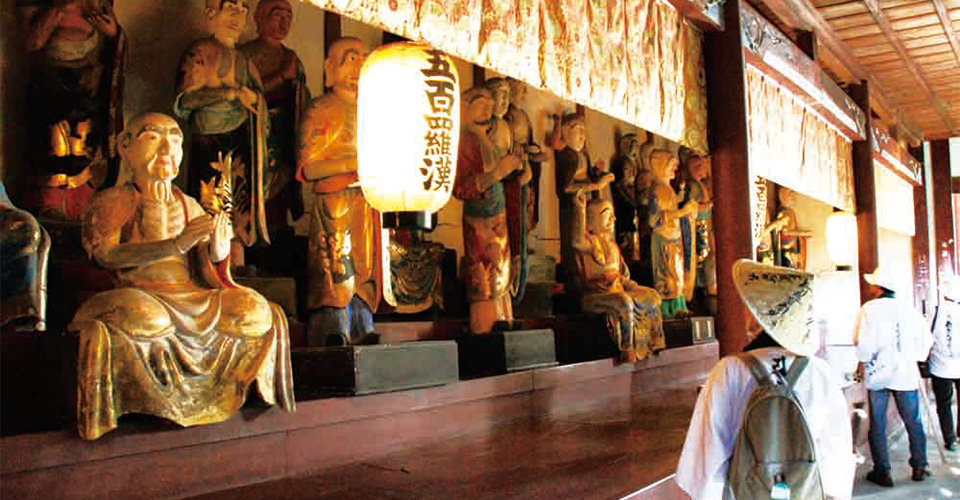
四国第4番札所「大日寺」(イメージ)
Among pilgrims there is a saying: "The moment you decide is the best time to start." Regardless of age, nationality or religion, Shikoku's beautiful nature and warm people will always welcome you kindly.
Why not start with a short tour and take a first step toward a wonderful journey in search of peace of mind?
Supervisor's Comment (Nanae Yamamoto)

四国八十八ヶ所霊場公認 権中先達 山本七絵(イメージ)
山本 七絵(やまもと ななえ)僧名:秀円
四国八十八ヶ所霊場公認権中先達。クラブツーリズム「こころの旅」ナビゲーターとして、数多くの巡礼ツアーを監修。初心者にも分かりやすいガイダンスで、高い評価とリピーターを獲得している。
The Shikoku Pilgrimage (ohenro) is a journey that people of all ages in Japan and abroad say they "want to make at least once."
What people seek from the pilgrimage differs for each person. There are many feelings and hopes, such as "healing," "reflecting on oneself," "marking a milestone in life," "experiencing Japanese culture," "ascetic practice" and "refreshment and renewal," and by traveling this land you receive blessings.
Strangely, your feelings change between before the journey and when you reach the goal. This is probably something you can't understand without actually experiencing it.
The pilgrimage is not a journey of seeking but one of "absorbing." Originally it is a journey you may take as many years as you like to complete, so first just try starting it. You will surely be blessed with connections and spend a wonderful journey and time.
Club Tourism official LINE, WhatsApp, Facebook, Instagram
Follow us to get tips for traveling in Japan




-
The content is current as of the time of publication. Please check the official website for the latest information.
 Related articles
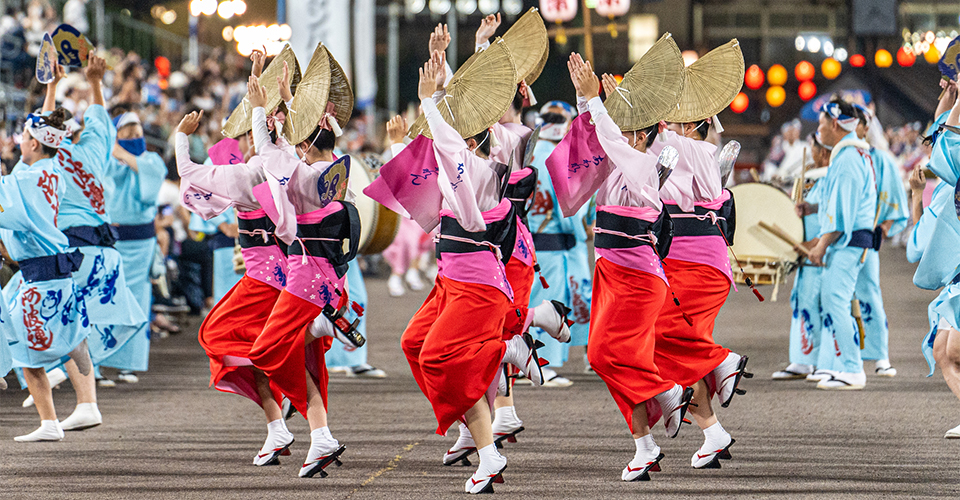
Complete Guide to Summer Festivals in Japan | Tokushima Awa Odori Festival 2027: Dates, Dance Venues, and How to Get Viewing Tickets
"The dancers are fools, the watchers are fools; if we're all fools, we might as well dance!" This famous chant echoes throughout the city.
Fools and…
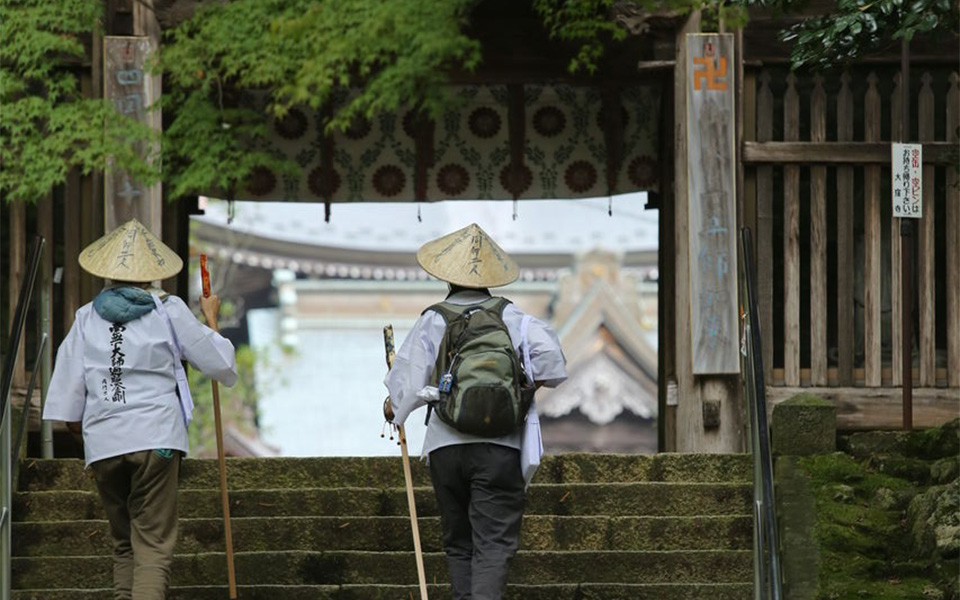
A Complete Guide to Choosing a Shikoku Pilgrimage Tour | How to Find a Bus Tour Even Beginners Can Join with Confidence
The Japanese Pilgrimage road "Shikoku Pilgrimage" is said to have opened about 1,200 years ago.
In recent years, 'healing' and 'self-discovery'...
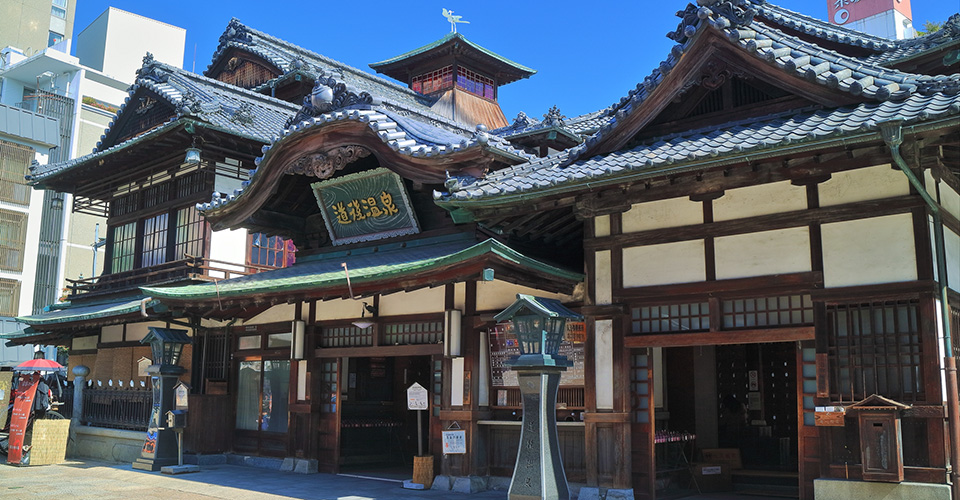
Check out the non-standard items! 15 Ehime souvenirs
Ehime Prefecture is famous for Dogo Onsen and its famous mandarin oranges. But that's not all! We'll introduce you to some recommended souvenirs from Ehime Prefecture.

Packed with unique attractions! 15 must-see tourist spots in Tokushima
Tokushima is known for its Awa Odori dance, but that's not all! There are many spectacular sights created by nature, such as whirlpools and whirlpool roads.
Search by area
Domestic
Search by keyword
- Solo Travel
- Girls' trip
- Family Trips
- Couple's trip
- Goshuin (temple stamp)
- History
- Shrines and temples
- Pilgrimage
- Art
- Music
- Famous Castles
- Spectacular views
- World Heritage
- Entertainment
- Gourmet
- Hot Springs
- Island Trips
- Cycling and skiing
- Festival
- History and Roads
- Souvenirs
- Museums
- Power Spots
- Night view
- Railway
- Mountain climbing and hiking