[We Asked Local Tourism Staff] A Complete Guide to Independent Travel in Kamikochi|Must-See Spots, Access and What to Wear for First-Timers
Last updated: Aug. 31, 2026
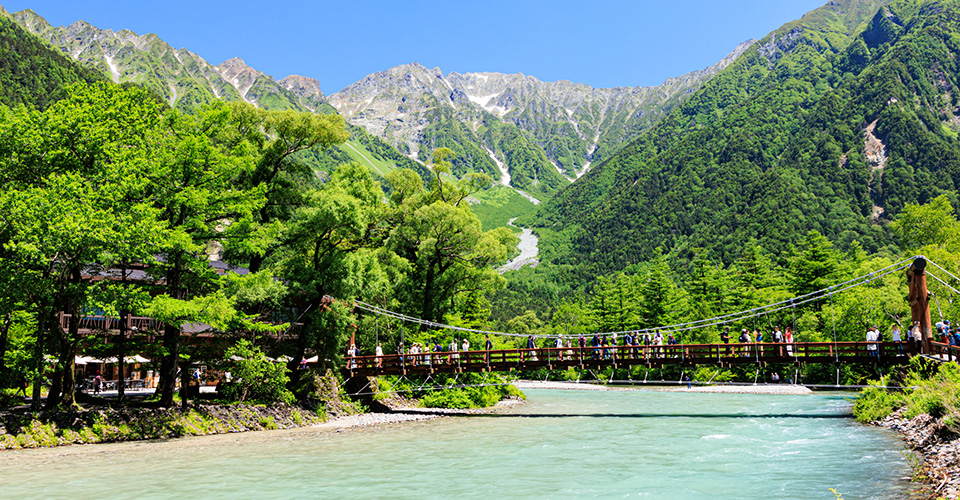
上高地(イメージ)
雄大な山々と清らかな梓川に囲まれた上高地。気軽に散策を楽しめる山岳リゾートのひとつで、登山をしなくても美しい自然を楽しめることから、近年人気を博しています。今回は「一般社団法人松本市アルプス山岳郷」に所属する多田さんに案内していただきながら、夏の上高地を訪れました。この記事では、東京・名古屋方面からのアクセスやバスの予約方法、訪れたいスポット、必要な滞在時間、服装、現地で役立つ情報などをまとめてご紹介します。初めて上高地を個人で訪れる方の旅行計画の参考になれば幸いです。
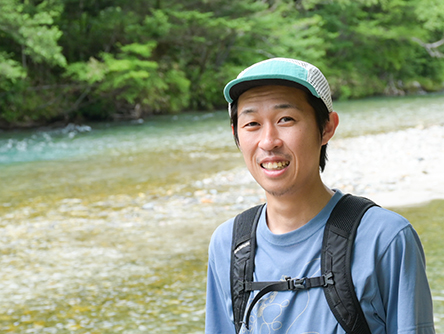
多田 空太さん(イメージ)
【今回、上高地を案内してくれた人】
多田 空太さん
一般社団法人松本市アルプス山岳郷 所属
上高地をはじめとする松本市西部エリアのコンテンツ造成や、旅行者の受け入れ体制づくりに携わる。今回の取材では、夏の上高地を一緒に歩きながら、アクセスや見どころ、現地での注意点などを教えていただきました。
*This article was created for travelers planning to visit Japan, but readers in Japan may also find it useful.
-
What kind of place is Kamikochi?
The basics to know before a first visit -
How to reach Kamikochi|Comparing routes from Tokyo, Nagoya and Gifu
-
Recommended spots to visit in Kamikochi
-
How many hours do you need in Kamikochi? Ideas by length of stay
-
Tips for enjoying Kamikochi while avoiding crowds
-
Practical information about Kamikochi for international visitors
-
What to wear in Kamikochi: clothing and what to bring
-
Nearby areas worth combining with Kamikochi
-
Which is better, independent travel or a tour?
-
Frequently asked questions about visiting Kamikochi
-
Summary|Make the most of your first visit to Kamikochi
What kind of place is Kamikochi?
The basics to know before a first visit
About 1,500 m above sea level and ringed by peaks: one of Japan's finest alpine landscapes
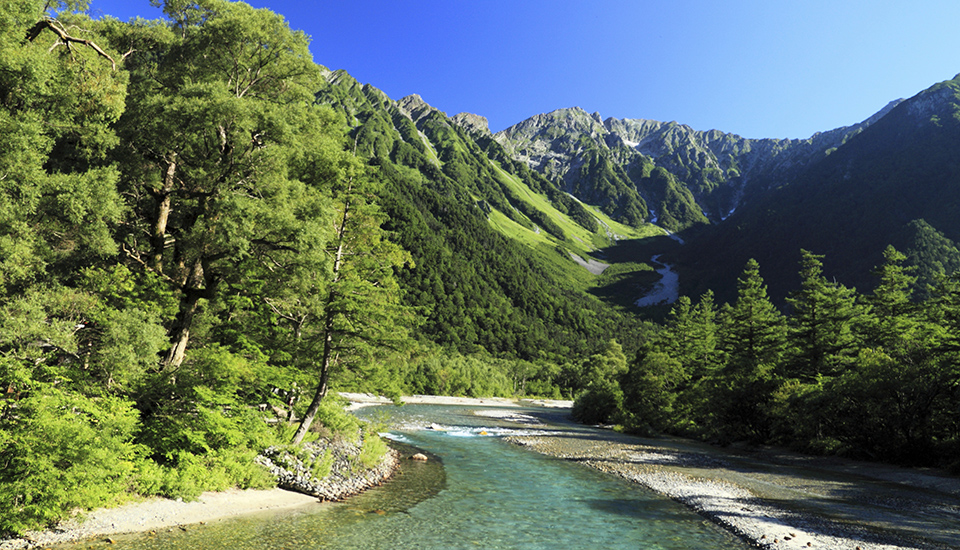
上高地(イメージ)
Kamikochi, in the western part of Matsumoto City, Nagano Prefecture, is an alpine scenic area about 1,500 m above sea level within Chubu Sangaku National Park. Designated a Special Place of Scenic Beauty and a Special Natural Monument, it takes in the Hotaka Range and the clear waters of the Azusa River. Well-maintained trails make walking easy, and the appeal is that you can enjoy mountains, rivers, forest and marshland on foot without climbing — which is why it draws crowds throughout the open season. It is also a well-known summer retreat: when we visited in late July, the lowlands were close to a heatwave at 34.5°C while Kamikochi was a comfortable 23.5°C.
Where is Kamikochi? How it sits in relation to Tokyo and Nagoya
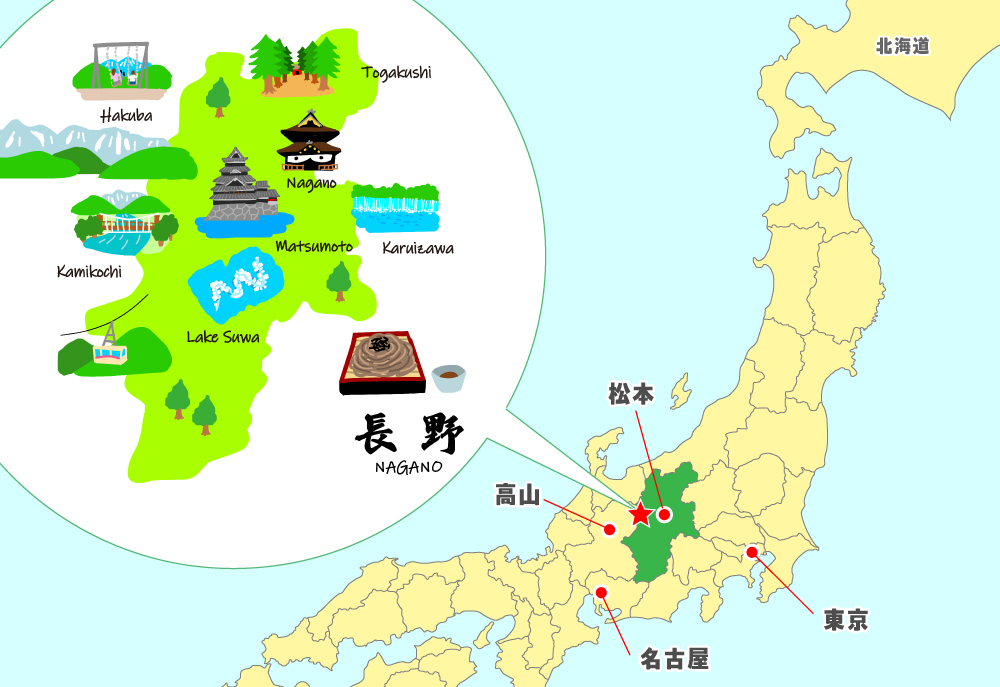
長野県マップ(イメージ)
Kamikochi lies in the western part of Matsumoto City, Nagano Prefecture. From Tokyo the route runs via Matsumoto and Shin-Shimashima; from Nagoya you can go via Matsumoto, or via Takayama and Hirayu Onsen.
Can you visit Kamikochi year-round? The open season and winter closure
Kamikochi is not open all year. Public transport and some facilities generally start operating in stages from April 17, and the main season runs from the opening festival on April 27 to the closing ceremony on November 15. From November 16 until around mid-April the area is closed: transport to Kamikochi does not run and most facilities shut. Check the official website for the current year's dates before you travel.
[Check Before You Go] Five things to know about Kamikochi, and the rules that apply
Kamikochi differs a little from a typical sightseeing destination in how you reach it and what to expect on site. We explain the details below, but if this is your first independent visit, start with these five points.
1. You cannot drive into Kamikochi in a rental car
Private vehicles, rental cars included, cannot enter directly. You need to transfer to a bus or taxi at Sawando or the Akandana Parking Lot.
2. Bus reservation rules differ by section
The Matsumoto–Shin-Shimashima–Kamikochi section gives priority to reservations. Other sections need no reservation at all.
3. Check your return bus in advance too
Where reservations take priority, book the departure you want ahead of time. Without a reservation you may have to wait in a long line, or miss the departure you wanted.
4. Bring a layer you can put on, even in summer
At about 1,500 m, Kamikochi stays cool in summer and can feel chilly in the morning and evening, or when the weather turns. Bring clothing that makes it easy to adjust.
5. Choose your walking route to match your time
How long you need depends on whether you stay around Kappa Bridge or hike out to Taisho Pond or Myojin. We recommend planning backward from your return connection.
(イメージ)
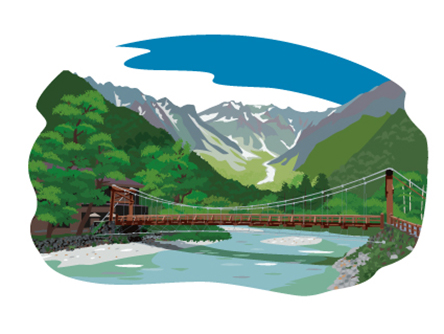
上高地の美しい自然を守る7つのルール
1.植物や昆虫などの生きものを採らない
2.野生動物にエサを与えない
3.ゴミはすべて持ち帰る
4.ペットや外来生物を持ち込まない
5.歩道を外れて歩かない
6.自転車を山岳地帯へ乗り入れない
7.ドローン(無人航空機)を飛ばさない
How to reach Kamikochi|Comparing routes from Tokyo, Nagoya and Gifu
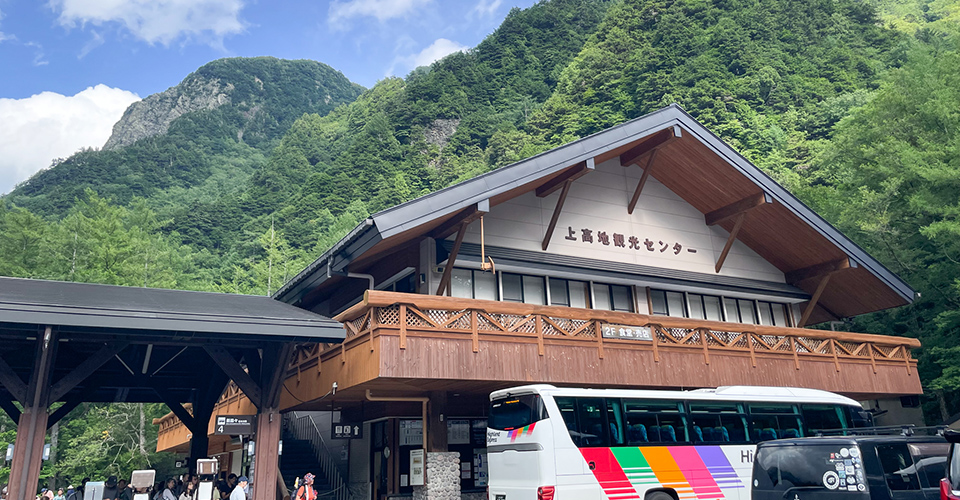
上高地バスターミナル(イメージ)
The one thing that needs preparation before you visit Kamikochi is how to get there.
Mr. Tada explains: "Private vehicles are restricted in Kamikochi, so you have to transfer at set locations. A lot of people get lost finding the right boarding or drop-off point, and because some routes take reservations in advance, you can wait at Taisho Pond on the way back only to find the bus already full. On a tour, the coach drives straight in, so you never have to think about access. That is a real convenience."
Below we set out the main routes from Tokyo, Nagoya and Takayama. Transfers and boarding lines can take longer than you expect, so plan with time to spare.
From Tokyo|Via Matsumoto and Shin-Shimashima
The standard route from Tokyo is
Shinjuku → Matsumoto → Shin-Shimashima → Kamikochi.
From Shinjuku Station take the JR Limited Express Azusa to Matsumoto Station, transfer to the Alpico Kotsu Kamikochi Line for Shin-Shimashima Station, then take the Alpico Kotsu local bus to Kamikochi Bus Terminal. As a guide, Shinjuku to Matsumoto takes about 2 hours 40 minutes, Matsumoto to Shin-Shimashima about 30 minutes, and Shin-Shimashima to Kamikochi about 1 hour.
For 2026 the Matsumoto–Shin-Shimashima–Kamikochi line gives priority to reservations. Without one you can still board in order of arrival if seats remain, but the line can be long, so if you have settled on a departure, booking ahead is the safer option. Mr. Tada also points out that the 7-Eleven near Shin-Shimashima Station is the last convenience store on the way to Kamikochi. Buy drinks and snacks, and withdraw any cash you need, before you pass it.
From Nagoya|Two routes, via Matsumoto or via Takayama
If you are heading from the Nagoya direction to Kamikochi, there are routes that go via Matsumoto and routes via Takayama and Hirayu Onsen. If you are going via Matsumoto, take the JR limited express 'Shinano' from Nagoya Station for about 2 hours to Matsumoto Station, then take the Alpico Kotsu Line Kamikochi to Shin-Shimashima Station. From Shin-Shimashima Station, transfer to a local bus and head to Kamikochi.
If you are coming via Takayama from Nagoya
Nagoya → Takayama → Hirayu Onsen → Kamikochi
That's the route.
Nagoya From the station, take the JR limited express 'Hida' to Takayama Station, then take the route bus operated by 'Nohi Bus' from Takayama Nohi Bus Center to Hirayu Onsen. At Hirayu Onsen, transfer to a shuttle bus bound for Kamikochi. The estimated travel time is: Nagoya ~Takayama about 2 hours 40 minutes, Takayama~Hirayu Onsen about 1 hour, and Hirayu Onsen~ Kamikochi about 25 minutes. The Takayama~Hirayu Onsen, Akandana Parking Lot & Hirayu Onsen~ Kamikochi bus is available without reservations in fiscal year 2026 and operates on a first-come, first-served basis.
Choose your route by including Takayama in your itinerary or passing through Matsumoto.
From Gifu|Via Takayama and Hirayu Onsen
If you have already visited Shirakawa-go or Hida Takayama and are staying near Takayama, a convenient route is the Nohi Bus from Takayama Nohi Bus Center to Hirayu Onsen, then a transfer to a bus bound for Kamikochi. Takayama Nohi Bus Center to Hirayu Onsen takes about 1 hour, and Hirayu Onsen to Kamikochi about 25 minutes. Neither requires a reservation for 2026.
By rental car|Private vehicles are restricted in Kamikochi
To protect the natural environment, private vehicles are restricted in Kamikochi year-round. Rental cars and motorcycles cannot be driven into Kamikochi either. Coming from Matsumoto, park in one of the lots at Sawando; coming from Takayama, park at the Akandana Parking Lot in Hirayu. From there, take a shuttle bus or taxi to Kamikochi. The buses need no reservation and run on a first-come, first-served basis. When it is busy, lines form for taxis as well as shuttle buses, so allow plenty of time.
The Sawando area has several parking lots with a combined capacity of about 2,000 vehicles, but in peak periods — Japan's May holidays, the Obon season, and autumn foliage weekends — they can fill up from early morning. If you are coming by rental car, factor road conditions, parking availability and bus lines into your plan.
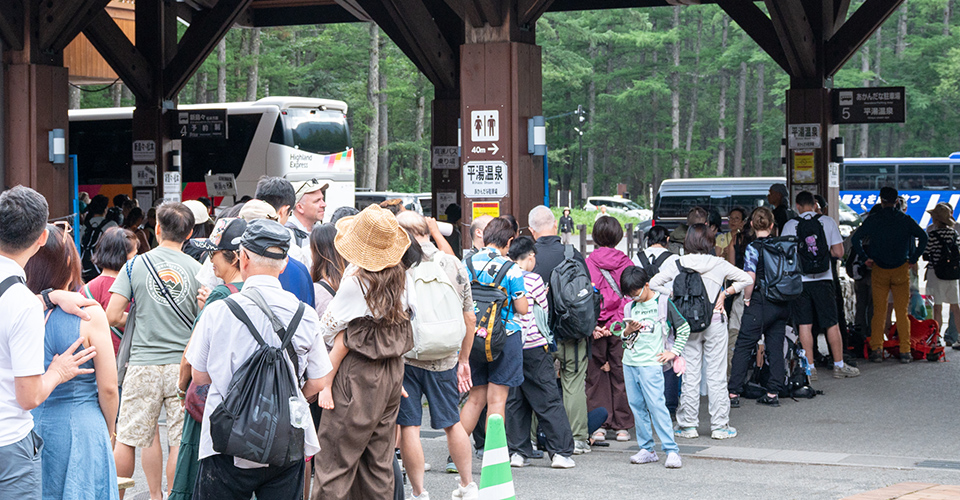
Check your reservation and boarding point for the return bus
バスのりば(イメージ)
You can board the return bus not only at Kamikochi Bus Terminal but also at the Imperial Hotel stop and Taisho Pond. However, on services that take no reservations, or if you travel without booking, many passengers board at Kamikochi Bus Terminal, the first stop, and you may not be able to get on at the Imperial Hotel or Taisho Pond. On our visit, an announcement on the outbound bus advised passengers to board at Kamikochi Bus Terminal near Kappa Bridge for the return trip. It gets particularly crowded in peak season, so allow plenty of time.
Rules for buses bound for Shin-Shimashima also changed on September 1, 2026. Stops between Kamikochi and Sawando Ohashi are now boarding-only, with no alighting. The only stops where you can get off are Azumi Shisho-mae and Shin-Shimashima Station. If you came by rental car from a parking lot near Sawando, note that you will not be able to get off if you take a Shin-Shimashima-bound bus on the way back.
● From Kamikochi to Shin-Shimashima (Kamikochi Bus Terminal, Platform 4)
Services to Shin-Shimashima give priority to reservations. Without one you will have to wait for a bus with seats available, so booking ahead is the safer option. For Matsumoto, you then change to a train at Shin-Shimashima Station.
● From Kamikochi to Sawando Ohashi (Kamikochi Bus Terminal, Platform 7)
Shuttle buses run without reservations. They are first-come, first-served, so we recommend boarding at Kamikochi Bus Terminal. Boarding at stops along the way is often not possible.
● From Kamikochi to Hirayu Onsen and the Akandana Parking Lot (Kamikochi Bus Terminal, Platform 5)
Buses toward Hirayu Onsen and the Akandana Parking Lot need no reservation. They run from Kamikochi Bus Terminal to the Akandana Parking Lot via Hirayu Onsen.
Recommended spots to visit in Kamikochi
上高地マップ(イメージ)
上高地マップ(イメージ)
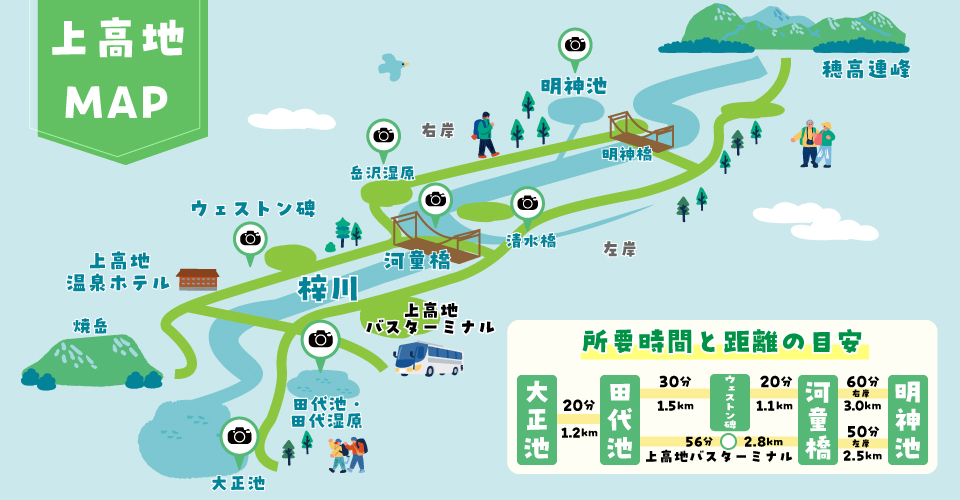
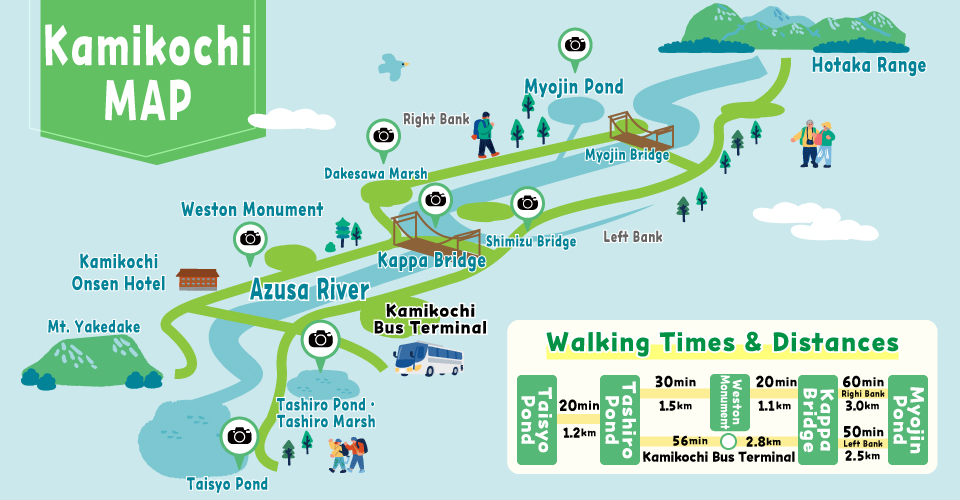
Kamikochi has a wide range of highlights, from the classics like Kappa Bridge and Taisho Pond to the marshland and Myojin Pond a little further on. Below we introduce spots we recommend for first-time visitors, along with places suggested on this visit by Mr. Tada of the Matsumoto City Alps Mountain Village association.
Kappa Bridge|The symbol of Kamikochi, with the Azusa River and the Hotaka Range
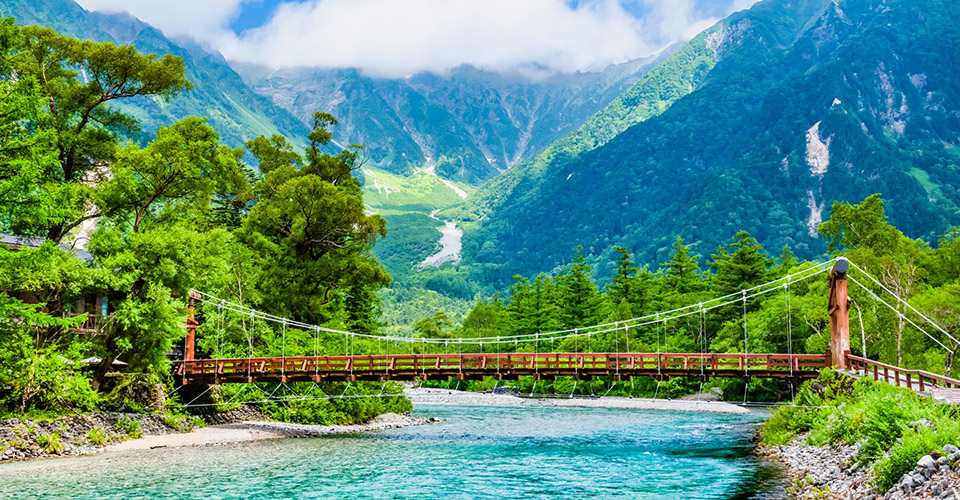
河童橋(イメージ)
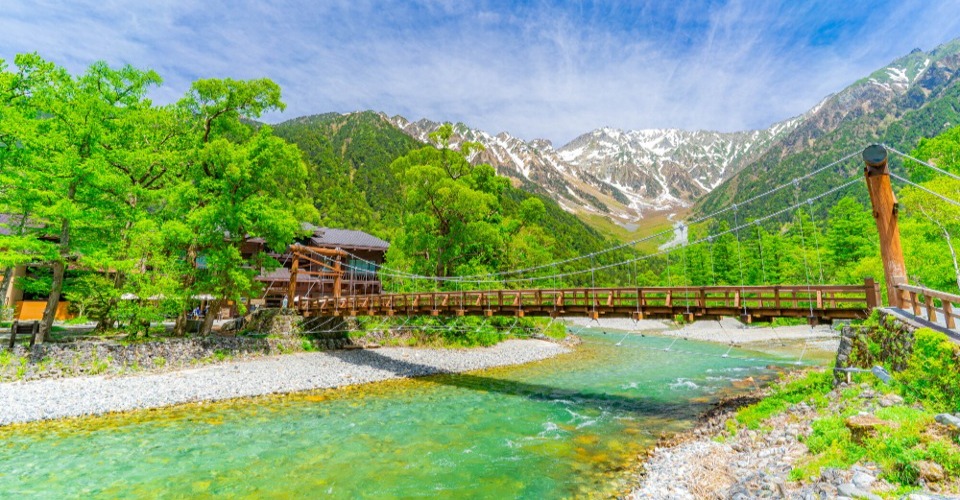
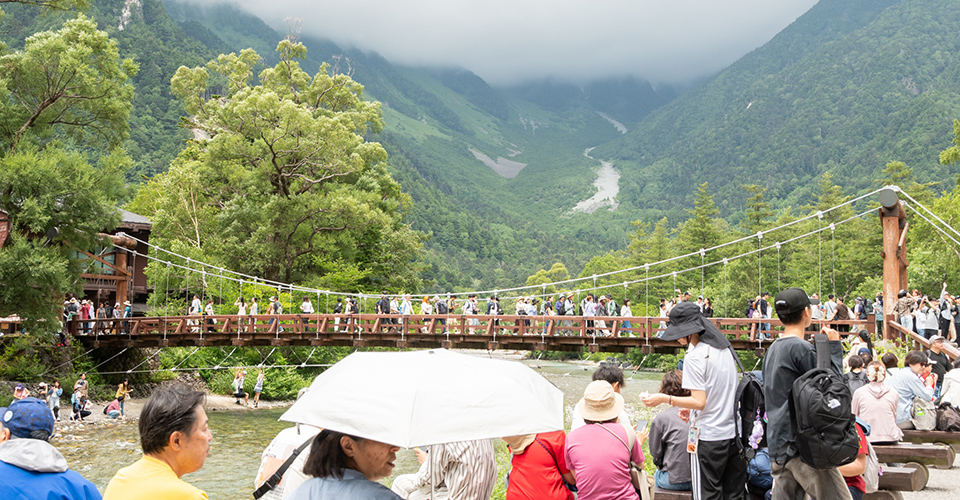
The scene that represents Kamikochi is Kappa Bridge. This wooden suspension bridge, about five minutes on foot from Kamikochi Bus Terminal, gives a sweeping view of the clear Azusa River, the Hotaka Range and Dakesawa. Turn around and you can see Mt. Yakedake as well — an excellent viewpoint, in an area where many souvenir shops and restaurants are gathered. Mr. Tada suggests visiting between about 8:00 and 10:00 a.m. In season the area around Kappa Bridge fills with visitors, so come early if you want to photograph the scenery at your own pace.
Taisho Pond|The classic Kamikochi view, with mountains mirrored in the water
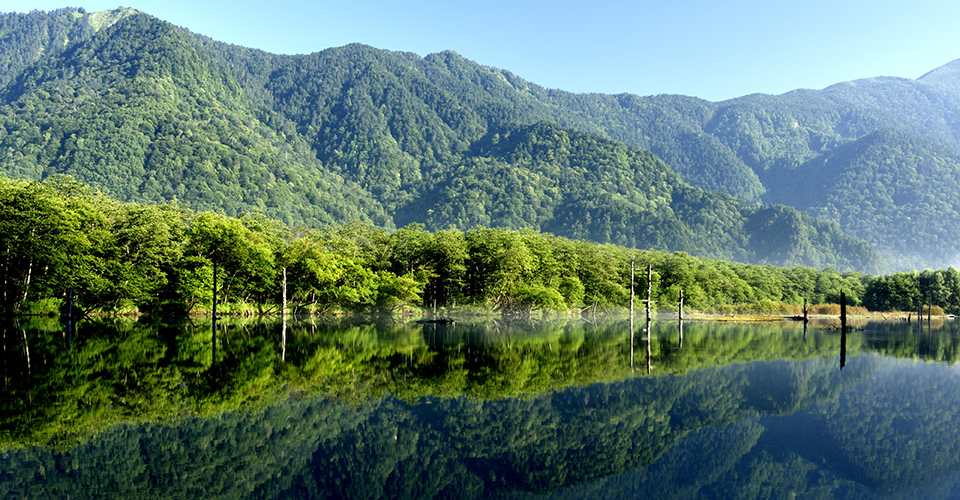
大正池(イメージ)
Taisho Pond was formed when lava and mudflow from the 1915 eruption of Mt. Yakedake dammed the Azusa River. On calm days you can see the Hotaka Range and Mt. Yakedake reflected beautifully on the surface. A walking route also runs from the Taisho Pond bus stop toward Kappa Bridge, which makes it a good starting point if you want to walk through the landscape Kamikochi is known for.
Tashiro Pond and Tashiro Marsh|Open views across marshland to the peaks
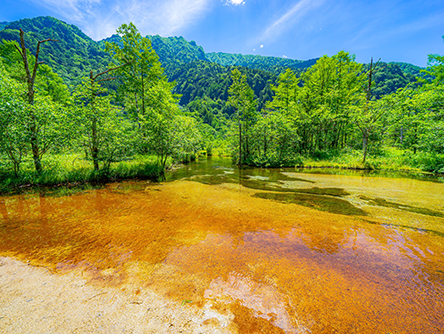
田代池(イメージ)
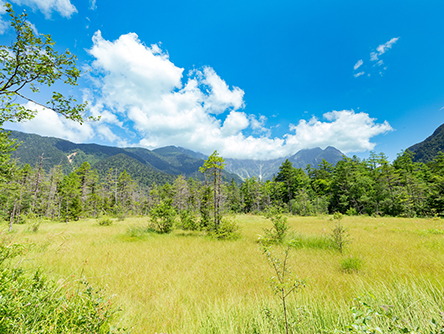
田代湿原(イメージ)
Tashiro Pond and Tashiro Marsh lie on the walk from Taisho Pond toward Kappa Bridge. Groundwater from Mt. Roppyakuzan and Mt. Kasumizawadake surfaces here as springs, and marshland opens out around it. Walking through the woods, the view suddenly widens into a broad landscape of marsh and mountains — the great appeal of this spot. It is about a 20-minute walk from Taisho Pond, so it is well worth including if you are walking between Taisho Pond and Kappa Bridge.
Dakesawa Marsh|Clear water and Mt. Roppyakuzan in primeval forest
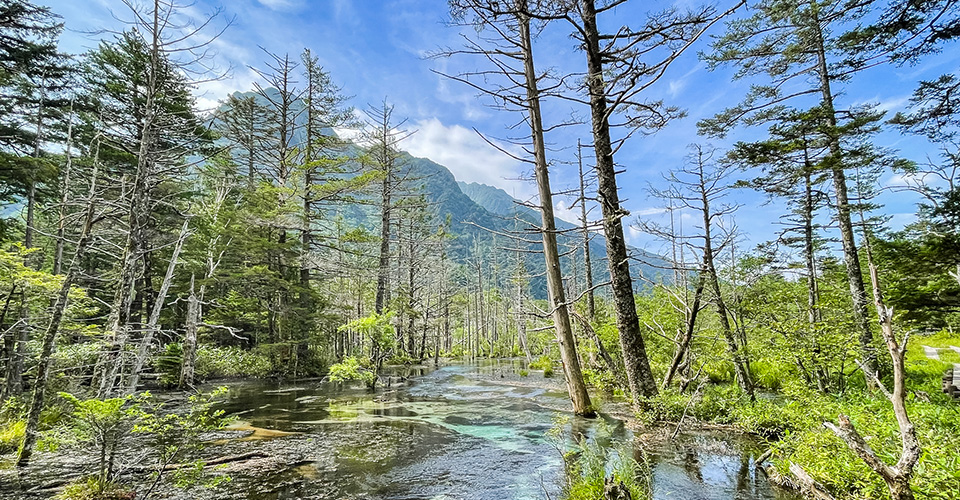
岳沢湿原(イメージ)
Walk 15 to 20 minutes along the right bank of the Azusa River from Kappa Bridge toward Myojin and you reach Dakesawa Marsh, ringed by primeval forest. Clear spring water spreads around the boardwalk, and standing dead trees and Mt. Roppyakuzan make for a quiet scene. Because it is relatively close to Kappa Bridge, it also suits visitors who do not have time to walk to Myojin but want to get a little deeper into the natural landscape.
Myojin Pond and Hotaka Shrine Okumiya
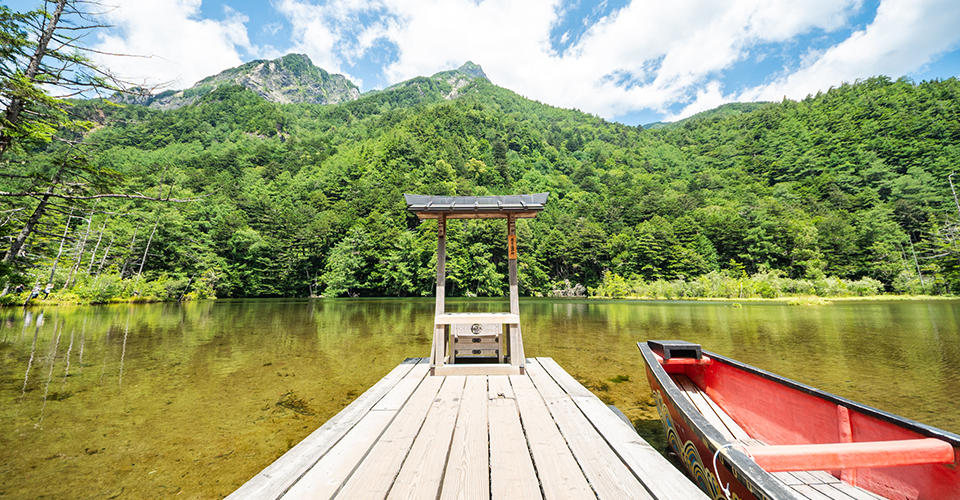
明神岳を望む明神池(イメージ)
About an hour's walk from Kappa Bridge, the Myojin area is home to Hotaka Shrine Okumiya and Myojin Pond. Set at the foot of Mt. Myojindake, Myojin Pond is a quiet pond fed by groundwater and springs. Surrounded by forest, it has a mysterious atmosphere quite unlike the area around Kappa Bridge. Each year on October 8 the Hotaka Shrine Okumiya grand festival, known as the Myojin Pond Boat Festival, is held, in which priests in Heian-period costume cross the pond by boat for the Ofune ritual.
*Myojin Pond stands within the grounds of Hotaka Shrine Okumiya, and a separate admission fee applies (500 yen, cash only)
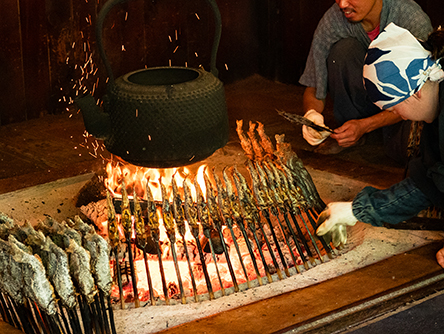
囲炉裏(イメージ)
嘉門次小屋で名物の岩魚を味わおう
明神池の近くにある「嘉門次小屋」は、多田さんおすすめのスポット。囲炉裏の薪火でじっくり焼き上げる岩魚の塩焼きが名物です。囲炉裏で岩魚を焼く様子も見学できますが、夏など暑い日は室内に入れず、外からの見学となる場合があります。
Spots recommended by the staff of a local tourism association
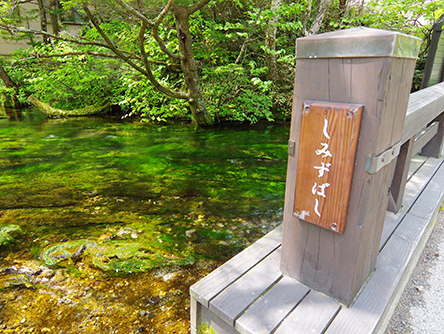
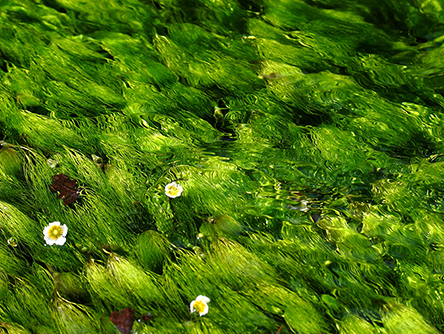
●小梨平付近の清水川
梓川の支流で、透き通った水と水中の水草が美しい場所。多田さんおすすめの撮影スポットです。水中の水草(梅花藻)に可憐な白い花が咲く様子を見られることも。
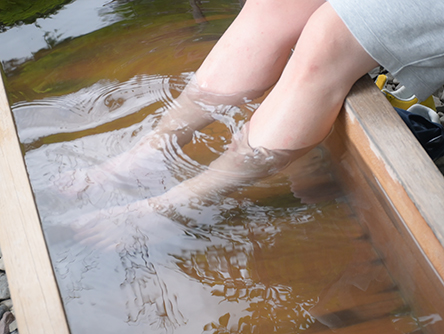
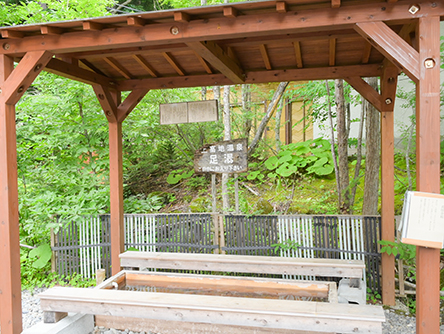
●上高地温泉ホテルの足湯
上高地には、天然温泉を楽しめるホテルが2施設だけあります。そのひとつ「上高地温泉ホテル」には無料の足湯があり、散策途中のひと休みに立ち寄りたいスポットです。
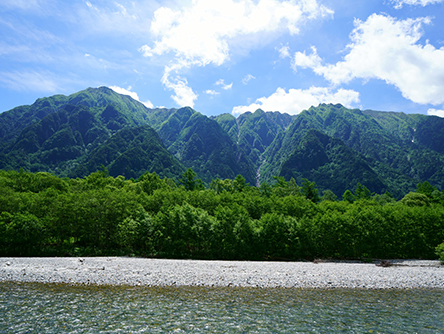
●霞沢岳・六百山の展望
上高地温泉ホテル前からは、梓川越しに眺める霞沢岳・六百山の景色も見逃せないポイント。穂高連峰とはまた違った山々の表情にも注目してみてください。
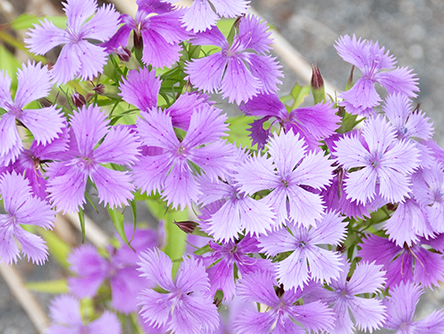
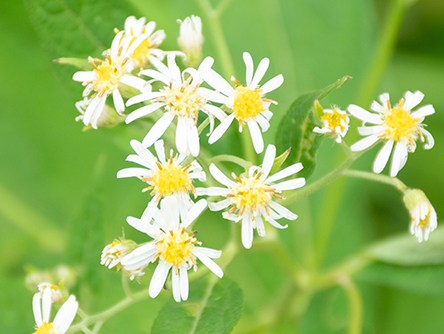
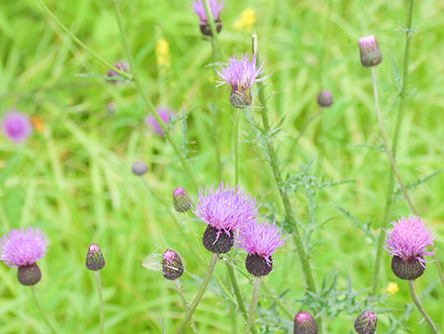
夏の上高地では花にも注目!
夏の上高地を歩いていると、各所でさまざまな花に出会えます。今回の取材でも、歩きながら夏の花をいくつも見ることができました。目的地だけを目指すのではなく、ときどき足元にも目を向けてみると、夏ならではの上高地の表情を楽しめます。
※植物や昆虫などの採取は禁止されています
How many hours do you need in Kamikochi?
Ideas by length of stay
How long you need in Kamikochi depends very much on how far you want to walk. On a first visit, check how long you can stay, then choose a route that will not push you.
For a 2–3 hour stay|The classic spots
If you have about two to three hours, we recommend staying around Kappa Bridge, or getting off the bus at Taisho Pond and walking toward Kappa Bridge via Tashiro Pond and Tashiro Marsh. Even in a short visit you can take in the Azusa River, the surrounding peaks, the ponds and the marshland — the scenery Kamikochi is known for.
For a 3–4 hour stay|Walking out to the Myojin area
If you can allow three to four hours, walk on from Kappa Bridge toward Myojin. It takes about an hour each way. Along the route you can take in Dakesawa Marsh, Myojin Pond and Hotaka Shrine Okumiya, and have a meal at Kamonji Hut. The key is to plan for more than walking time: allow for the visit to Myojin Pond, a meal and rest stops.
Two days, one night|Quiet mornings and evenings in Kamikochi
If you want to walk without watching the clock, staying overnight in Kamikochi is well worth considering. The great appeal is the quiet Kamikochi you get from the moment the day visitors leave until the following morning. Walking to Kappa Bridge at first light, or splitting your walking between the first and second day, gives you room to take in Taisho Pond, Kappa Bridge and the Myojin area at a relaxed pace. If you want to enjoy the time spent in Kamikochi itself, with meals, cafes and a foot bath along the way, staying over is a good choice.
Tips for enjoying Kamikochi while avoiding crowds
河童橋(イメージ)
Kamikochi is busy with visitors in summer. Saturdays, Sundays, public holidays and the Obon period (around August 13) are especially crowded, so allow more time than usual.
● Walk beyond Kappa Bridge
Crowds gather particularly between Taisho Pond and Kappa Bridge; heading from Kappa Bridge to Myojin Pond and on toward Tokusawa makes it easier to avoid them. If you have the time and energy, walking a little further is worth it.
● Start walking early
For photographs at Kappa Bridge, aim for the 8:00 to 10:00 a.m. window Mr. Tada recommends. If you stay overnight, you can walk before the day visitors arrive in numbers.
● Allow time for the journey back
The return bus can also be crowded. On a day trip especially, plan around the return bus, not just your walking time.
Practical information about Kamikochi for international visitors
If you are visiting Kamikochi independently, check in advance how you will handle cash, connectivity and larger luggage.
● Payment on site and ATMs
There are no banks or bank ATMs in Kamikochi. Many facilities accept credit cards, but some are cash only, so bring cash with you.
● Can you use a JR pass?
The JR EAST PASS for international visitors (35,000 yen for five days) can be used on the Limited Express Azusa between Shinjuku and Matsumoto. The round trip between Shinjuku and Matsumoto costs 13,460 yen, however, so buying the pass for Kamikochi alone works out expensive.
It is worth considering if your itinerary also covers Tohoku or Niigata, but for a return trip to Kamikochi alone, ordinary tickets are cheaper.
*Information as of August 2026. Please see the official website for detailed fares.
● Restrooms
Most public restrooms in Kamikochi run on a tip basis, so bring some coins. The money goes toward environmental conservation.
● Wi-Fi and mobile coverage
Mobile networks work at Kappa Bridge, Taisho Pond and Tashiro Pond, though reception is weak in places. Matsumoto City Free Wi-Fi is available at Kamikochi, Myojin, Tokusawa and Yokoo.
● Large luggage
Kamikochi Bus Terminal has a paid luggage storage counter. If you have a suitcase or similar, leave it there and walk unencumbered.
● Meals, cafes and souvenirs
Kamikochi has hotels, mountain huts, restaurants, cafes and shops, so you can eat or take a break as you walk. The visitor center at Kamikochi Bus Terminal also has a restaurant and shop, useful on arrival or while waiting for the return bus.
What to wear in Kamikochi: clothing and what to bring
At about 1,500 m, Kamikochi can feel chilly even in summer, depending on the weather and the time of day. The figures show an average high of 23.0°C and an average low of 13.7°C in July (calculated from 2022 data published by the Kamikochi Visitor Center). Do not assume it will feel like summer on the plains: bring clothing that can handle changes in temperature.
What to wear and what to bring in Kamikochi
There are summer days when a T-shirt is enough during the daytime, but mountain weather changes quickly, so it is reassuring to have something easy to put on, such as a long-sleeved shirt or a windbreaker, even in summer. Much of the walking route is laid with boardwalk, and sneakers you are used to will do. Some sections are unpaved, however, with boardwalk or gravel, so for longer walks or wet weather, hiking or trekking shoes with good grip are recommended.
It is also worth bringing a hat, sunglasses, rain gear, drinking water, a power bank, and cash including coins.
Nearby areas worth combining with Kamikochi
If you are making the trip to Kamikochi independently, it is also worth building an itinerary that combines it with nearby destinations.
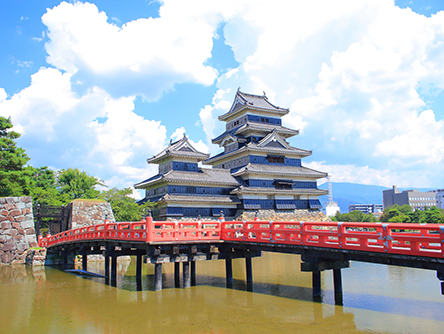
松本城(イメージ)
●松本市街
国宝・松本城を中心とした城下町の面影や北アルプスの山並みが広がる、上高地へ向かう長野県側の玄関口。蔵造りの建物が並ぶ中町通りなどの街歩きに加え、北アルプスの伏流水を生かした日本酒や信州ワイン、クラフトビールなど、地元のお酒を楽しめるのも魅力です。
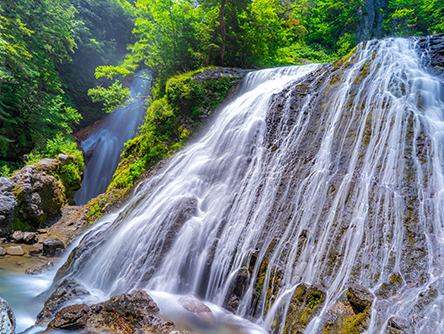
三本滝(イメージ)
●乗鞍高原
乗鞍岳の麓、標高約1,500mに広がる自然豊かな高原。夏は涼しい気候の中で、三本滝や善五郎の滝などの滝巡りや高原散策、サイクリングを楽しめます。上高地とはまた違った、のびやかな高原の景色やアウトドアを楽しみたい方におすすめです。
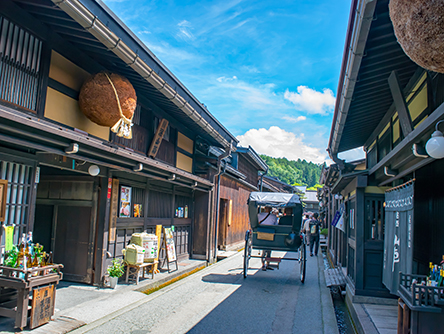
飛騨高山(イメージ)
●飛騨高山・平湯温泉
飛騨高山では、江戸時代の面影を残す「古い町並み」や高山陣屋、地元の食材や民芸品が並ぶ朝市などを楽しめます。飛騨牛などのご当地グルメも魅力です。平湯温泉は奥飛騨温泉郷の中でも歴史ある温泉地で、温泉街のほか「日本の滝百選」に選ばれた平湯大滝などの自然も楽しめます。
Which is better, independent travel or a tour?
You can reach Kamikochi independently by train and local bus, but if you are unsure about the transport or the bookings, a travel agency tour is another way to go.
Who independent travel suits best
The appeal of traveling independently is being able to build the whole trip around your own preferences. You can decide freely how long to stay in Kamikochi and which route to walk, and it is easy to build an itinerary that combines it with nearby destinations such as Matsumoto or Hida Takayama. On the other hand, you need to check train and bus times, booking methods and your return connection yourself.
Who a tour suits best
If you would rather keep booking and transfers as simple as possible, a tour is one option. Private vehicles are restricted in Kamikochi, but a chartered tour coach can drive in directly under those restrictions. On a tour that takes you straight in by coach, you avoid the effort of changing to local buses along the way. You can also leave larger bags on the coach and walk unencumbered. There are tours that combine the area with nearby sightseeing too, such as a two-day, one-night itinerary staying at Gero Onsen, one of Japan's three great hot springs, and taking in both Shirakawa-go and Kamikochi.
Frequently asked questions about visiting Kamikochi
Q. How many hours do you need to see Kamikochi?
The area around Kappa Bridge can be enjoyed in a short visit, but if you want to walk out properly to Taisho Pond or Myojin, three to four hours is more comfortable. Decide your stay from where you want to walk and the time your return connection leaves.
Q. Can you walk there on a rainy day?
Yes, but boardwalks and unpaved paths become harder to walk on when wet. On rainy days, waterproof shoes with good grip are recommended. Bring rainwear if you plan to walk for a long stretch.
Q. Are there bears?
Kamikochi is habitat for the Asiatic black bear. Remember that this is where wild animals live, and check local sighting and safety information before setting out. Kamikochi Bus Terminal has notices in several languages about bear behavior and precautions.
Q. Can I leave large luggage such as a suitcase?
Kamikochi Bus Terminal has a paid luggage storage counter. At peak times its shelves can fill up, so leaving bags at your lodging, or on the coach if you are on a travel agency tour, is another option.
Q. Do I need mountaineering gear?
For the usual walking areas — Kappa Bridge, Taisho Pond, Myojin — proper mountaineering gear is not necessary. Do bring comfortable shoes, rain gear and clothing that can handle changes in temperature. Climbing to Yarigatake or Hotakadake is a different matter and calls for full equipment and planning.
Summary|Make the most of your first visit to Kamikochi
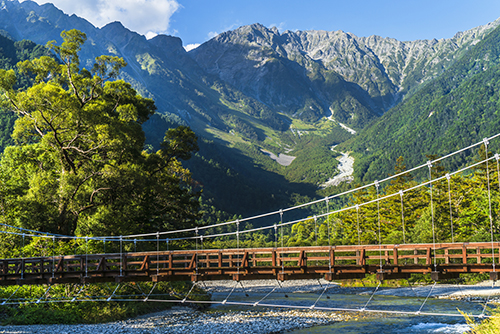
上高地(イメージ)
Majestic peaks, the clear Azusa River, ponds and marshland, and flowers in summer — the further you walk in Kamikochi, the more of its natural variety you meet. It is reachable not only from Tokyo and Nagoya but also from Hida Takayama and Hirayu Onsen, which makes it easy to fit into a wider itinerary in Japan. Whether you travel independently or take a tour, choose what suits your schedule and preferences, and enjoy the scenery Kamikochi offers only in summer.
多田 空太さん(イメージ)
【今回、上高地を案内してくれた人】
多田 空太さん
一般社団法人松本市アルプス山岳郷 所属
上高地をはじめ松本市西部エリアのコンテンツ造成と、地域のランドオペレーション体制の構築を担当。国内外の旅行者を現地で受け入れる立場から、上高地の交通事情や季節ごとの見どころに詳しい。
上高地のおすすめスポットは、明神池近くにある「嘉門次小屋」の囲炉裏で焼き上げる岩魚の塩焼き。
「上高地に来ると、日本の自然の美しさを一番感じてもらえると思います。空気が本当にきれいで、歩いているだけで気持ちがリセットされます。」
*This article was produced on Jul. 30–31, 2026, under the guidance of Mr. Tada.
Club Tourism official LINE, WhatsApp, Facebook, Instagram
Follow us to get tips for traveling in Japan




-
The content is current as of the time of publication. Please check the official website for the latest information.
 Related articles
[Summer Kamikochi] Day Trip Complete Guide | Access & Recommended Walking Routes On-site Coverage
Located at an altitude of about 1500m, Kamikochi offers a landscape where majestic mountains and the pure Azusa River weave together are well-known for their natural beauty.
Nagano Cherry Blossom Guide | Ueda Castle & Garyu Park│ Club Tourism
Nagano Prefecture is a naturally rich area surrounded by Japan's three major mountain ranges, and is home to many of Japan's most famous cherry blossom viewing spots.
From sweets to miscellaneous goods! 15 souvenirs from Nagano
Nagano is famous for tourist spots such as Karuizawa, and it is famous for producing beautiful produce such as buckwheat noodles, wasabi, apples, and Nozawana (greens), taking advantage of the clean water.
30 Famous Peaks of the Japanese Alps ~ spectacular views ・Mountain trip to alpine plants and mountain hut gourmet ~
The Japanese Alps include the Hida Mountains (Northern Alps), which mainly span Toyama, Gifu, and Nagano prefectures and also extend into Niigata prefecture, and the Kiso Mountains in Nagano prefecture (...
Search by area
Domestic
Search by keyword
- Solo Travel
- Girls' trip
- family trip
- Couple's trip
- Goshuin (temple stamp)
- history
- Shrines and temples
- Pilgrimage
- art
- music
- famous castle
- Spectacular views
- world heritage
- Entertainment
- Gourmet
- hot spring
- island trip
- Cycling and skiing
- Festival
- History and Roads
- souvenir
- museum
- power spot
- Night view
- Railway
- Mountain climbing and hiking