Complete Guide to the Katakai Festival (Katakai Fireworks) | See the World's Largest Firework, the Sho-Yonshakudama! A First-Hand Tour Report
Updated: September 29, 2026
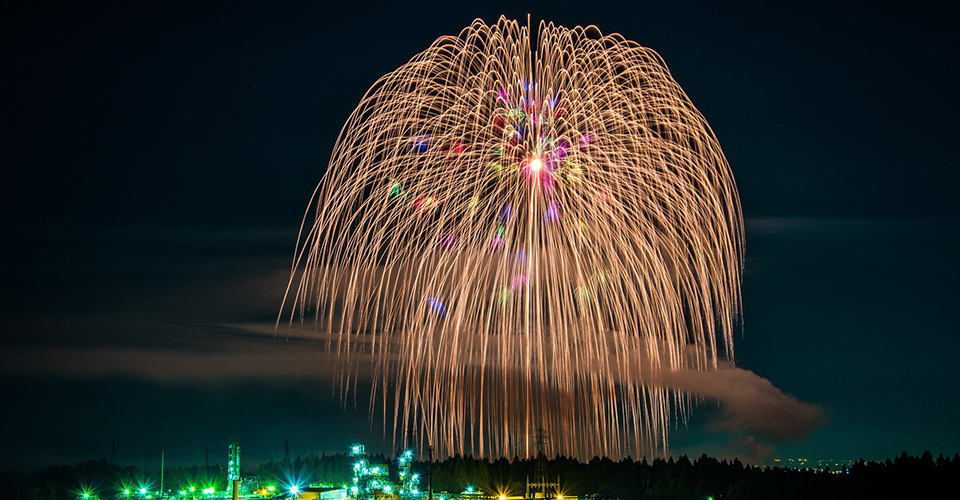
片貝まつり・世界最大の花火「正四尺玉」(イメージ)
日本の夏の風物詩といえば「花火大会」。日本でも有数の花火の産地である新潟県では、毎年さまざまな花火大会が開催されていますが、中でも「片貝まつり(片貝煙火大會)」は、新潟県の花火文化発祥の地ともいえる歴史ある花火大会です。世界一の巨大花火「正四尺玉」の打ち上げをはじめ、ほかとはひと味違う特別な魅力があります。
そんな片貝まつりを見に行くなら、個人手配ではなく断然ツアー参加がおすすめ。移動手段やホテルに加え、食事や花火を観賞する場所の確保も欠かせません。そのため移動+ホテル+食事+観覧席がセットになったツアーを利用するのが、最もスムーズで賢い選択なのです。
この記事では「片貝まつり(片貝煙火大會)」を徹底解説するとともに、実際に東京からツアーに参加し、片貝まつりを楽しんでみた体験談をお届けします!
*This article was created for travelers planning to visit Japan, but readers in Japan may also find it useful.
-
What Is the Katakai Festival Asahara Shrine Autumn Grand Festival Dedication Fireworks?
-
Fully Following the Tour! A Real Experience Report
-
Before Going to the Katakai Festival | Examining 4 Hurdles
-
Comparing the Three Great Fireworks Festivals of Echigo (Nagaoka, Kashiwazaki, Katakai)
-
Katakai Festival | Practical Information to Help You Avoid Trouble on Site
-
Frequently Asked Questions (FAQ)
-
Summary
What is the Katakai Festival
Asahara Shrine Autumn Grand Festival Dedication Fireworks?
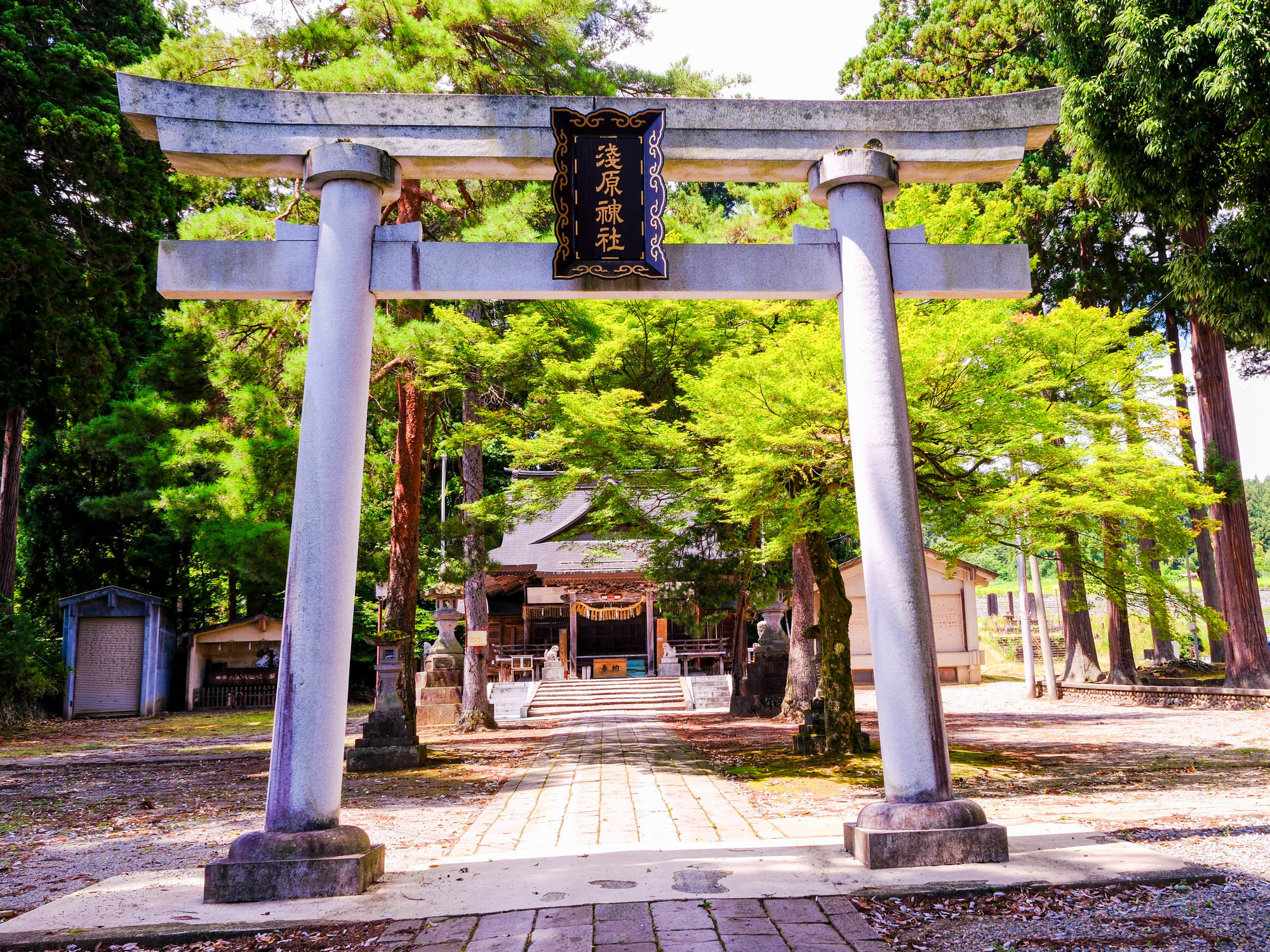
古くから地元の人々の信仰をあつめる浅原神社(イメージ)
Japan's Fireworks Culture | Dedication Fireworks Launched with Wishes
The official name of the Katakai Festival is the "Katakai Festival Asahara Shrine Autumn Grand Festival Dedication Fireworks," a traditional event with about 400 years of history in which fireworks are dedicated to the deity enshrined at Asahara Shrine.
Unlike ordinary fireworks displays, Katakai's fireworks are "dedication fireworks" offered to Asahara Shrine. They are launched with donations and funding from individuals, companies and volunteer groups across Japan.
So before each firework is launched, the dedicator's name and a warm message, such as "celebrating a child's birth," "celebrating a wedding," "celebrating coming of age," "in memory of a loved one" or sometimes "thanks to my favorite idol," is announced, making it a rare fireworks festival even in Japan. In the sense of releasing your feelings into the night sky, it may be a little like releasing sky lanterns in Taiwan.
There are no fireworks set to music or wide Starmine displays. Rather than enjoying the artistry and dynamism of fireworks, the Katakai Festival lets you experience a fireworks culture rooted in the community while feeling the thoughts people have put into each individual shell.
What Are Japan's Largest Sho-Sanshakudama and the World's Largest Sho-Yonshakudama?
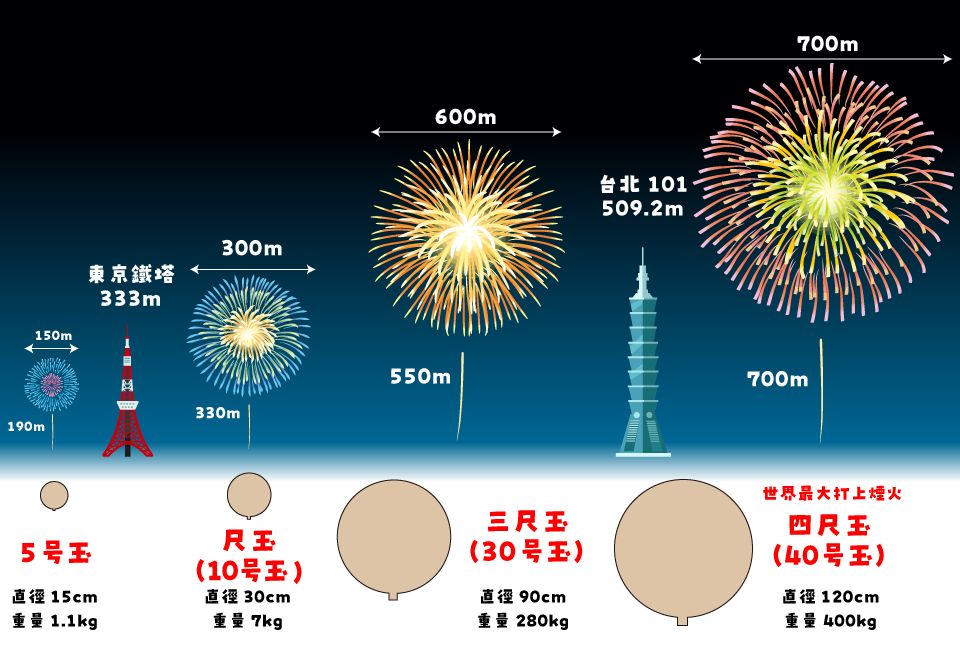
花火の大きさ比較(イメージ)
A shaku is a unit of length long used in Japan, and "shakudama" describes the size of a firework shell. "Sho-Yonshakudama" means a firework that is truly four shaku (about 120 cm) in size. Katakai was the first place in Japan to launch the Sho-Sanshakudama and the Sho-Yonshakudama, making it truly the root of fireworks culture.
Fully Following the Tour! A Real Experience Report
Tour Name & Itinerary
[Tour Name]
"One of Echigo's Three Great Fireworks! Featuring the Powerful Sho-Yonshakudama:
Watch the Katakai Festival Dedication Fireworks from Sajiki Seats, 2 Days"
[Itinerary]
Day 1
• Meet at Tokyo Station and take the shinkansen to Echigo-Yuzawa Station
• Dinner of a Japanese set meal with Uonuma Koshihikari rice and local dishes in Minamiuonuma
• Watch the Katakai Festival Asahara Shrine Autumn Grand Festival Dedication Fireworks
• Stay at a hotel in front of Tsubame-Sanjo Station
Day 2
• Visit Yahiko Shrine, the Ichinomiya (head shrine) of Echigo
• Shopping and free lunch on Teradomari's market street
• Shopping and tasting at the sake brewery Asahi-Shuzo
• Return to Tokyo Station by shinkansen from Echigo-Yuzawa Station
[Benefits of Joining a Tour]
• Includes viewing seats for the Katakai Festival, which are hard to arrange on your own
• Travel by chartered sightseeing bus, so no need to carry luggage or make transfers
• Guaranteed hotel booking for festival night, when hotels are fully booked and hard to reserve, with a dedicated bus to the hotel
• Dinner included, so no need to worry about eating before the fireworks
• Sightseeing in Niigata Prefecture the day after the festival
[Recommended For]
• Those who want to enjoy an authentic Niigata fireworks festival
• Those interested in Japanese tradition and culture
• Those who want to enjoy sightseeing and fine food all at once
• Those who want to enjoy fireworks and sightseeing with peace of mind, without the hassle of transportation and reservations
From Tokyo to Katakai | How does the tour get there?
How long does it take?
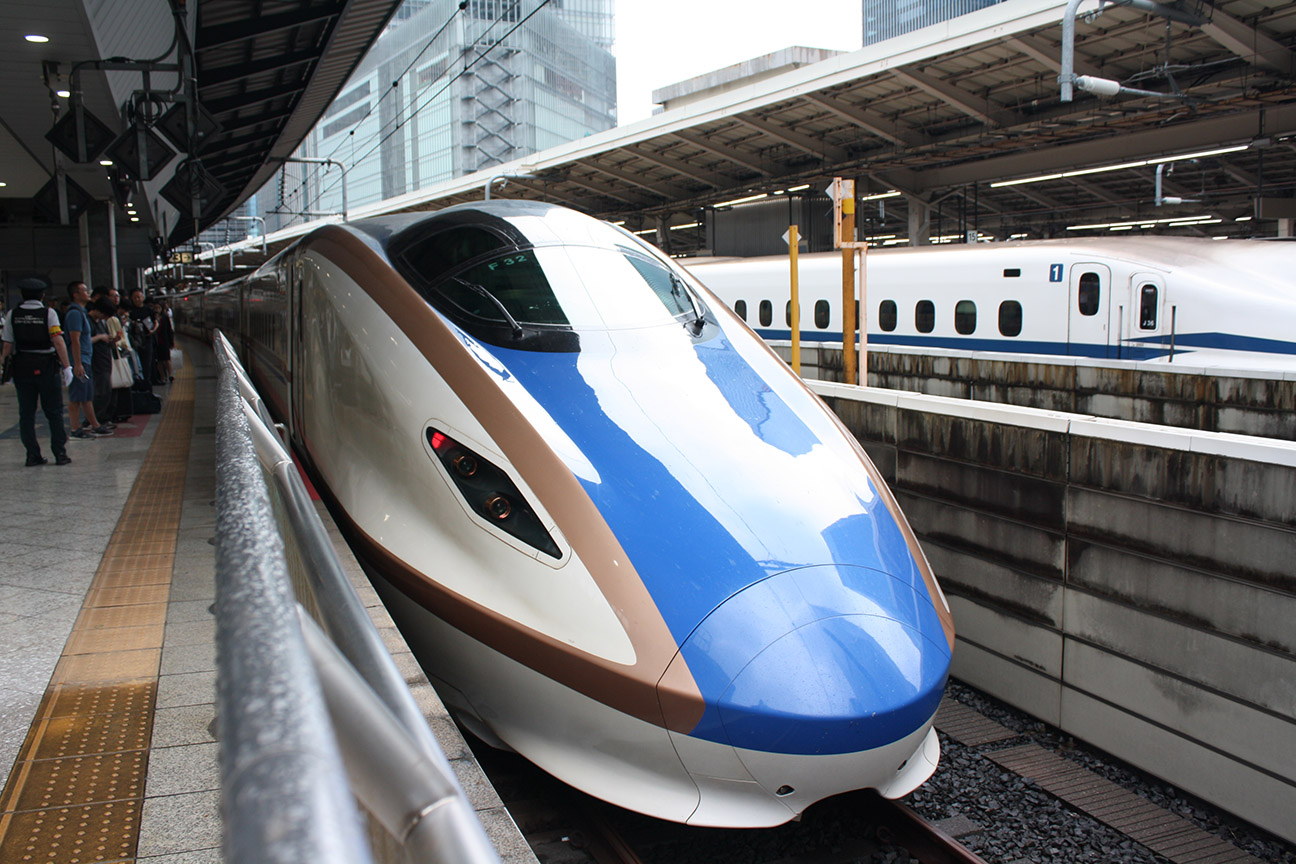
新幹線とき号(イメージ)
Tour departure date: September 11, 2026
[13:10]
Meet at the Nihonbashi Exit of Tokyo Station. Tour conductors for each course line up along the wall, holding placards with the course number and name and Club Tourism flags. Find your course, tell the conductor your name and complete check-in.
Once all participants have gathered, everyone follows the conductor through the conventional-line and shinkansen ticket gates to the shinkansen platform. There are shops on the platform selling drinks, bento boxes and snacks, so if you have time, you can buy whatever you like.
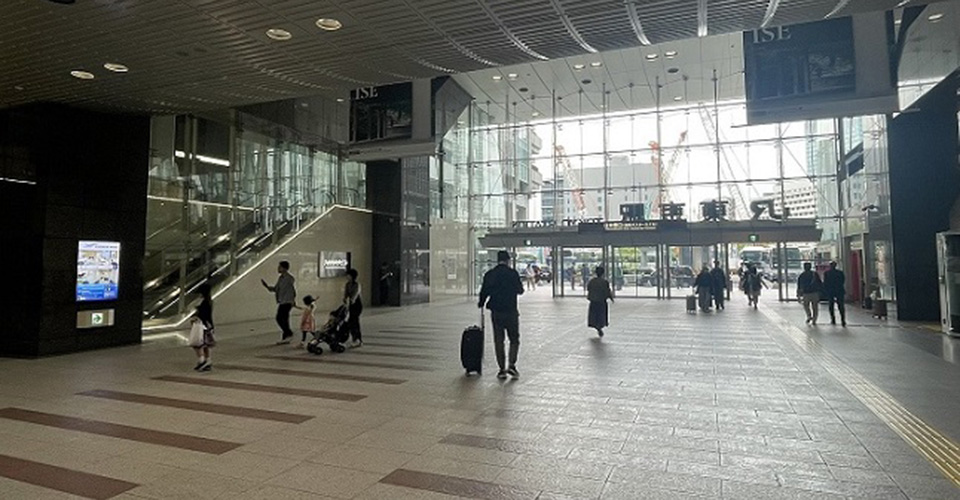
東京駅・日本橋口(イメージ)
[13:40]
We boarded the Joetsu Shinkansen Toki No. 323 from Tokyo Station. There was even an announcement on board that all reserved seats were full, showing how popular the fireworks festival is.
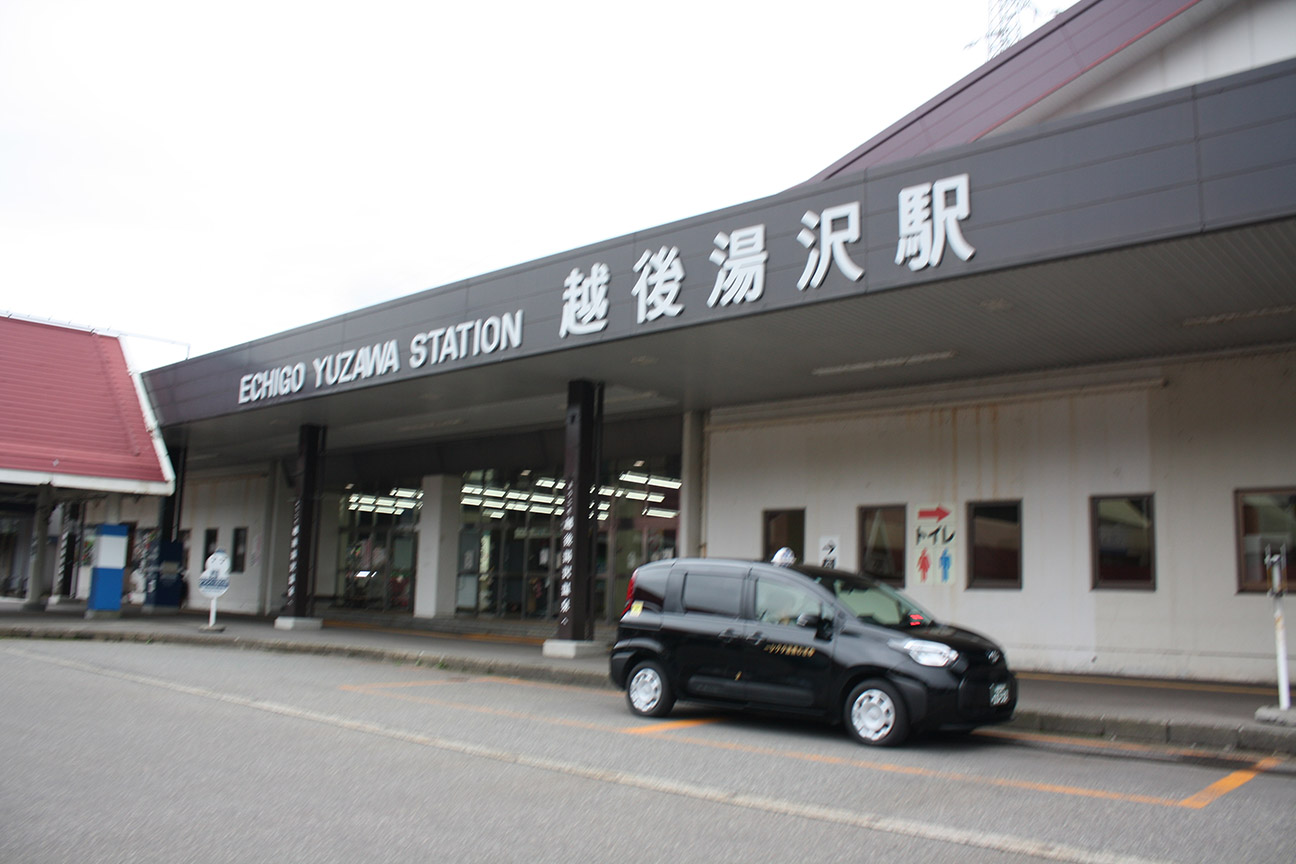
越後湯沢駅(イメージ)
[14:56]
We arrived at Echigo-Yuzawa Station in about an hour. We boarded our chartered bus from the station's rotary and set off!
There were 40 participants in this tour, and many of them were traveling alone.
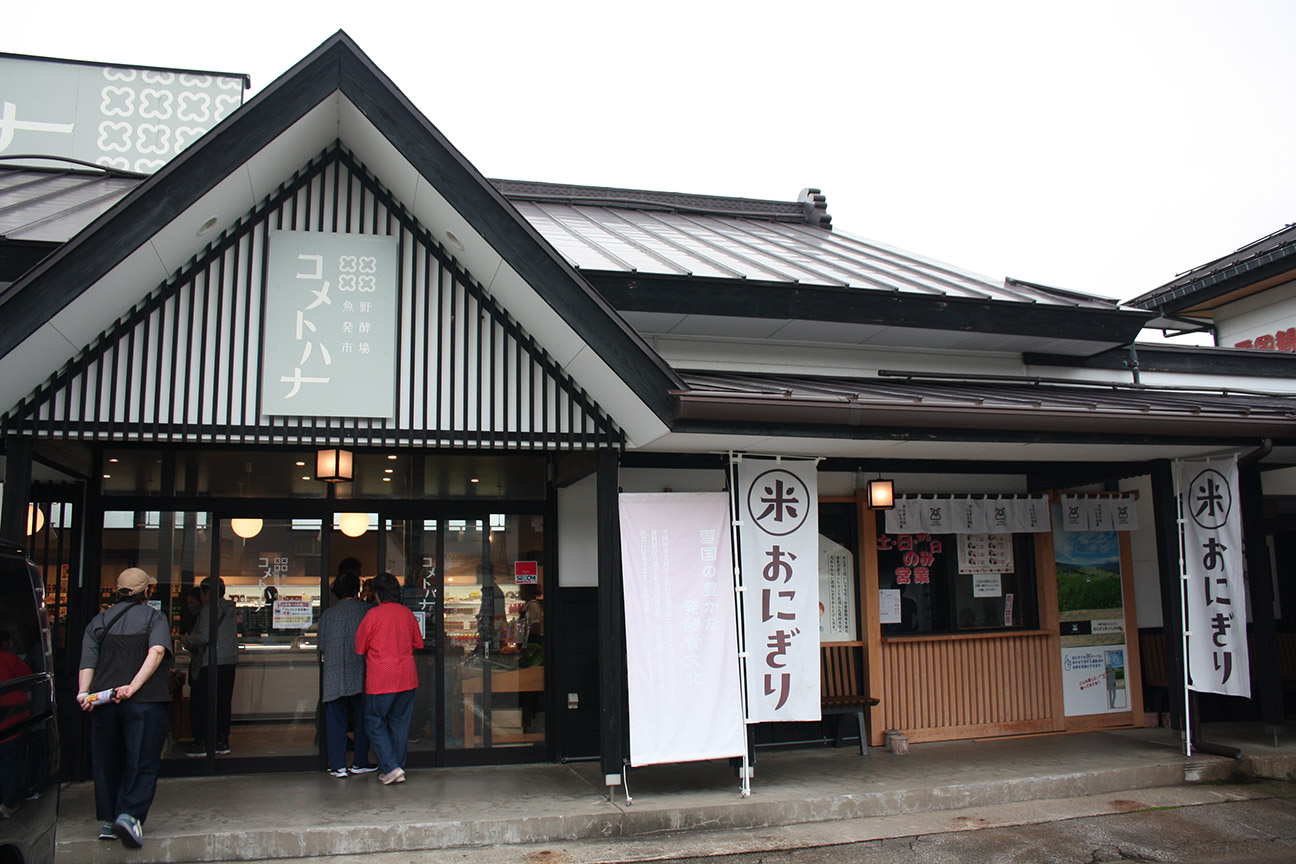
売店や食事処がある南魚沼「魚野の里」(イメージ)
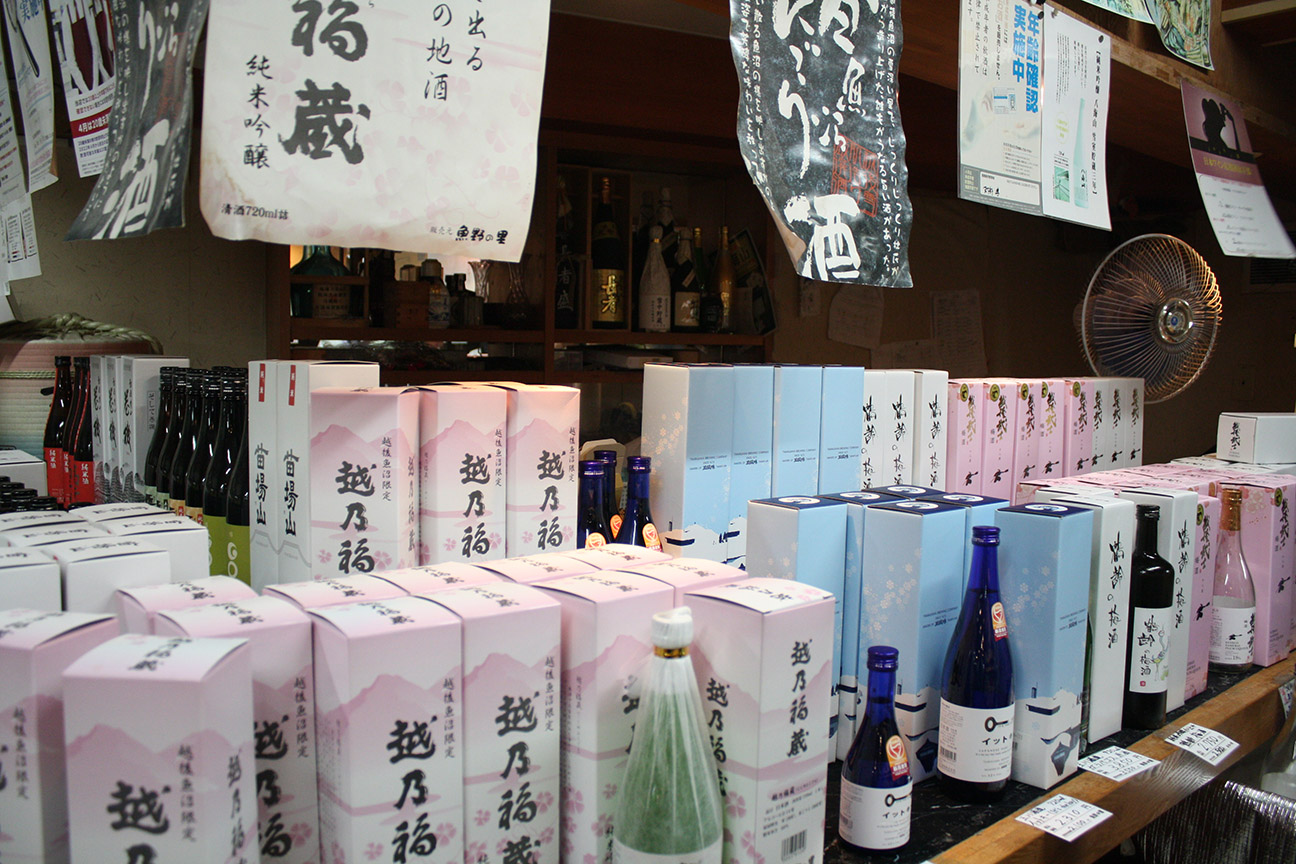
売店では日本酒などの新潟名物が販売されています(イメージ)
[15:24-16:50]
On the way, we stopped at a restaurant called "Uono no Sato" in Minamiuonuma for an early dinner. We enjoyed a meal featuring rice from Minamiuonuma and autumn delicacies such as maitake and shiitake mushrooms.
The shop next to the restaurant sells many Niigata specialties that make perfect souvenirs, such as sake and new rice that just started appearing in September.
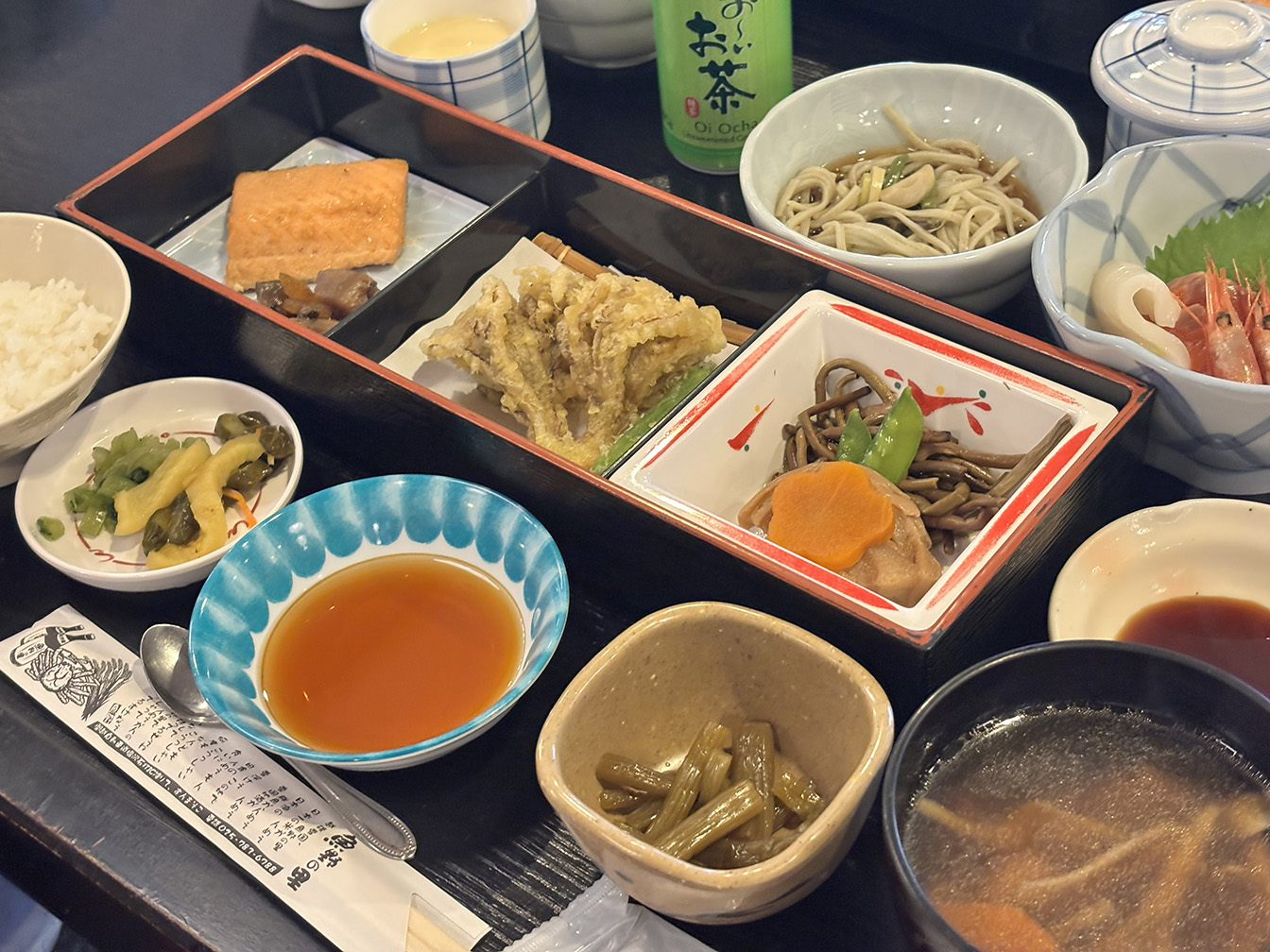
秋の味覚が詰まったボリューム満点の夕食(イメージ)
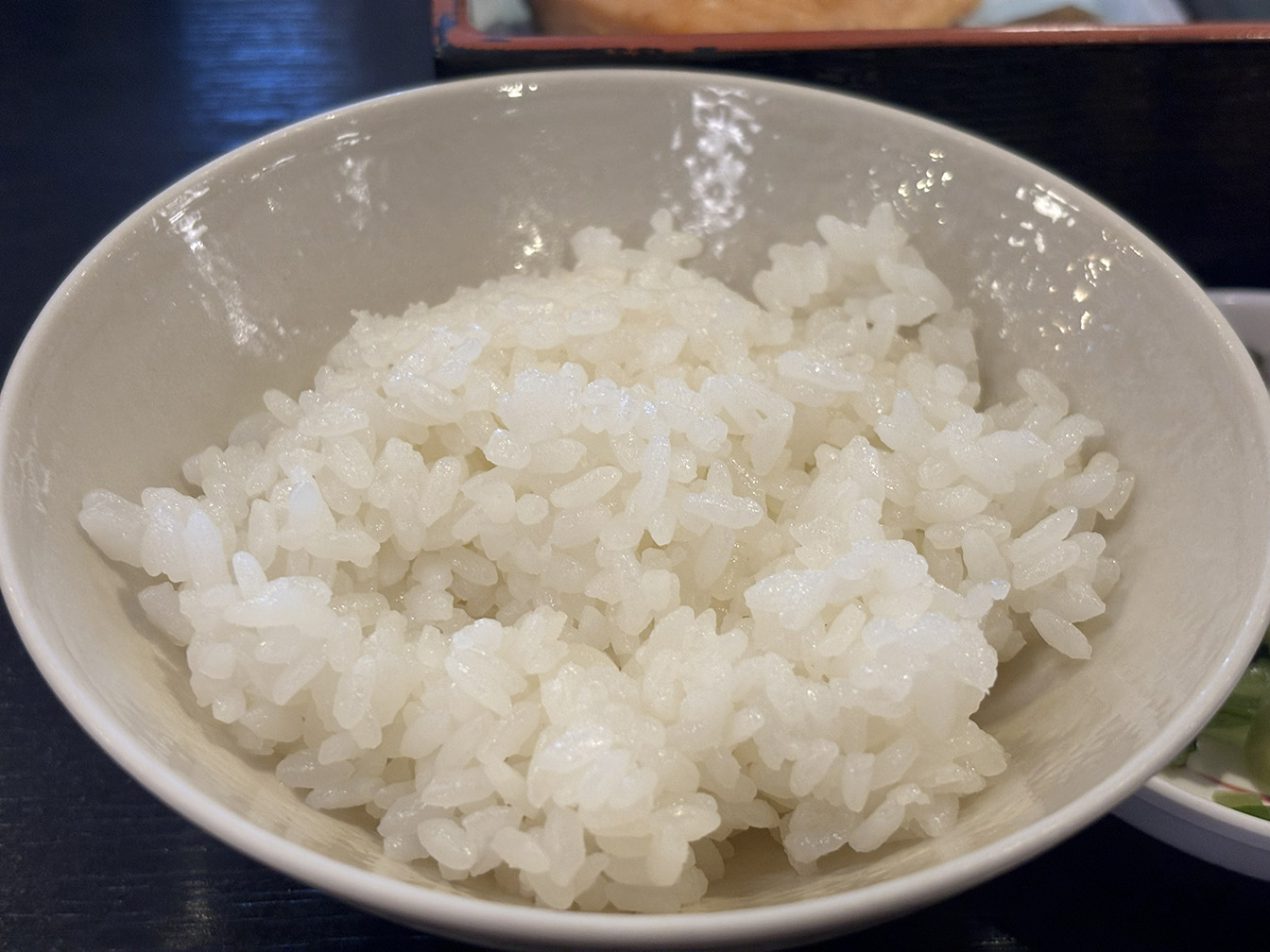
南魚沼産のお米「こしひかり」の炊き立てご飯も(イメージ)
[17:50]
We finally arrived at the parking lot near the fireworks venue! You can leave large bags on the bus, so you can enjoy the fireworks unencumbered. We received our viewing seat tickets from the tour conductor and set off for the seats, following the conductor's flag.
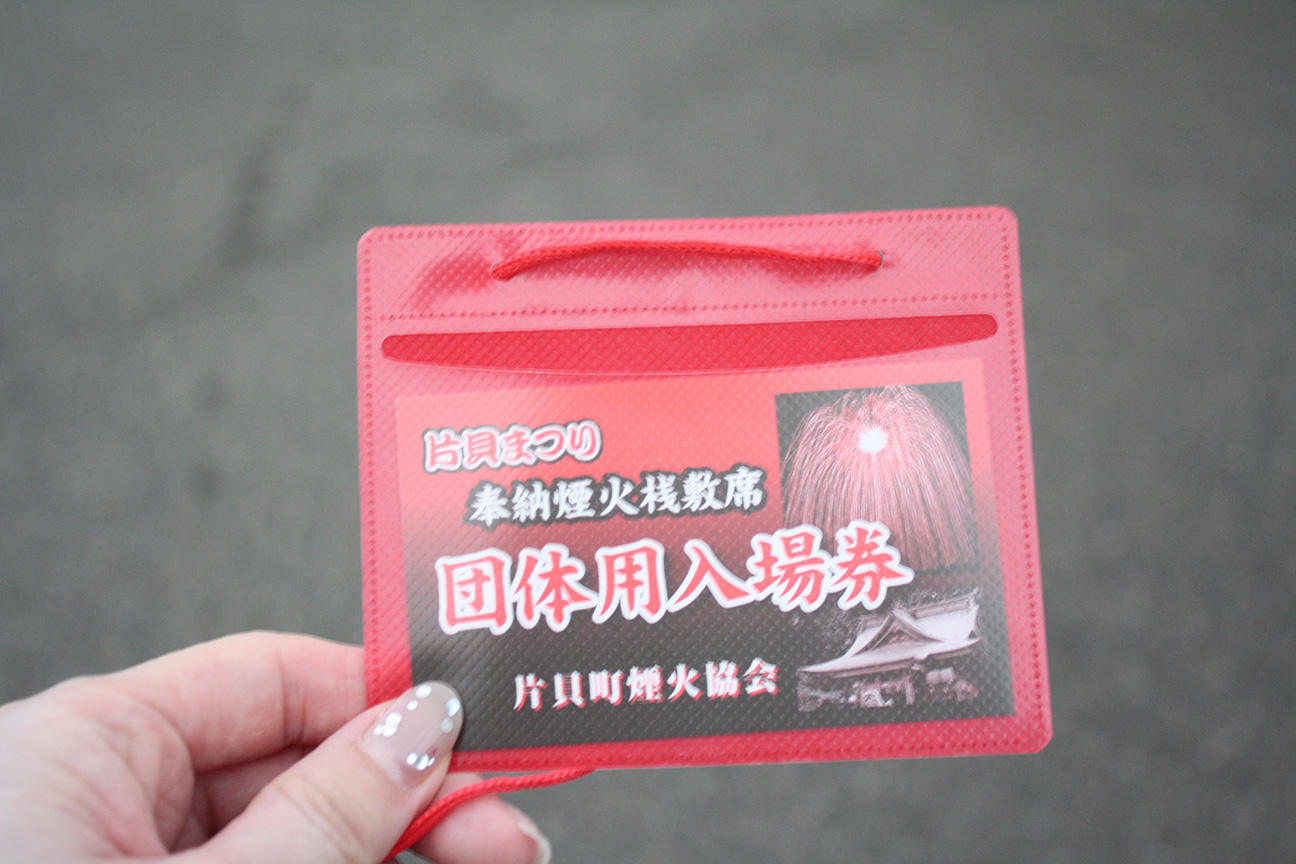
観覧席の入場券(イメージ)
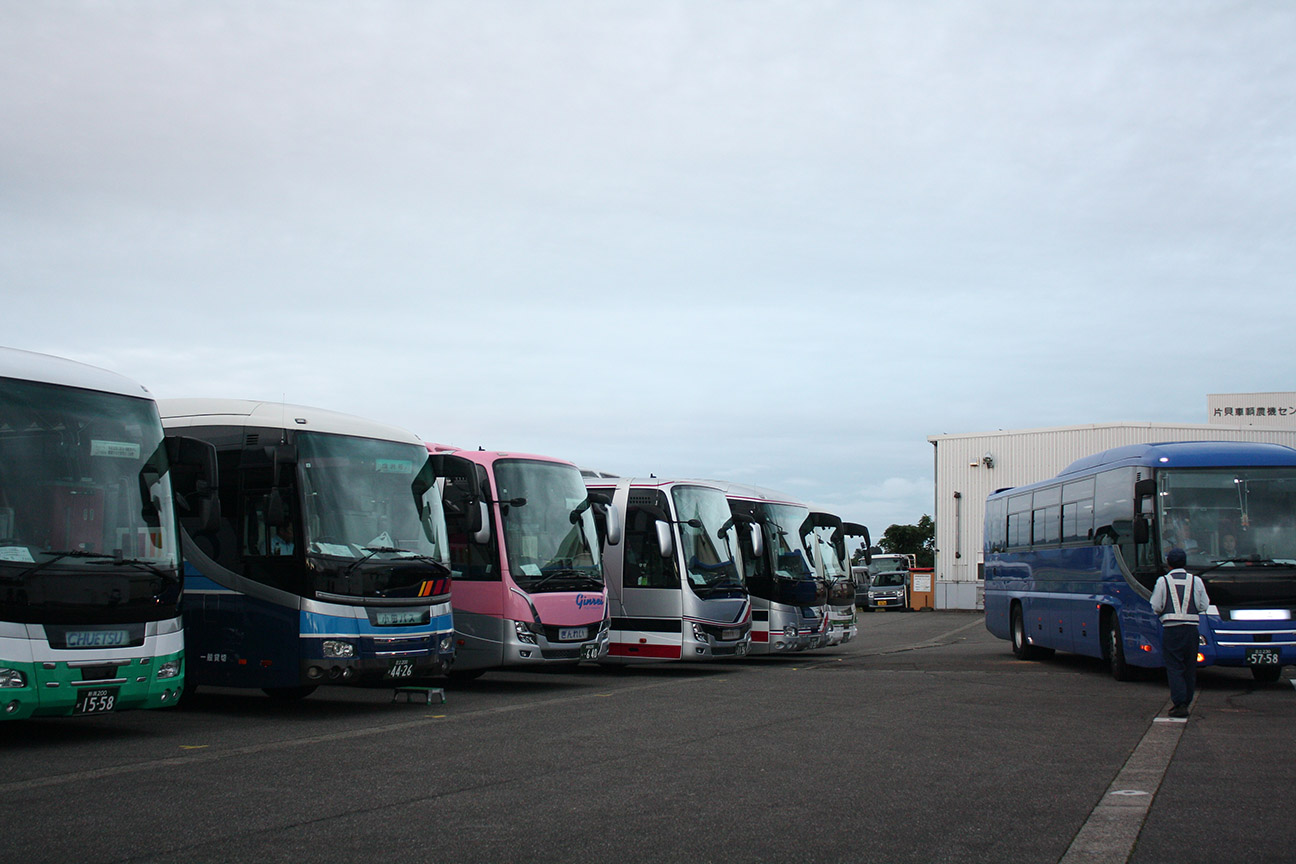
駐車場には貸切バスが続々と入ってきます(イメージ)
You'll cross crosswalks and walk along narrow streets in residential areas, so follow closely and don't lose sight of the lead conductor's flag. If you get lost, use the map handed out in advance.
Along the way, the entrances of homes were decorated with red-and-white curtains and large lanterns celebrating the Katakai Festival. You can feel the local people's joy in celebrating the festival, and your own excitement to enjoy it grows too.
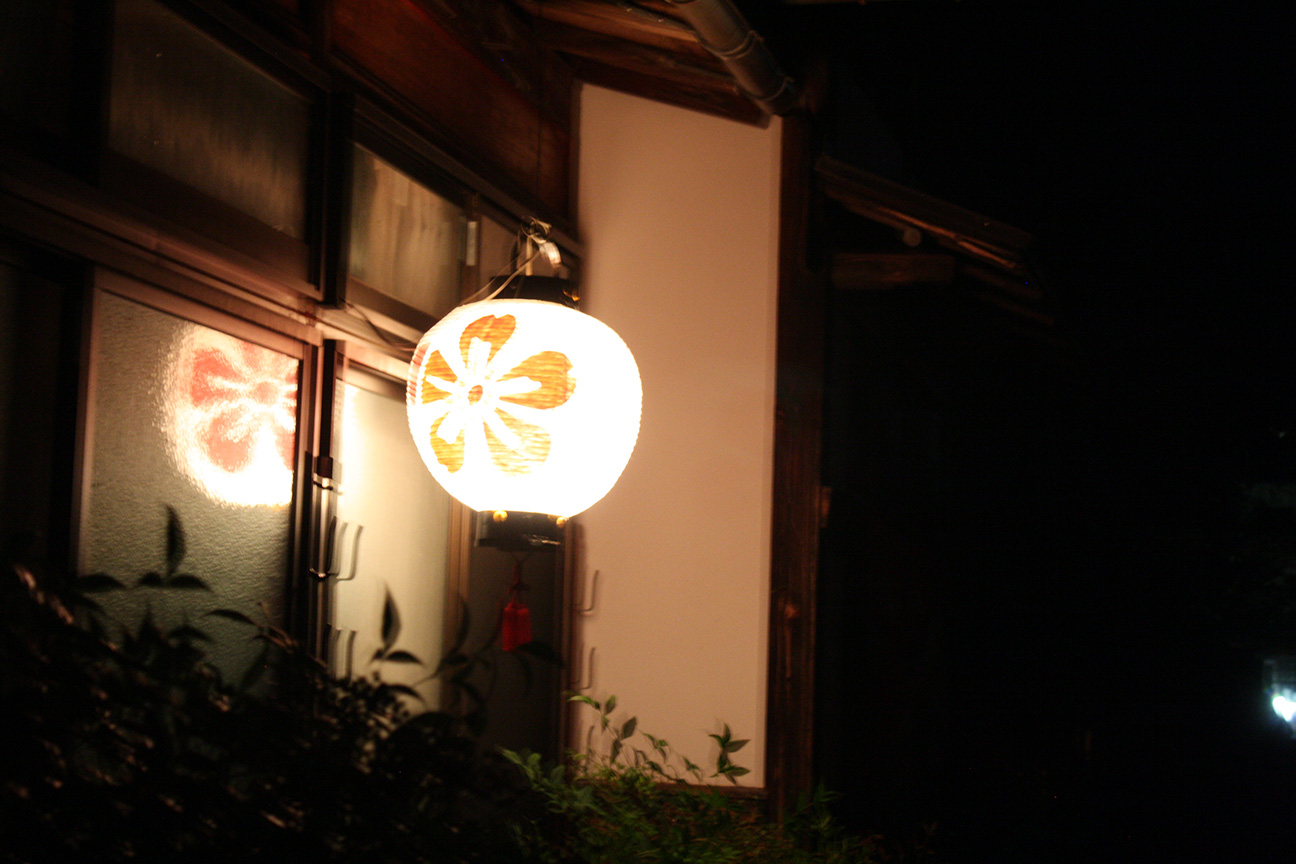
民家の軒先に飾られた提灯(イメージ)
As you approach Asahara Shrine, the street fills with stalls, an essential part of any Japanese festival, and beyond them lies the approach to the shrine. Wrapped in the atmosphere of a true Japanese festival, your excitement grows even more.
From arriving at the venue to the start of the show:
An on-site look at the viewing seats and restrooms!
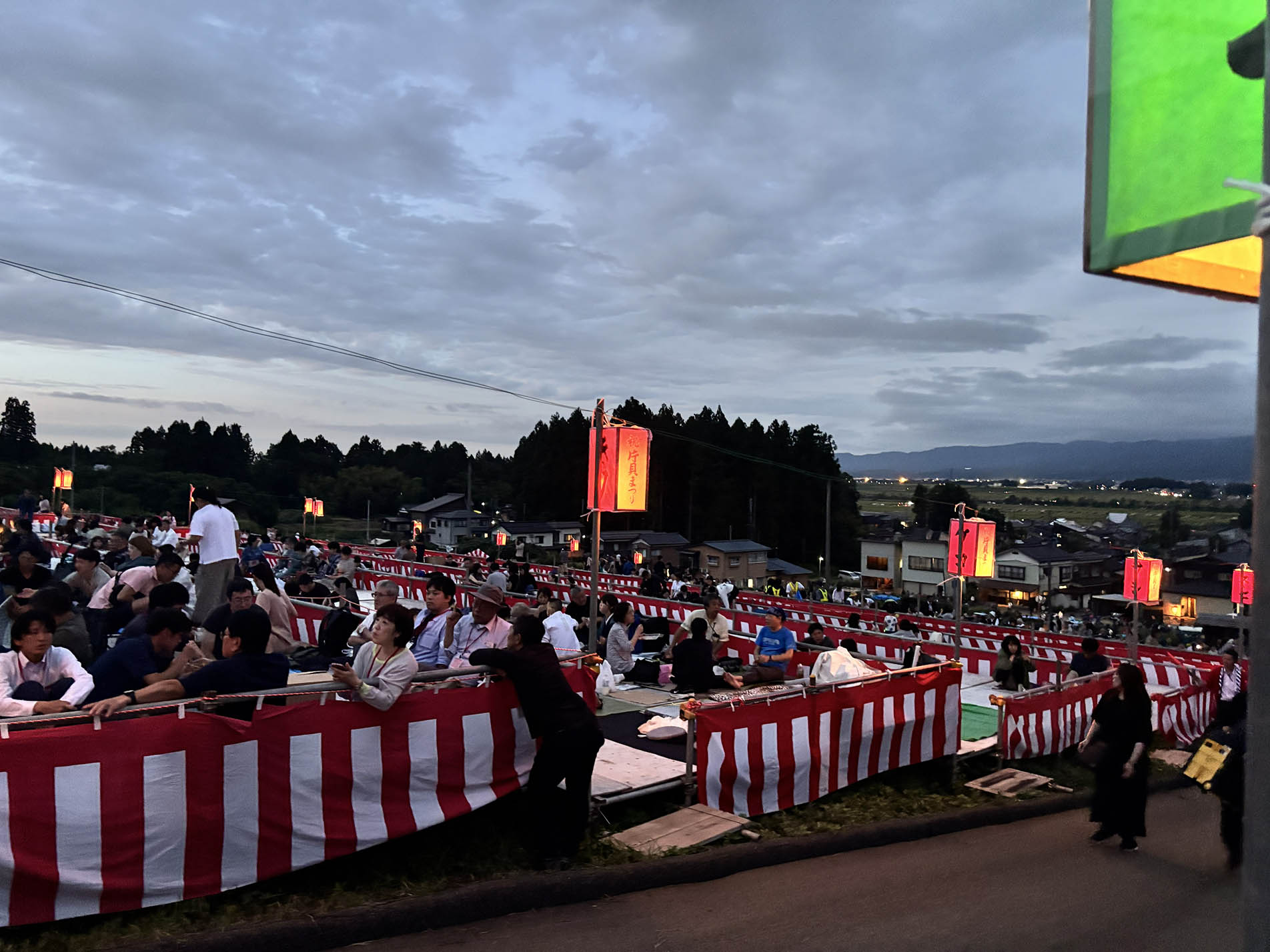
なだらかな丘陵地に設けられた観覧席(イメージ)
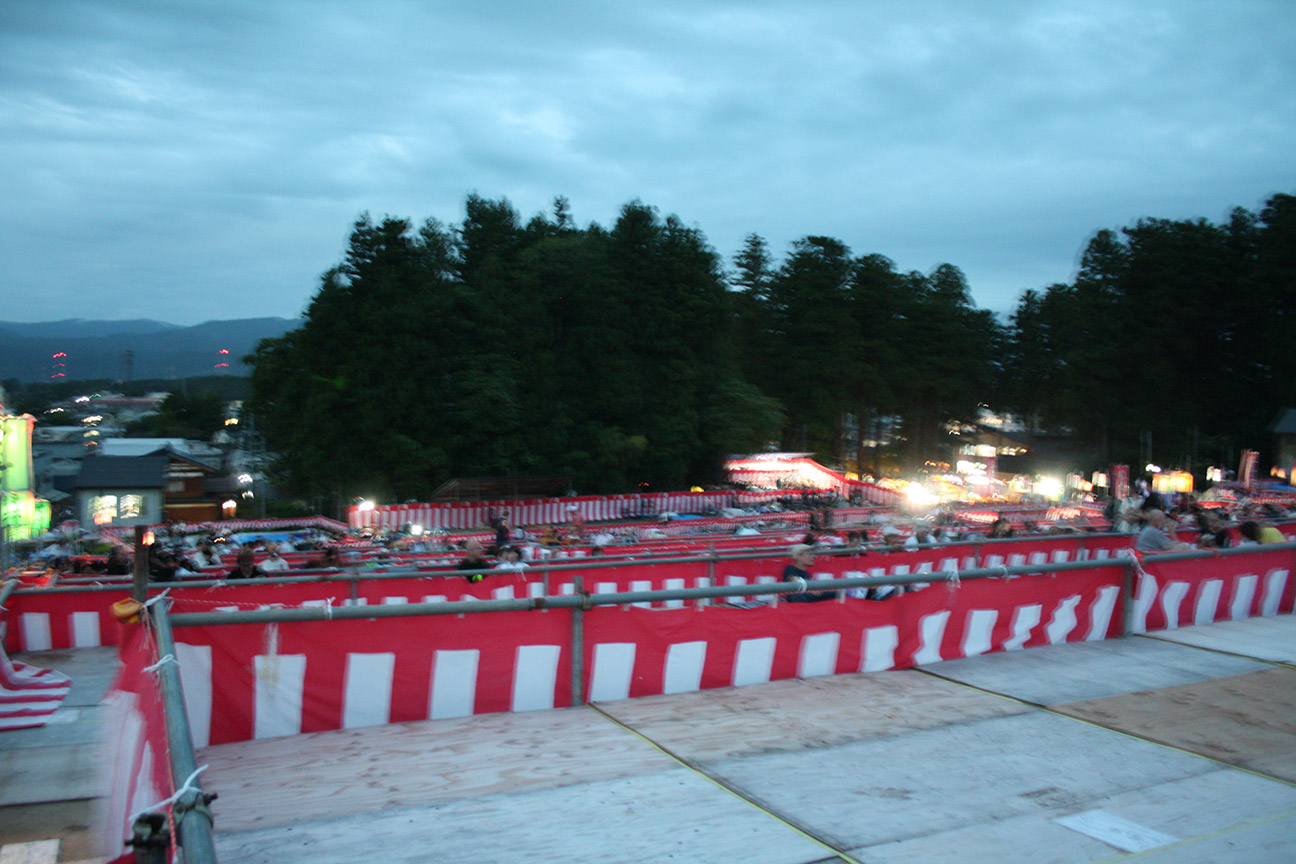
なだらかな丘陵地に設けられた観覧席(イメージ)
[18:10]
We reached the viewing seats 15–20 minutes from the parking lot. There is a ticket check gate in front of the seating area, where each person's ticket is checked. The seats are laid out like terraced rice fields, higher at the front and lower at the back, facing the launch site. They are flat platforms of plywood on a steel-pipe frame with no chairs or mats, but we could take off our shoes and sit comfortably.
With a ticket, you can go in and out of the entrance gate freely. If you get lost, tall lanterns at the seating entrances show seat codes such as "Na" and "Ni," so you can use them as landmarks.
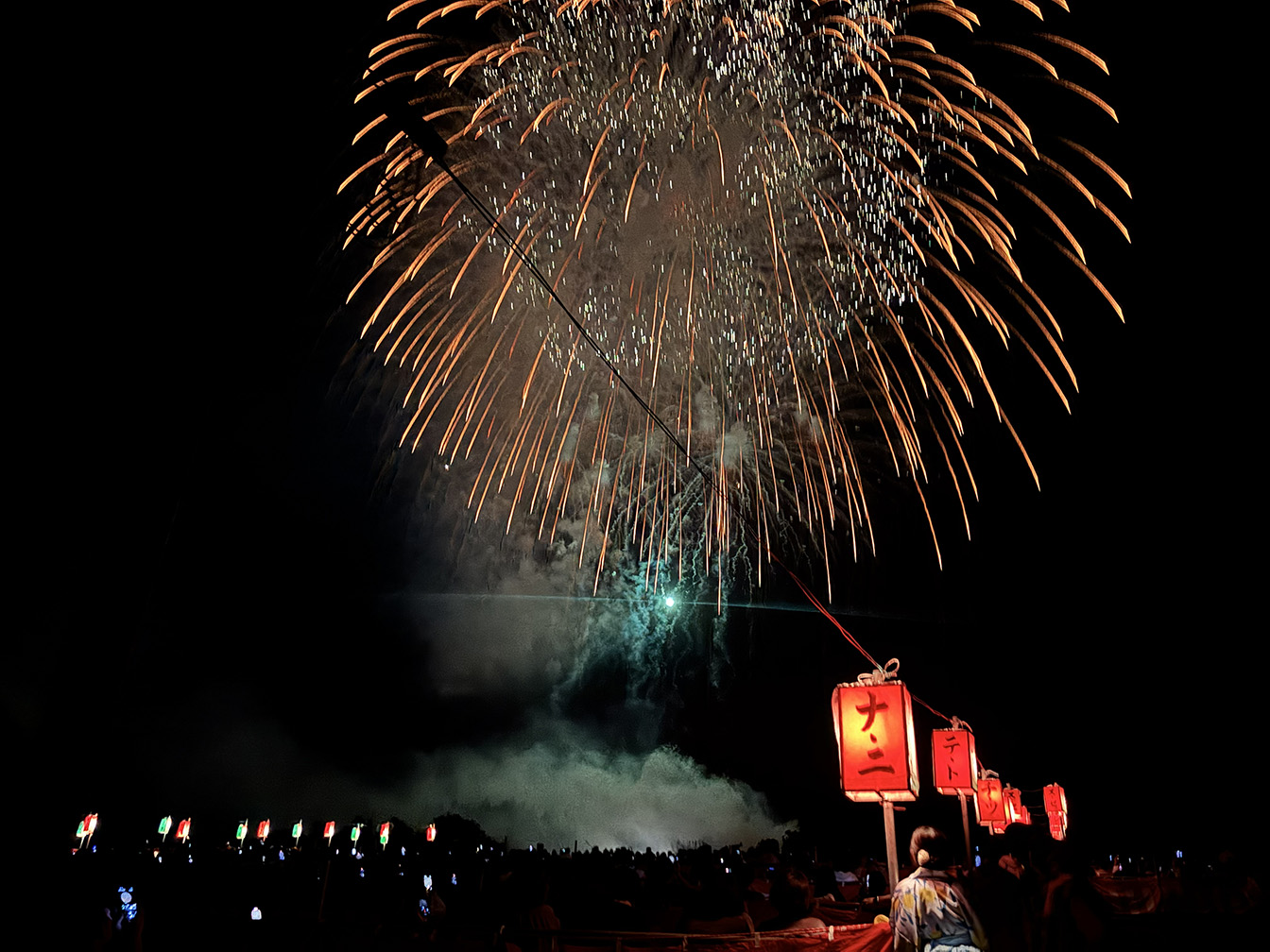
観覧席の横には列を表す行燈が立っています(イメージ)
Temporary restrooms were set up at the bus parking lot and the entrances to the seating area. Each had about 5–12 stalls, so waits were short and they were comfortable to use.
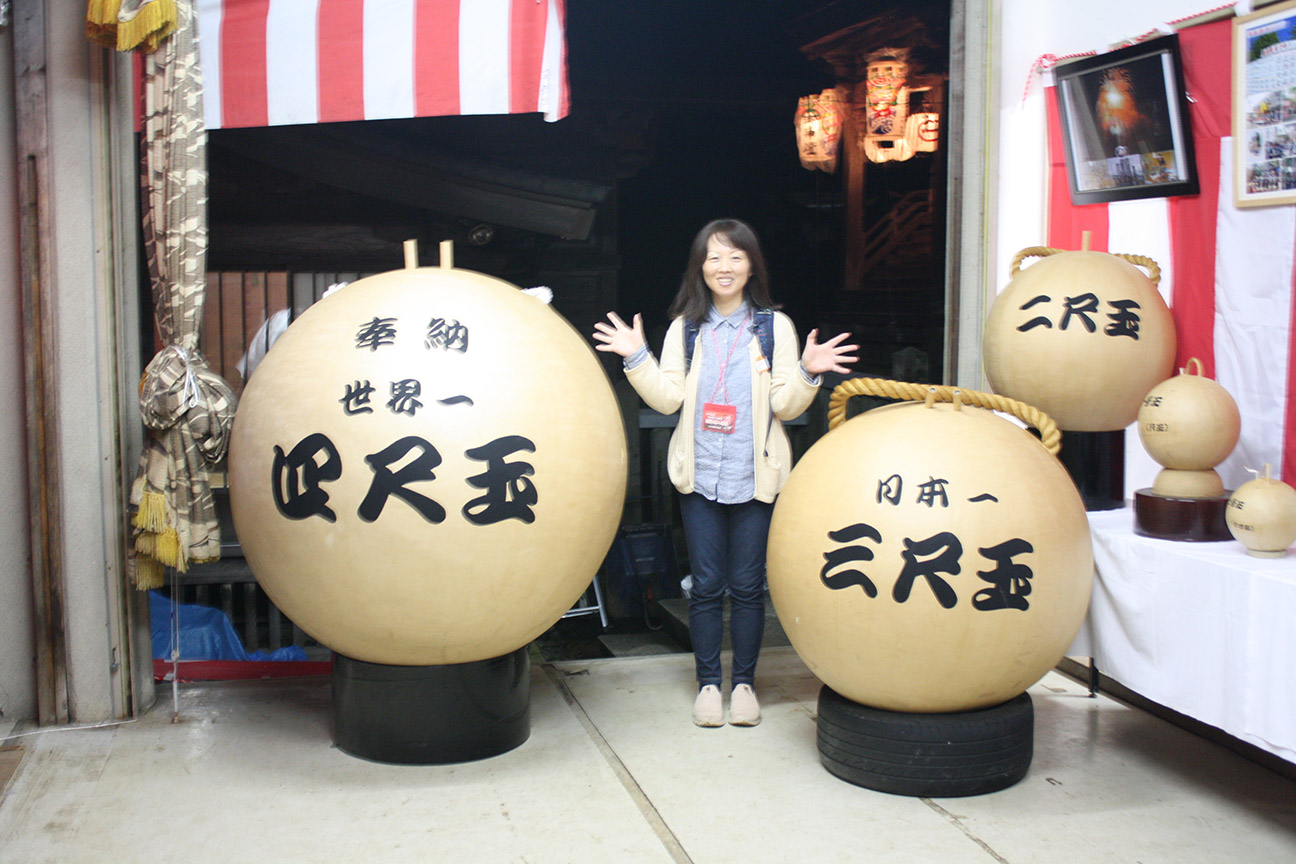
実物大の花火玉は迫力満点!(イメージ)
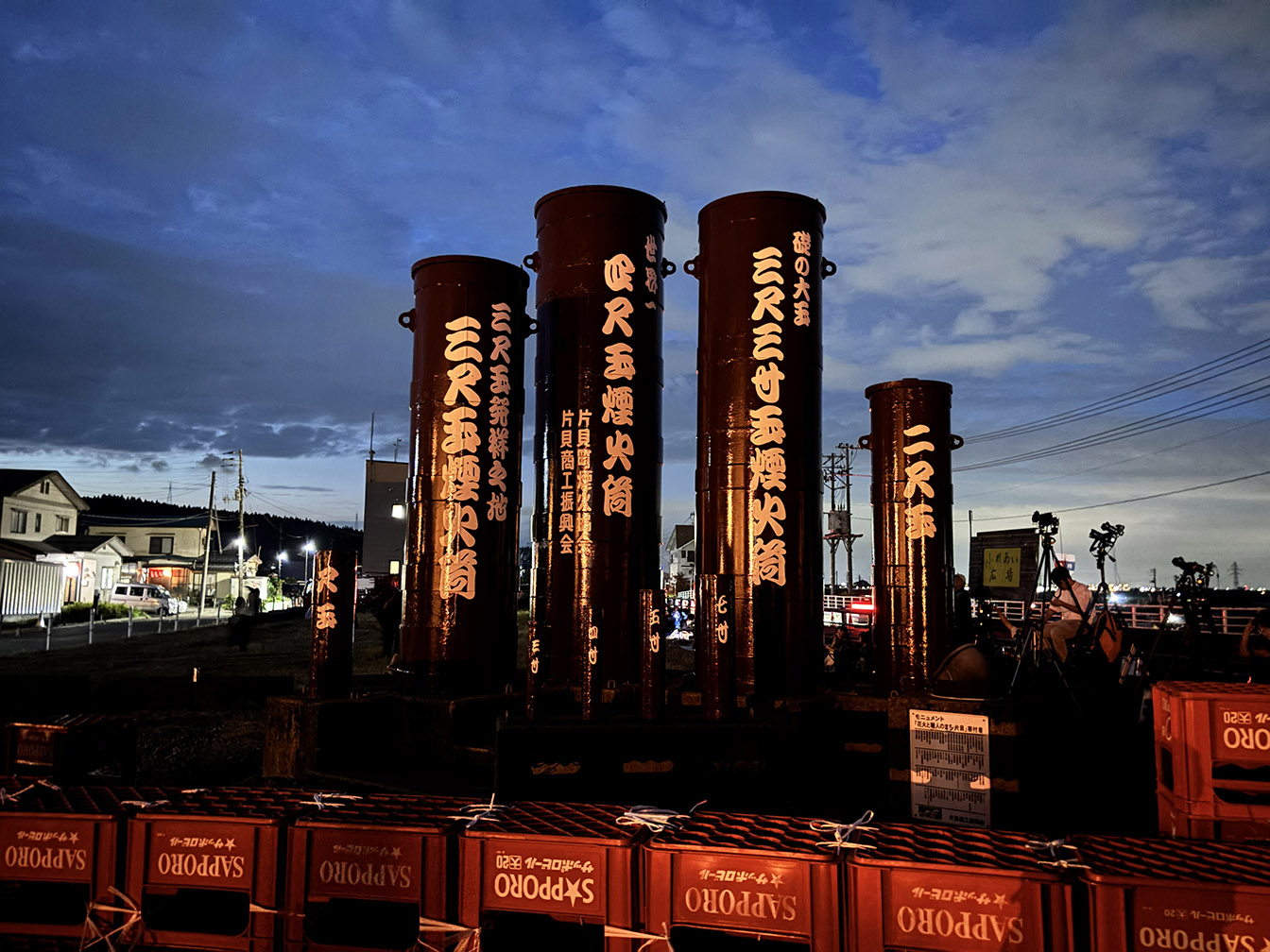
打ち上げ筒を再現したモニュメント(イメージ)
[18:30]
If you have time before the fireworks start, we recommend exploring the sights around the venue.
At Asahara Shrine, the main venue of the festival, a Sho-Yonshakudama shell is on display. It is actually a life-size replica that looks just like the real thing, so don't worry, there is no gunpowder inside. Staff will take a souvenir photo for you.
About a 5-minute walk from the seating area there is also a square displaying a life-size launch tube, a spot well worth visiting to get a feel for the scale of the fireworks you are about to see.
The Show Begins | The Fireworks That Thrilled the Crowd
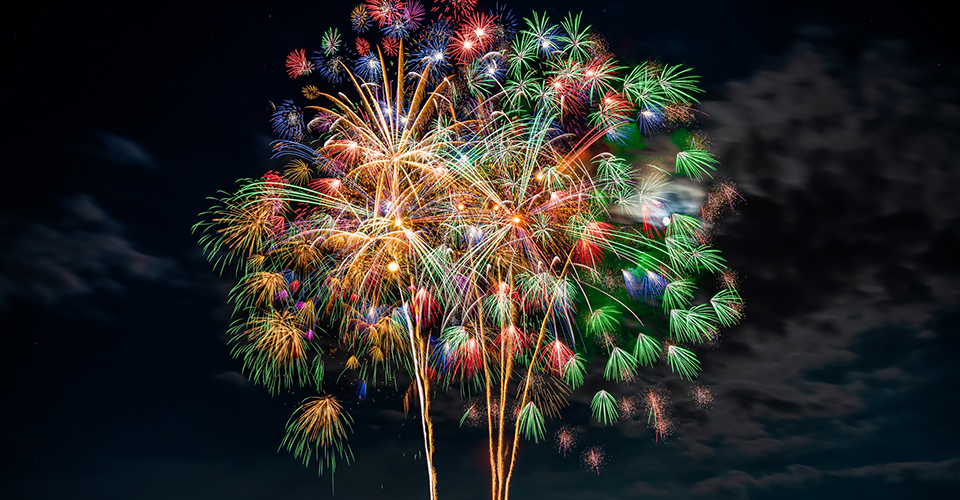
色とりどりの花火が夜空を彩ります(イメージ)
[19:30]
The fireworks finally begin! Unlike a "glamorous entertainment show" such as the Taipei 101 countdown fireworks in Taiwan, the Katakai Festival is "an art of savoring the light, sound and afterglow of each individual shell." The highlights are large shells called shakudama and fireworks with unusual shapes.
Since these are "dedication fireworks," the festival proceeds in a style where the names and messages of the people who dedicated them are announced, and then the fireworks are launched.
[20:30] [21:30]
Katakai is known as the birthplace of the Sho-Sanshakudama, as the first place in Japan to launch one, and four are launched over the two days.
The moment a white flower opened across our whole field of view, we felt a deep "boom" in our stomachs a moment later. The sound echoing off the surrounding mountains and coming back at us in three or four layers is an experience unique to Katakai, in the mountains.
That day they were launched twice, drawing big cheers and applause from the crowd.
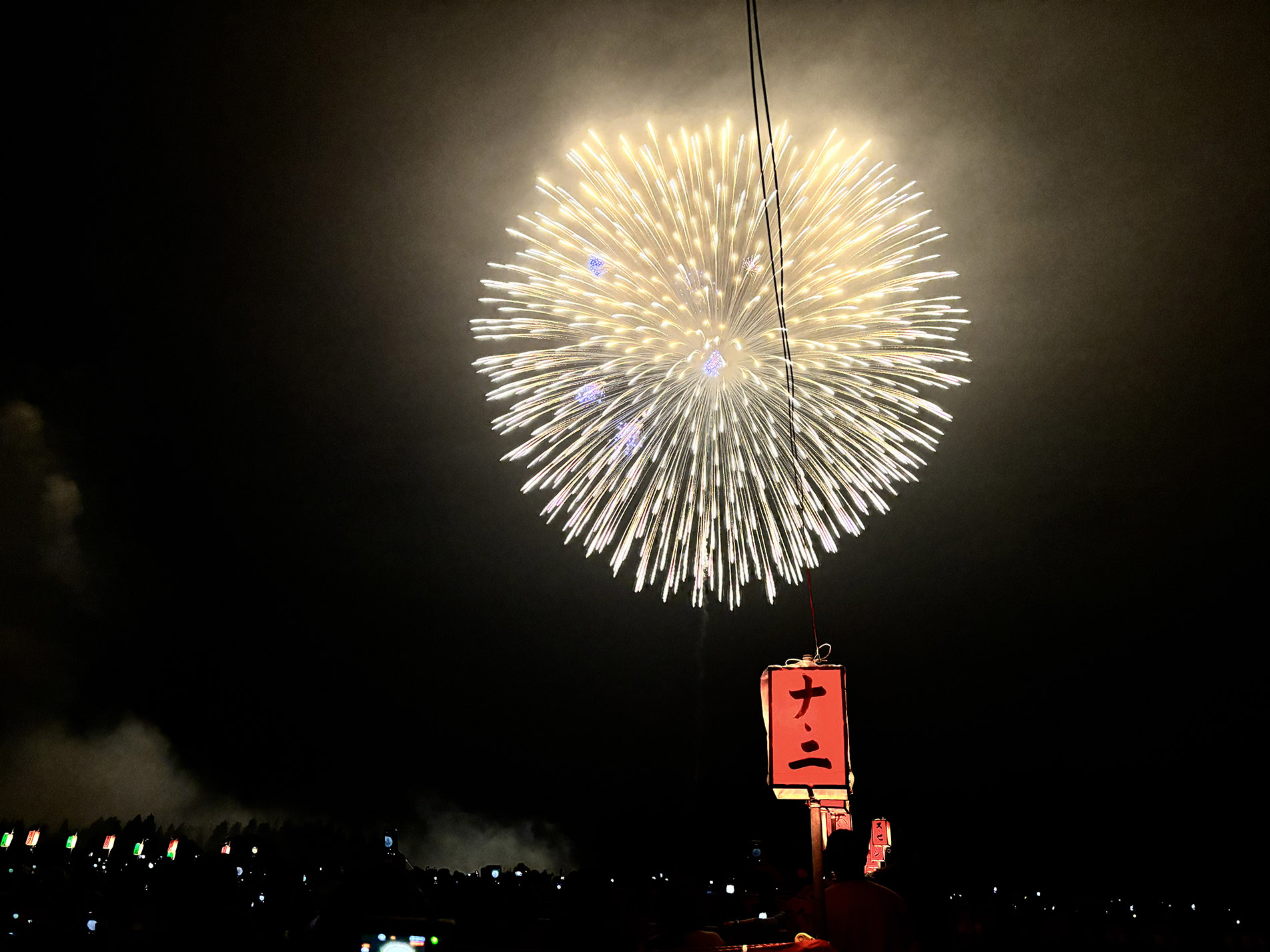
観覧席の目の前に上がる「正三尺玉」(イメージ)
[21:45]
In Katakai, graduates of Katakai Junior High School form alumni groups and dedicate Starmine displays when they turn 20, 33, 42, 50 and 60 (kanreki). One of the highlights of the first day is the launch of the "extra-large Starmine" dedicated by the 60-year-old alumni.
For about 6 minutes, 100 shells were launched without a break, and cheers of "Go up! Go up!" rang out across the venue. The dedication money for this year's extra-large Starmine was apparently about 20 million yen!
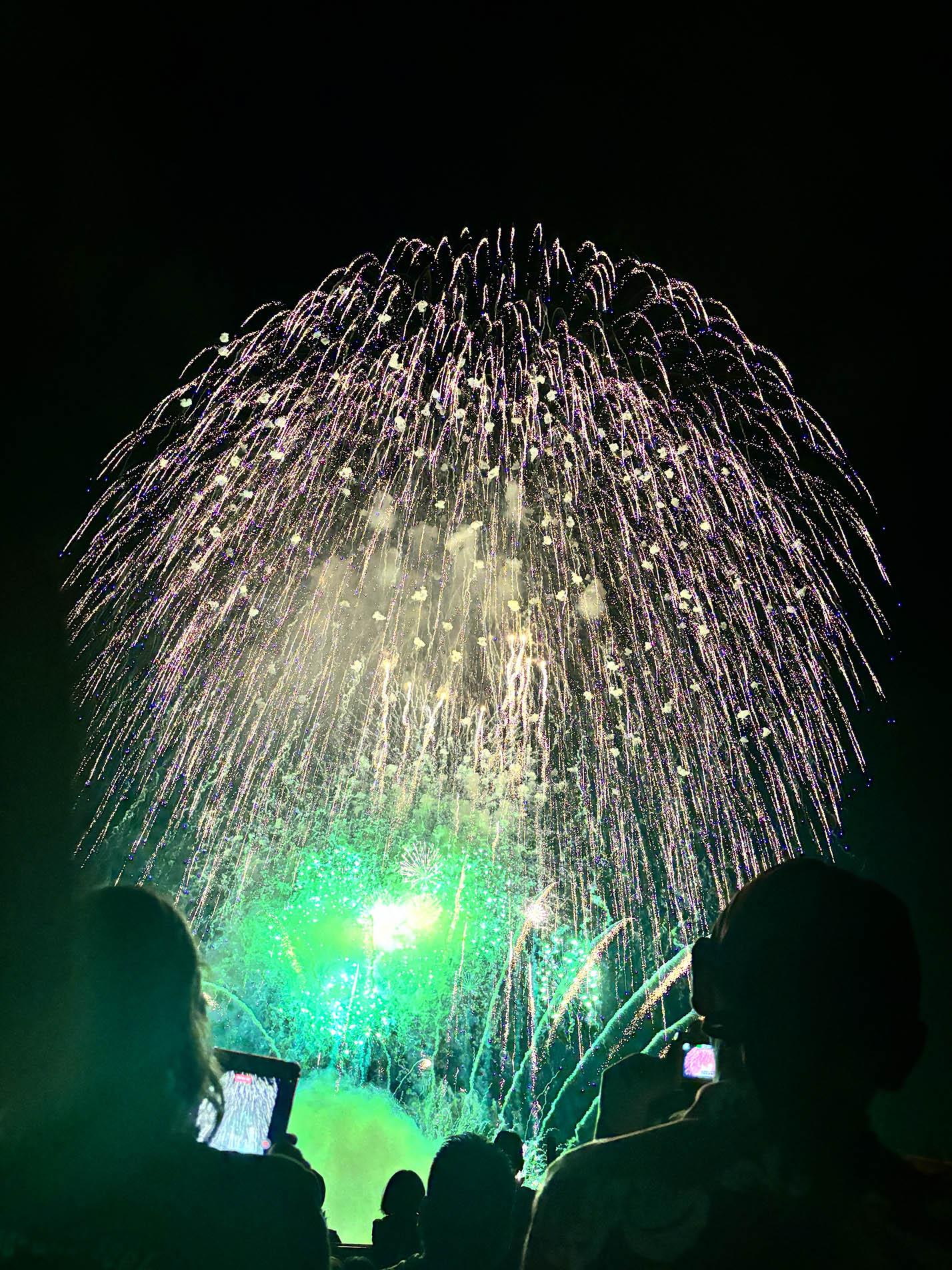
次々に咲く花火に圧倒される「特大スターマイン」(イメージ)
[22:00]
The nearly three-hour fireworks show finally reaches its climax: the launch of the world's largest Sho-Yonshakudama!
A single streak of white light shot high into the sky, and then a huge white radiating bloom burst open with an intense flash. Countless small flowers then bloomed around it, changing color to green, blue, purple and red, before falling in trails like willow branches.
Immediately after, a shockwave and deep bass seemed to rise up from the ground and run through our bodies, and the crackling echo of falling sparks came from every direction. It was a truly special experience, like being wrapped in the light and sound of the fireworks.
At the Katakai Festival, different Sho-Yonshakudama are launched on the first and second days. This year, "Shoten Ginryu Ogon Sudare Kowari Ukimoyo" was dedicated on the first day and "Shoten Ginryu Ogon Senrin Nidanzaki" on the second.
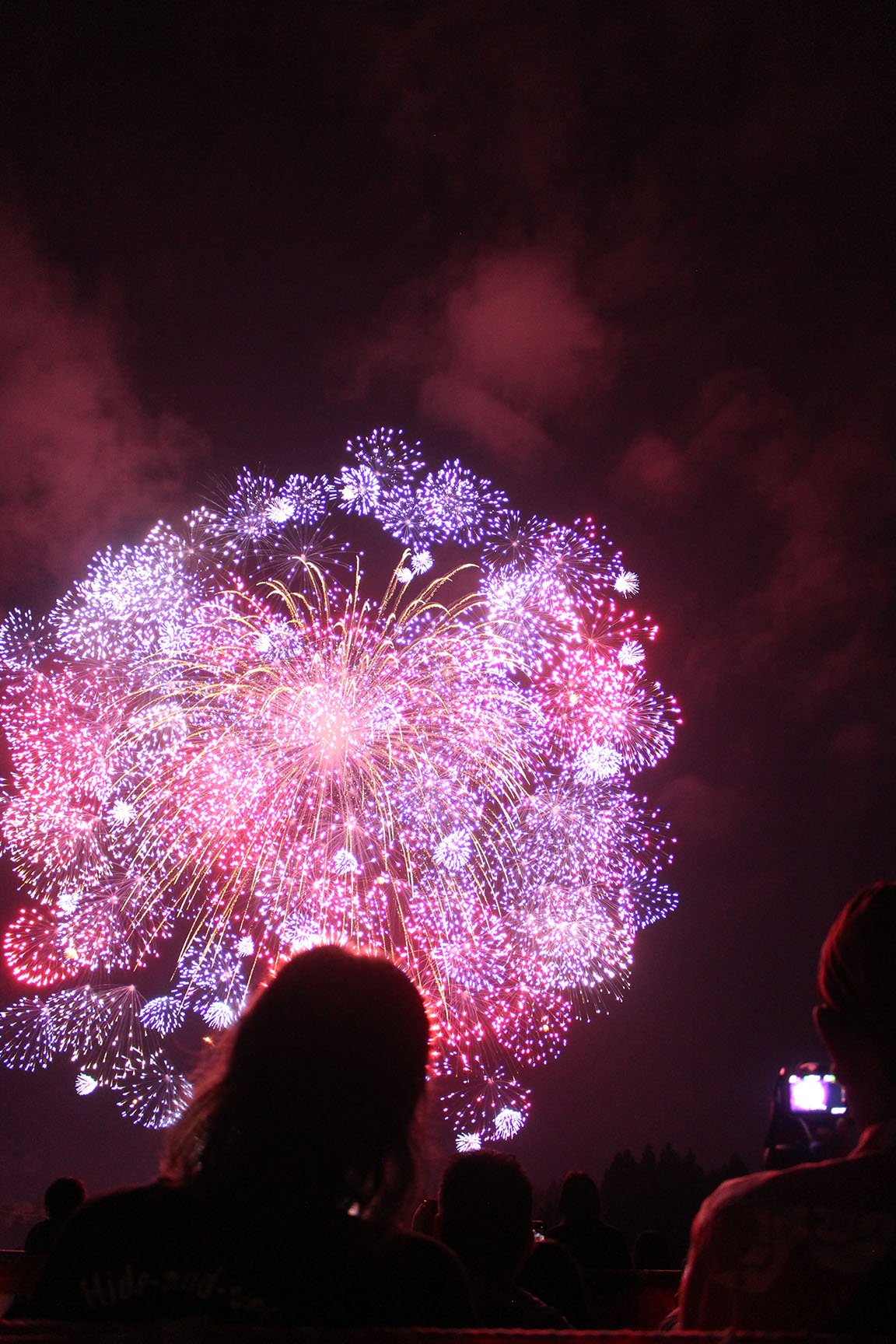
一発で無数の花が咲き乱れる「正四尺玉」(イメージ)
After the Show | What Time Did We Reach the Hotel Amid Heavy Traffic?
[22:05]
The fireworks ended. Spectators started leaving one after another, and the aisles became very crowded. The entrances to the seating area are narrow, so people stood up and moved out in turn. It was dark, so we took care not to leave anything behind or drop anything.
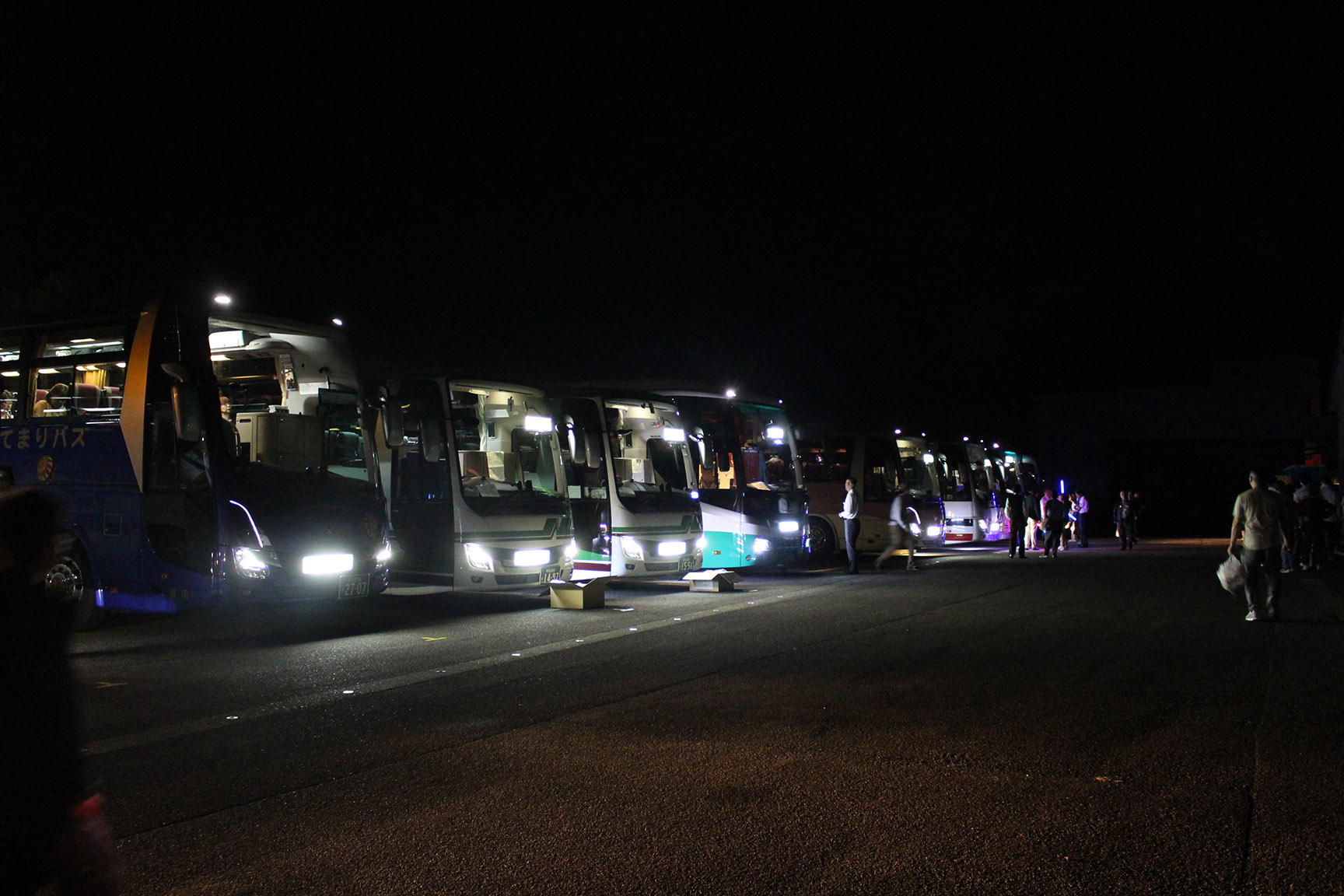
バスが待つ駐車場へと戻ります(イメージ)
[22:37]
We walked back to the parking lot along a crowded, dark road. The bus waits until all tour participants return, so we could head back calmly without rushing. Everyone boarded and the bus left the fireworks venue.
This time no one got lost, and we were able to depart about 40 minutes after the festival ended.
From the bus window on the way to the hotel, we saw long lines of people waiting for the public shuttle buses. Waits of over an hour are apparently not unusual because of the crowds. On a tour, by contrast, once you board the chartered bus you can relax and be taken to your hotel while savoring the afterglow of the fireworks, which was very comfortable.
[23:45]
We arrived at our hotel, Hotel Route-Inn Tsubame-Sanjo Ekimae. After receiving our keys in the lobby, all that was left was to go to our rooms and rest! On this tour, every participant had a single room and could relax without worrying about anyone else.
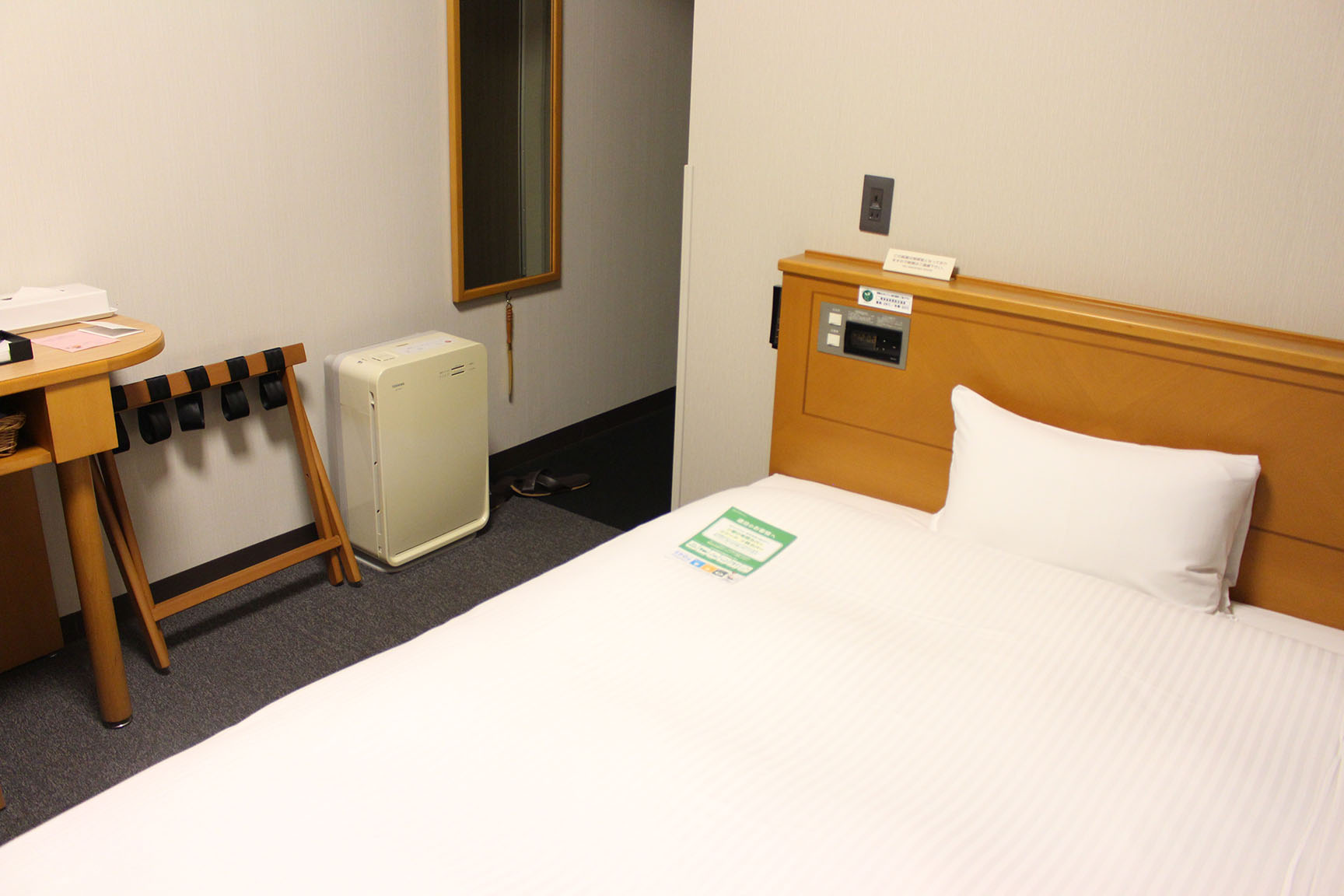
ホテルの客室(イメージ)
The next morning included a buffet breakfast. We ate at a leisurely pace to match the relaxed 9:30 departure, then set off on the sightseeing tour.
Before going to the Katakai Festival:
Examining 4 hurdles
Hurdle 1:
Accommodation | Ojiya and Nagaoka are sure to be fully booked
Hotels in Ojiya City, Niigata Prefecture, where the Katakai Festival is held, and around the nearby major city of Nagaoka start filling up months before the festival.
They are booked early by local regulars and people involved in the festival, so it is extremely difficult for individuals to secure a room at the last minute. Even if you book a hotel a little farther away, you must secure a way to travel late at night.
Hurdle 2:
Paid viewing seats | Advance reservations are too difficult
To fully experience the overwhelming scale of the Sho-Yonshakudama, we recommend watching from the paid viewing seats closest to the launch site. You can also enjoy the nearly three-hour program comfortably seated. However, arranging these seats on your own is very difficult.
No online booking: You need to download a Japanese application form, fill it out and apply by fax or mail. The hurdle is very high for applying from overseas.
Large units: The smallest unit of seating is one section (8 people). Both the cost and the space are too large for 1–2 independent travelers. *25,300 yen per section (8 people / 1-day ticket)
Same-day tickets are first come, first served: Same-day tickets are sold for 5,500 yen per seat from 9:00 a.m. at the central entrance of the sajiki (viewing) seats, but since they are first come, first served, it is uncertain whether you can get good seats. You must plan to arrive on site on the morning of the festival.
Hurdle 3:
Getting back | Returning by public transportation after the Sho-Yonshakudama is difficult
The climax, the launch of the world's largest Sho-Yonshakudama, is around 22:00.
After the fireworks end at 22:05, long lines of people heading home form at the public shuttle bus stops from the venue to the nearest stations and major cities. There is also traffic congestion, so you may not make the last train or shinkansen. It is also hard to call a taxi yourself late at night, so securing a way back is the biggest challenge.
Hurdle 4:
Language | Announcements and signs at the venue are in Japanese only
Because the Katakai Festival is a traditional "dedication fireworks" event rooted in the community, multilingual support is less developed than at typical events in big cities. You may be confused when getting around or if trouble occurs on site.
▼ Click here for details
The Differences at a Glance! | Independent Travel vs. Group Tour
Here is a simple summary of the differences between independent travel and a group tour. For overseas travelers, a tour that bundles accommodation, viewing seats, meals and transportation is the easiest and surest way to enjoy the Katakai Festival.
| 個人手配 | 団体ツアー | |
|---|---|---|
| 宿泊先の確保 |
小千谷・長岡周辺は満室必至。遠方のホテル確保が必要 |
旅行会社が手配済み |
| 観覧席の手配 |
FAX・郵送のみ対応。8名単位での購入が必要、当日券は購入できるかが不確定 |
旅行会社が団体用の観覧席を確保済み |
| 会場への交通手段 |
行きも帰りも大渋滞。シャトルバスは乗車待ちの列が発生することも |
貸切バスで直行&帰りもホテルまで車内でのんびり |
| 食事の手配 |
会場周辺や屋台、飲食店を自力で探す必要があり、混雑で時間がかかる |
旅行会社がレストランやお弁当を手配済み |
| 言語 |
案内板やアナウンスが日本語のみで迷いやすい |
添乗員が同行し、集合場所やスケジュールを案内 |
| 予約の難易度 |
★★★★★ |
★☆☆☆☆ |
Comparing the Three Great Fireworks Festivals of Echigo (Nagaoka, Kashiwazaki, Katakai)
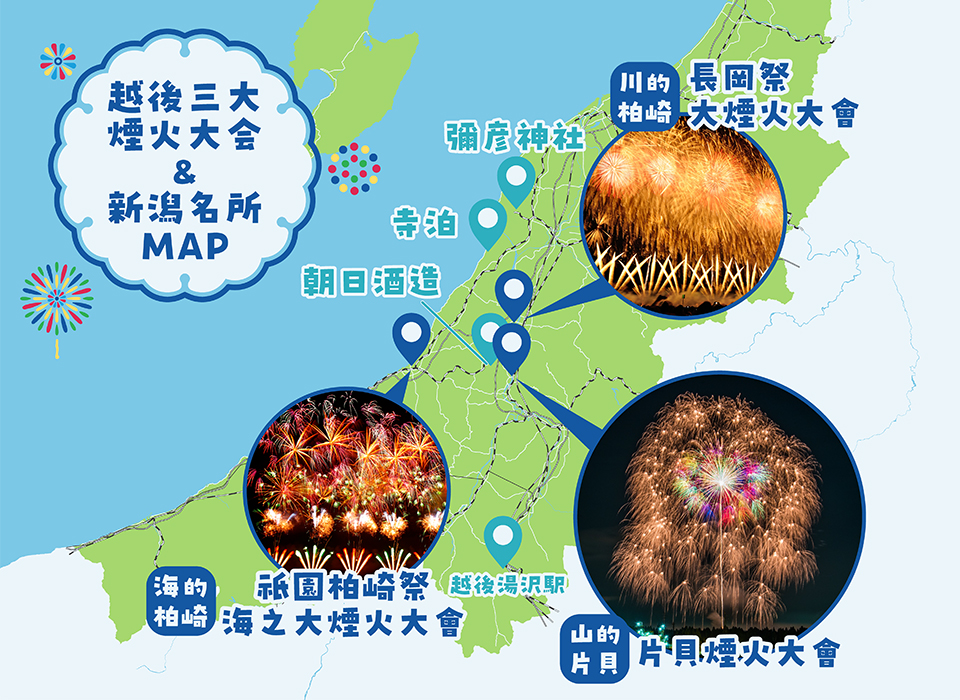
越後三大花火大会マップ(イメージ)
Niigata Prefecture is known as one of Japan's great "fireworks kingdoms," and the three festivals with the most history and scale are called the "Three Great Fireworks Festivals of Echigo."
What Are "Kashiwazaki of the Sea," "Nagaoka of the River" and "Katakai of the Mountains"?
Because of their locations, which make the most of each area's character, the "Three Great Fireworks Festivals of Echigo" have long been called "Kashiwazaki of the sea," "Nagaoka of the river" and "Katakai of the mountains." Here is how the three differ.
| 大会名 | 開催時期 | 開催地 | 見どころ |
|---|---|---|---|
| ぎおん柏崎まつり 海の大花火大会 |
7月26日 |
柏崎市・みなとまち海浜公園 |
海面に打ち込まれる「海中空スターマイン」、尺玉100発同時打ちなど |
| 長岡まつり 大花火大会 |
8月2・3日 |
長岡市・信濃川河川敷 |
幅約2kmのパノラマで繰り広げられる「復興祈願花火フェニックス」 |
| 片貝まつり 浅原神社秋季例大祭奉納大煙火 |
9月第2金曜日・土曜日 |
小千谷市・浅原神社 |
山に反響して重低音が鳴り渡る世界最大の「正四尺玉」 |
Recommended For: How to Choose a Fireworks Festival
Choose Kashiwazaki if you want the open feel of the summer seaside and dynamic displays
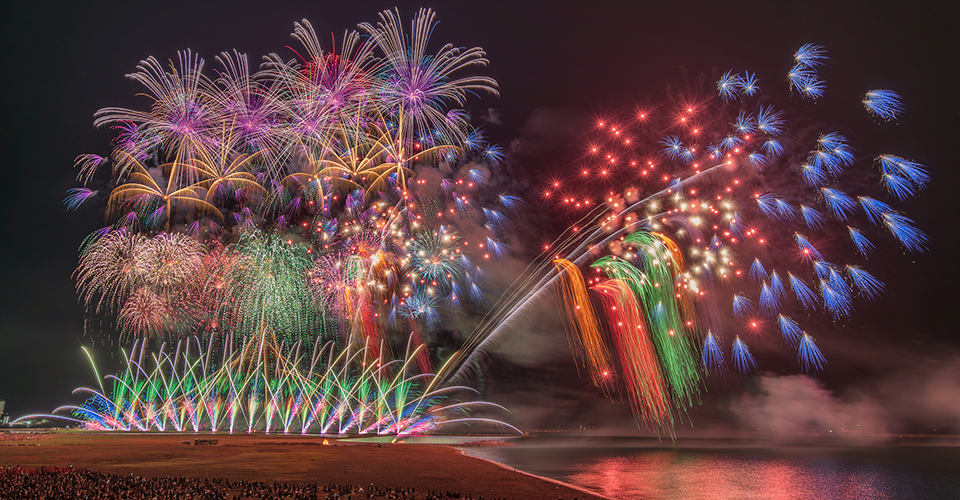
ぎおん柏崎まつり海の大花火大会(イメージ)
The Gion Kashiwazaki Festival Sea Fireworks is held every year on July 26 in Kashiwazaki City, Niigata Prefecture.
Kashiwazaki is known for dynamic fireworks that make full use of the vast sea and night sky, such as the "Kaichu-ku Starmine," launched from the shore so that the fireworks burst in semicircles on the sea surface, and shells launched one after another from the water's edge. It's perfect for those who want to see unusual fireworks that use the sea.
First time in Japan?
Choose Nagaoka to experience the scale of a Japanese fireworks festival
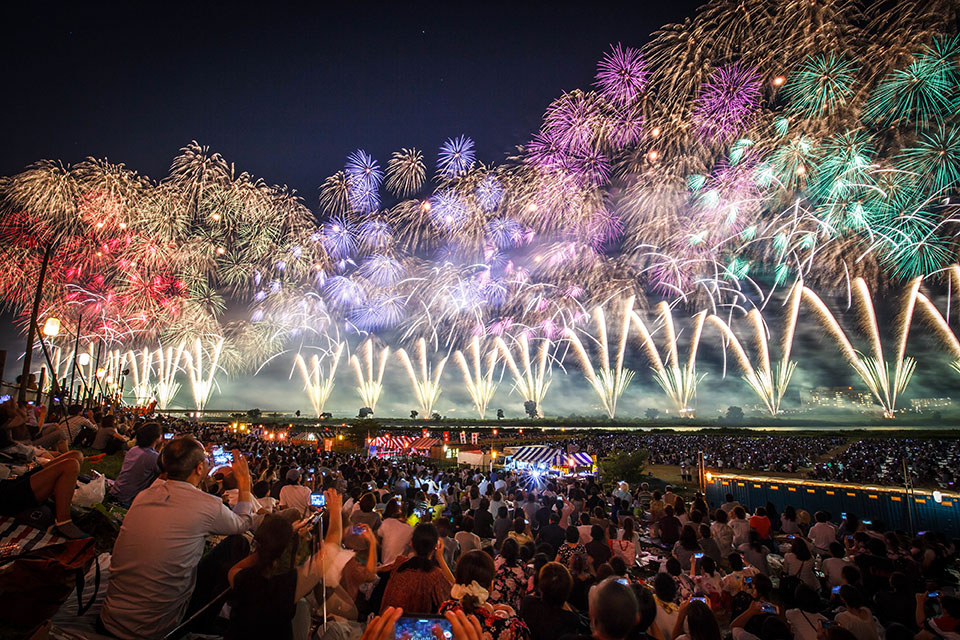
長岡まつり大花火大会(イメージ)
The Nagaoka Festival Grand Fireworks is held every year on August 2 and 3 on the Shinano River riverbank in Nagaoka City, Niigata Prefecture.
Held between two bridges over the Shinano River, Japan's longest river, its wide displays stretching about 2 km are too big to fit in your field of view. "Tenchijin Fireworks" and "Phoenix," fireworks praying for recovery, launched one after another in sync with music, are so powerful that even those who just want to see a huge fireworks show will be thrilled.
Choose Katakai if you want to savor Japan's traditional culture
and the "sound" of fireworks
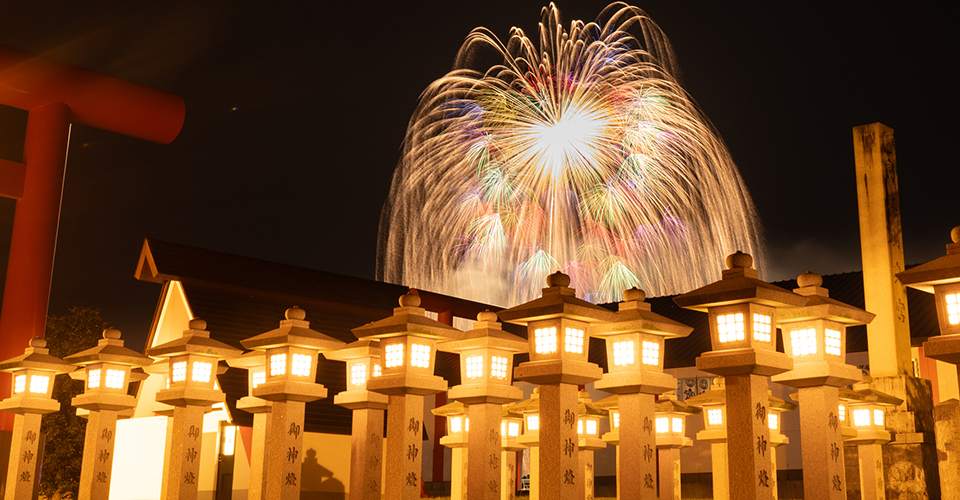
片貝まつり 浅原神社秋季例大祭奉納大煙火(イメージ)
The Katakai Festival Asahara Shrine Autumn Grand Festival Dedication Fireworks is held over two days every September.
Its "dedication fireworks," offering wishes and gratitude to the gods, let you touch the faith and feelings deep in the hearts of Japanese people. If you want to fully savor the world's largest Sho-Yonshakudama and its sound echoing many times off the mountains, why not feel the tradition and skill of fireworks craftsmen in Katakai?
Katakai Festival:
Practical information to avoid trouble on site
Watch Out for Night Temperatures and Clothing in Niigata in September!
On recent Katakai Festival dates, the average high was 30.1°C and the average low 22.1°C (Japan Meteorological Agency, 2022–2026). The viewing seats are in an open area, so a hat to prevent heatstroke during the day and a long-sleeved layer at night will give you peace of mind.
Must-Have Items for Watching the Fireworks
□Inflatable cushion
□Plastic sheet
□Flashlight
□Rain gear
The viewing seats are wooden boards, so a cushion you can deflate and carry compactly and a sheet to sit on are must-haves to keep from getting sore or dirty.
Unless there is severe weather such as a typhoon, fireworks are launched at the Katakai Festival even in the rain. Umbrellas block others' view and are prohibited. We recommend a hooded poncho or a two-piece rain suit.
Niigata Delicacies to Enjoy Along with the Fireworks
Facing the Sea of Japan and surrounded by rich nature, Niigata is also a gourmet paradise. Here are some special foods you must try when you visit!
The tour introduced in our experience report visited spots on Day 2 where you can enjoy Niigata's fine food. Enjoying fireworks and gourmet food at the same time is another way of traveling that only a tour makes possible.
New-crop rice
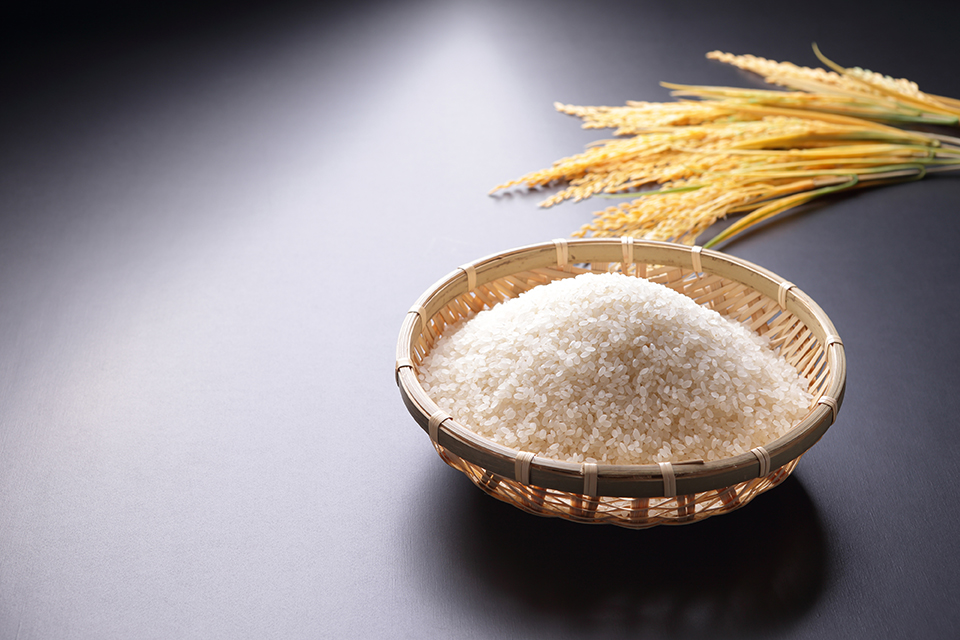
新潟県の米「こしひかり」(イメージ)
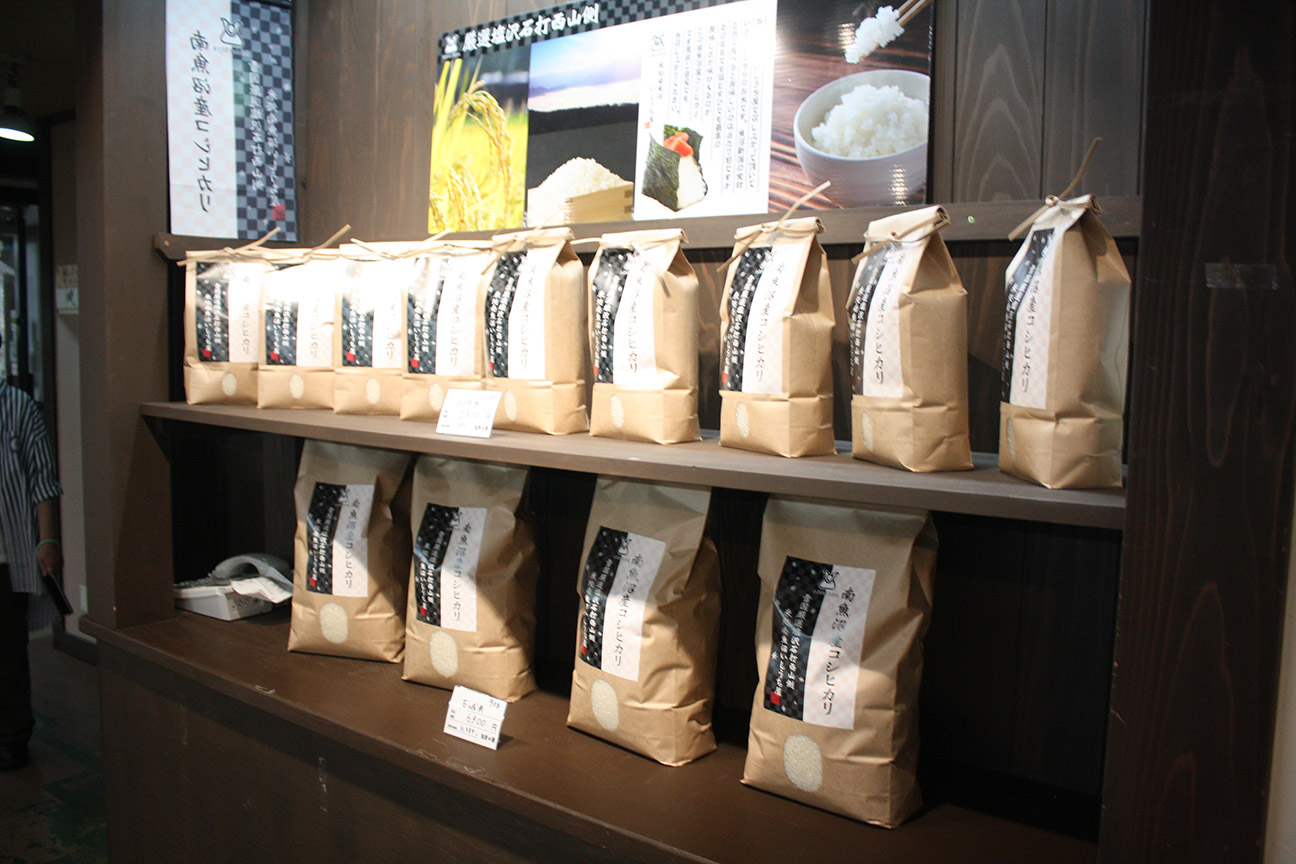
土産店にも新米が並びます(イメージ)
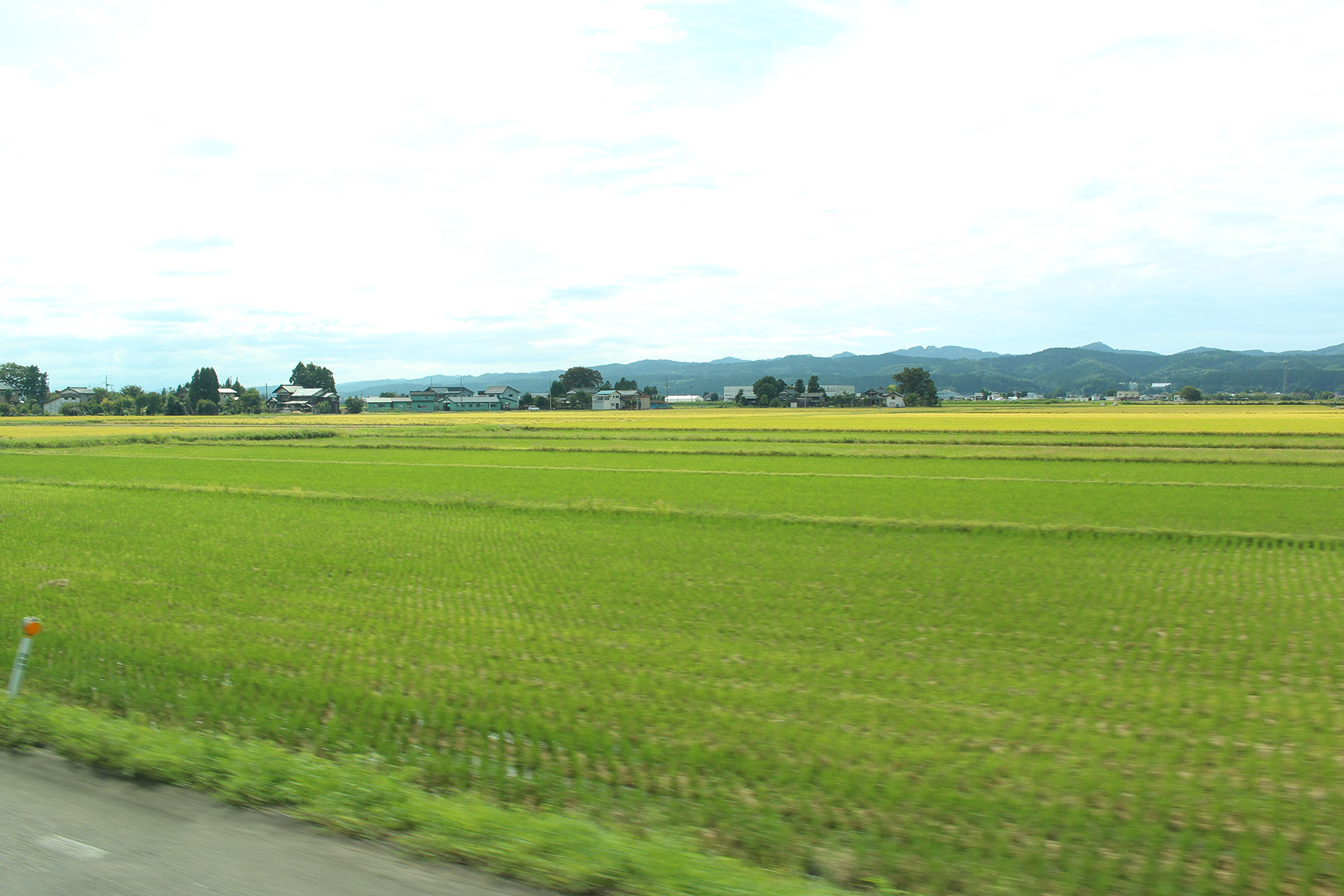
バス移動の道中、車窓に水田風景が広がります(イメージ)
September in Niigata is rice-harvest season. New-crop rice holds plenty of moisture, and when cooked it becomes delicious rice with excellent gloss and aroma.
Seafood
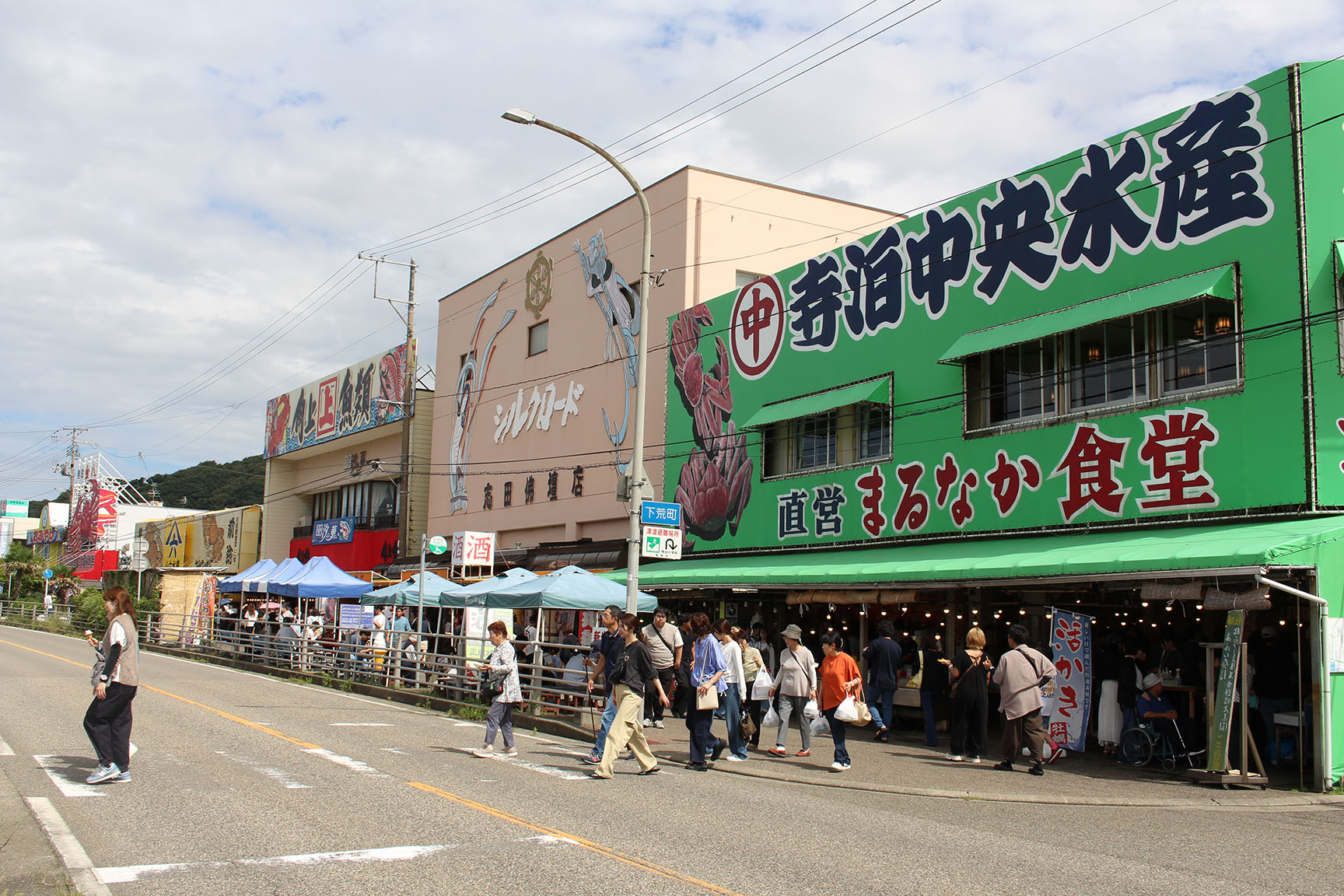
海産物が並ぶ寺泊の「魚の市場通り」(イメージ)
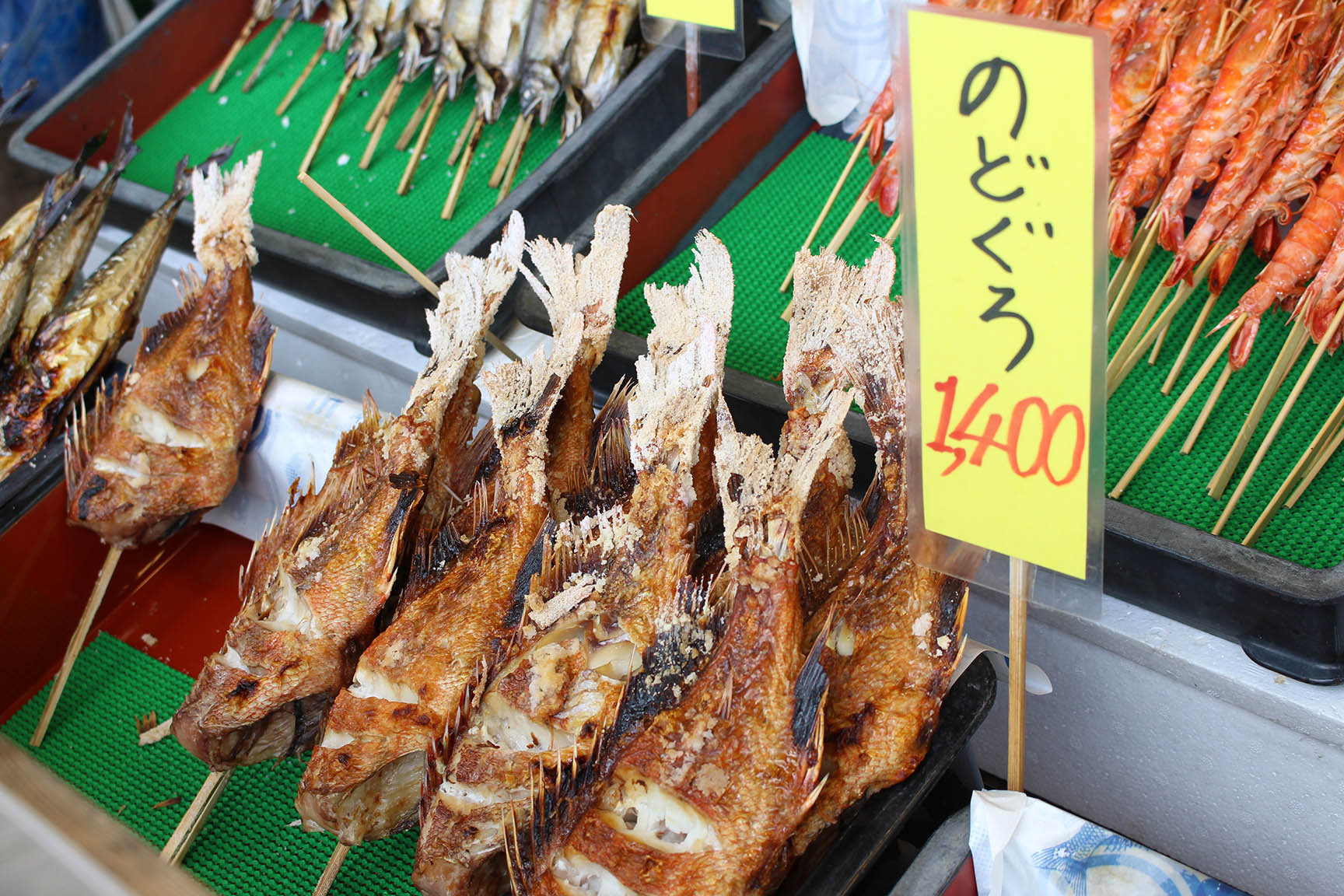
「のどぐろ」の浜焼き(イメージ)
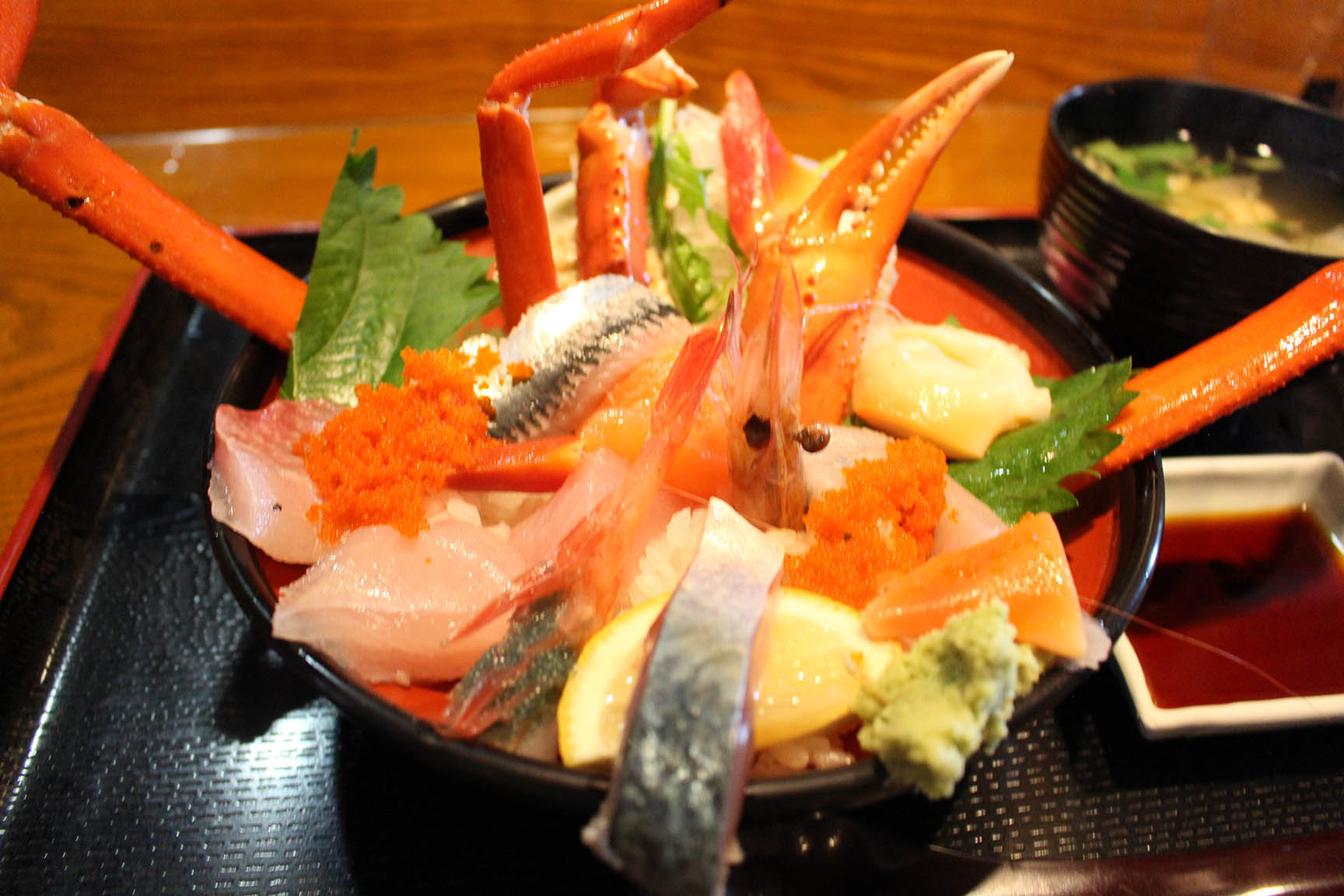
新鮮な海の幸満載の海鮮丼(イメージ)
The market in Teradomari, a fishing port town facing the Sea of Japan, is lined with seafood restaurants and shops selling food to eat on the go. Each shop front sells various seafood grilled hamayaki-style, which you can buy and eat on nearby benches and rest areas.
Restaurants offer menus that let you fully enjoy the bounty of the Sea of Japan, such as ramen topped with a whole crab and seafood rice bowls.
Nodoguro, a luxury fish in season in autumn, is especially popular for its rich, melt-in-your-mouth flavor.
Japanese sake
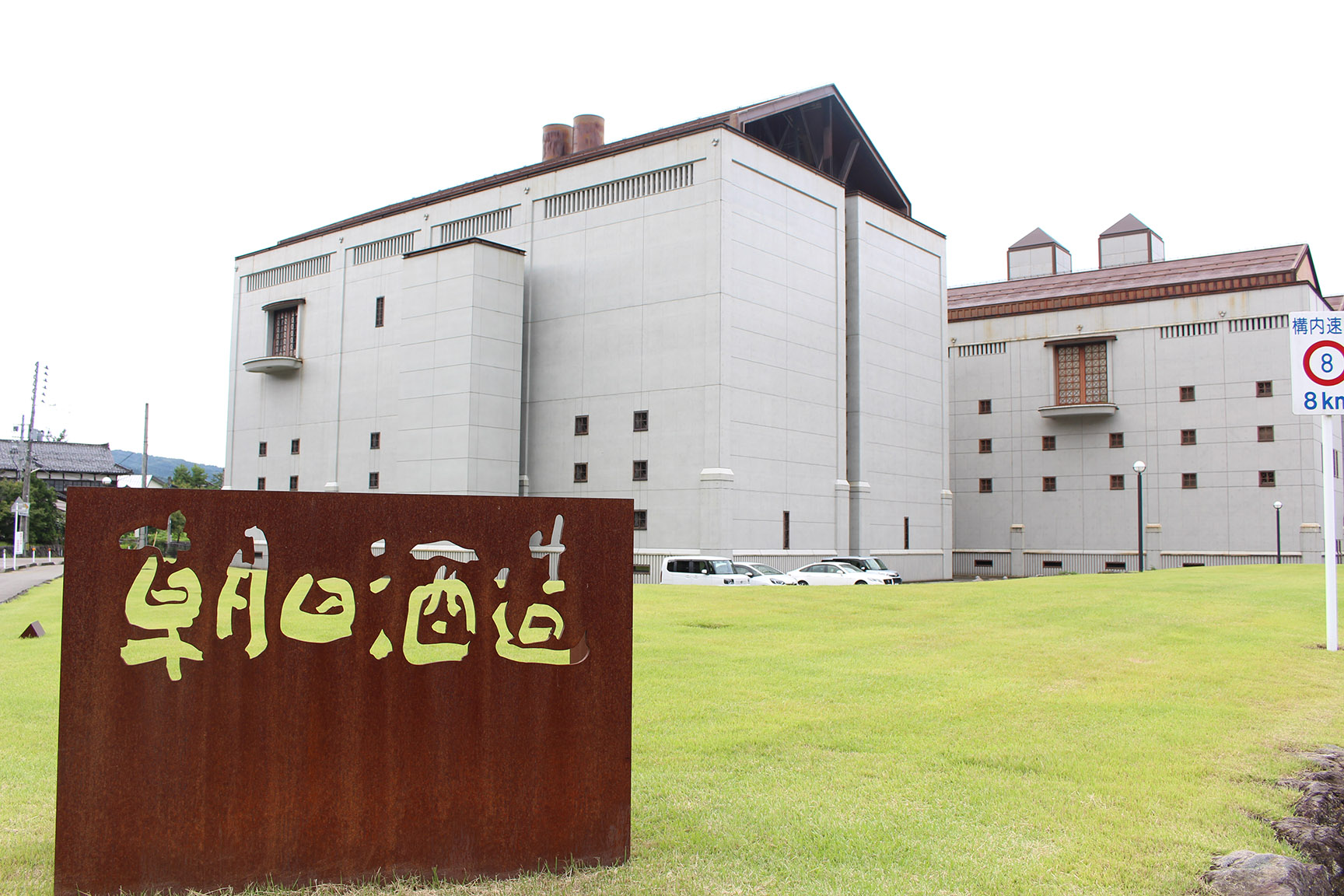
新潟県の代表的な蔵元「朝日酒造」(イメージ)
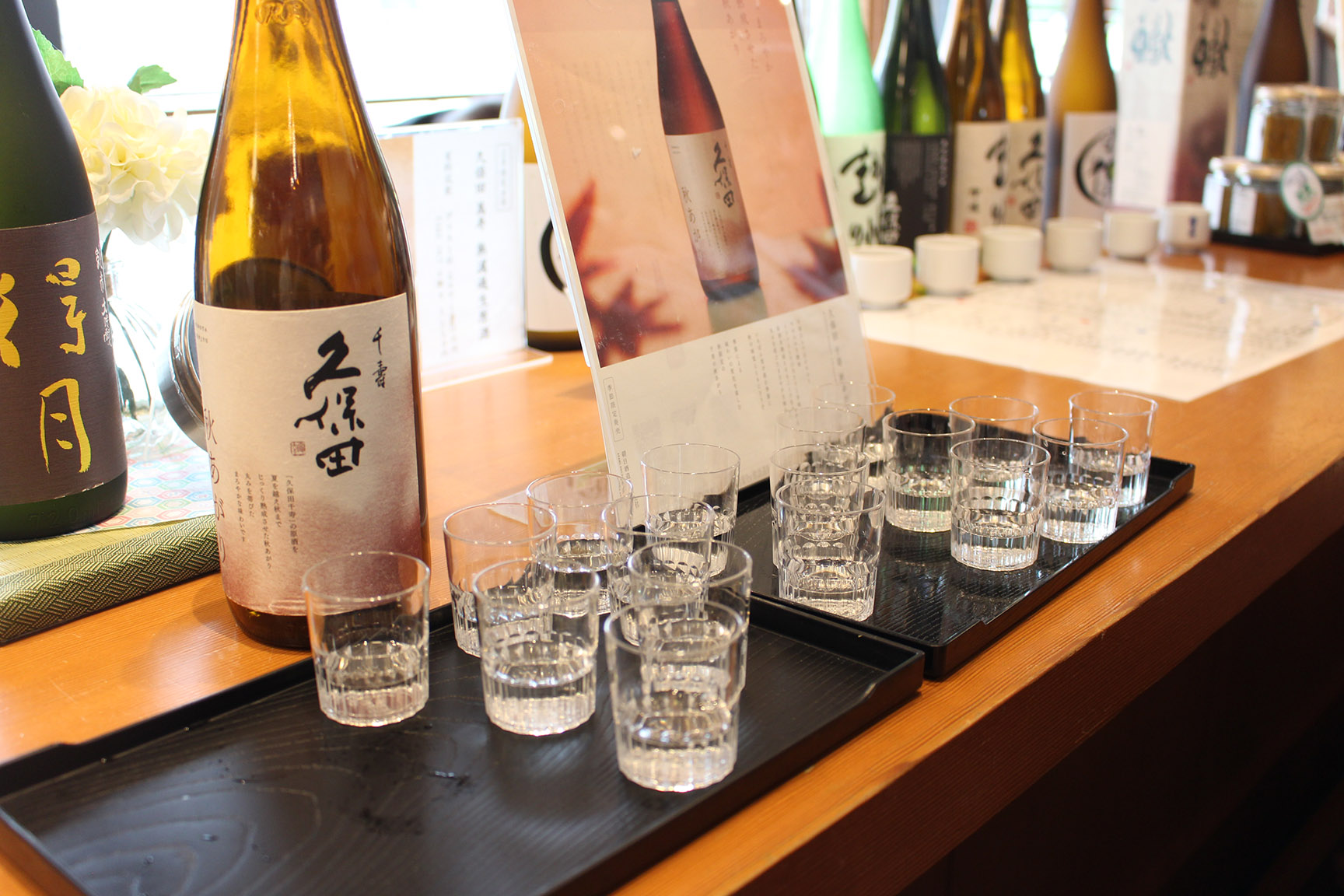
見学や試飲もできます(イメージ)
Frequently Asked Questions (FAQ)
About the Katakai Festival
Q: When is it usually held?
A: It is held over two days, on the second Friday and Saturday of September.
Q: Is it canceled if it rains?
A: Fireworks are launched even in the rain. In severe weather such as a typhoon, if warnings are issued for wind speeds of 10 m/s or more, it is postponed to the following day or later.
Q: Is it OK to bring children?
A: Yes. However, it is crowded on site, so be careful not to get separated. It also ends after 22:00, late at night, so you need to watch your children's health.
Q: Can I go from Tokyo to Katakai as a day trip?
A: No. An overnight day trip is possible, but it is a very tough schedule.
Example) Take the shinkansen to Nagaoka Station, then a shuttle bus or similar to Asahara Shrine. After the festival, walk or take a taxi to the Katakai bus stop on the Kan-Etsu Expressway and board a late-night highway bus to Tokyo, arriving the next morning.
*The last shinkansen from Nagaoka Station to Tokyo leaves at 22:01, so you can't use the shinkansen on the way back.
Q: What time is the Sho-Yonshakudama launched?
A: Usually around 22:00.
Meeting and Departure for the Tour
Q: How can I confirm the meeting place and time after booking?
A: After booking, you can check the meeting place, meeting time and emergency contact on My Page. Before departure, you can also view the Tour Program (Tabi no Shiori) online.
About Luggage
Q: Can I bring a suitcase?
A: Yes. For bus travel, luggage space is provided, so suitcases are allowed. However, please limit large suitcases to about two per person.
Language Support
Q: Can I join even if I don't speak Japanese?
A: Yes. Tours are conducted in Japanese, but important information is provided in English and Chinese (Traditional) through AI translation devices and written materials. Tour conductors and drivers also use translation apps, so there is no need to worry about language.
About Payment
Q: What are the payment method and currency?
A: Payment is made online by credit card in Japanese yen. The exchange rate follows your card company's rules. Payment is required immediately at the time of booking.
About Local Support
Q: Do you have physical stores in Taiwan or overseas?
A: In Taiwan, KNT Taiwan is the general agent for Club Tourism. For local inquiries, please contact KNT Taiwan.
For travelers in Taiwan, please contact KNT Taiwan (Taiwan General Agent)
Book Online: https://www.knt-taiwan.com/contact.php
Book by Phone: 02-87717551 (Mon–Fri 09:15–18:00, excluding holidays)
Email: info@knt-taiwan.com
Summary
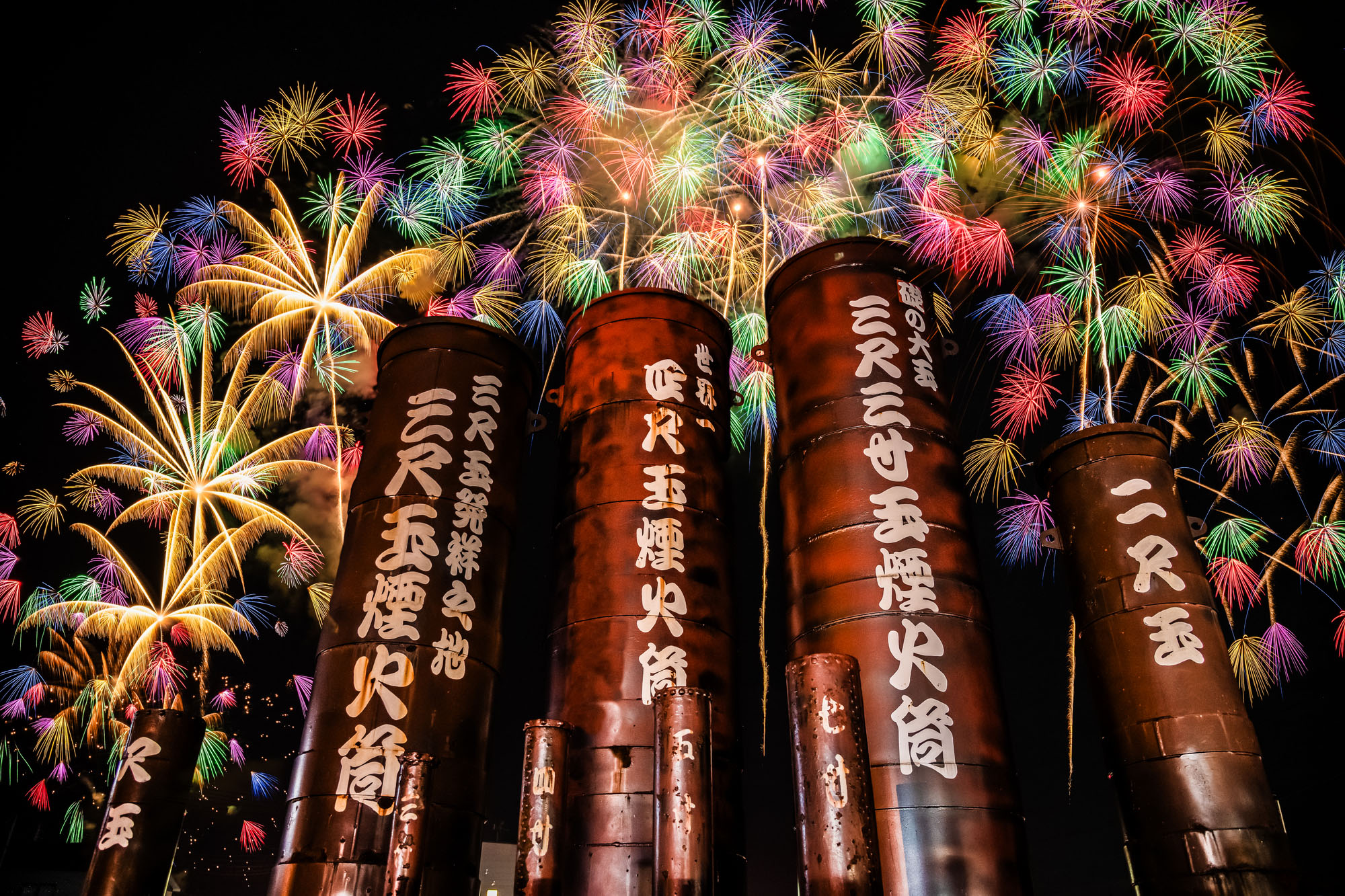
打ち上げ筒のモニュメントと片貝の花火(イメージ)
September brings relief from the harsh midsummer heat and a pleasant climate. Watching the giant blooms in the night sky at the Katakai Festival while listening to their echoes in the mountains is a special experience.
"Tours with viewing seats," which make both travel and viewing smooth, are very popular and usually start filling up around June, so if you're interested, check and apply early!
In this perfect season, when fine food such as new-crop rice and local sake and rich nature add to the appeal, experience authentic fireworks and the charms of Niigata!
Club Tourism official LINE, WhatsApp, Facebook, Instagram
Follow us to get tips for traveling in Japan




-
The content is current as of the time of publication. Please check the official website for the latest information.
 Related articles
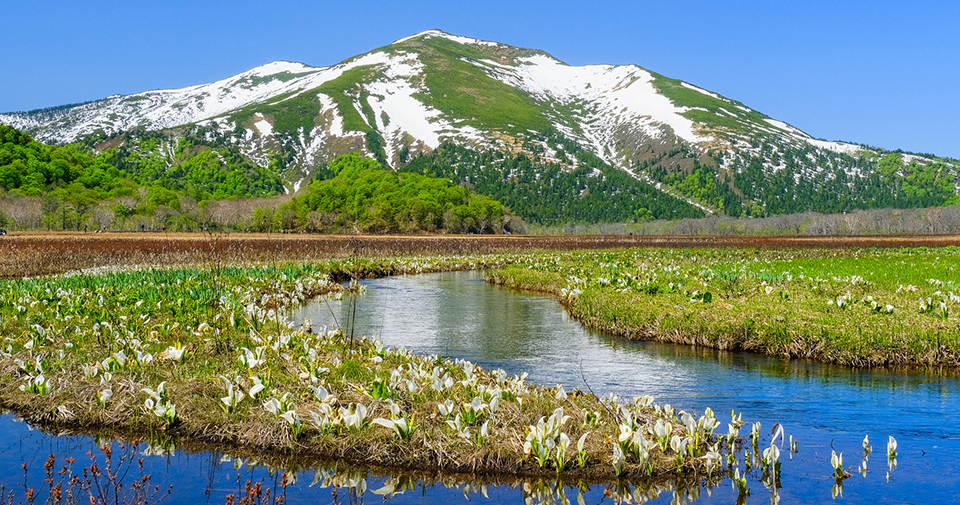
Lots of highlights! A treasure trove of alpine plants, spectacular views in all four seasons! Oze Attractions of National Parks
Oze is known as a treasure trove of alpine plants. From early summer to summer, enjoy flowers such as mizubasho, cotton sedge, and Nikko sedge...
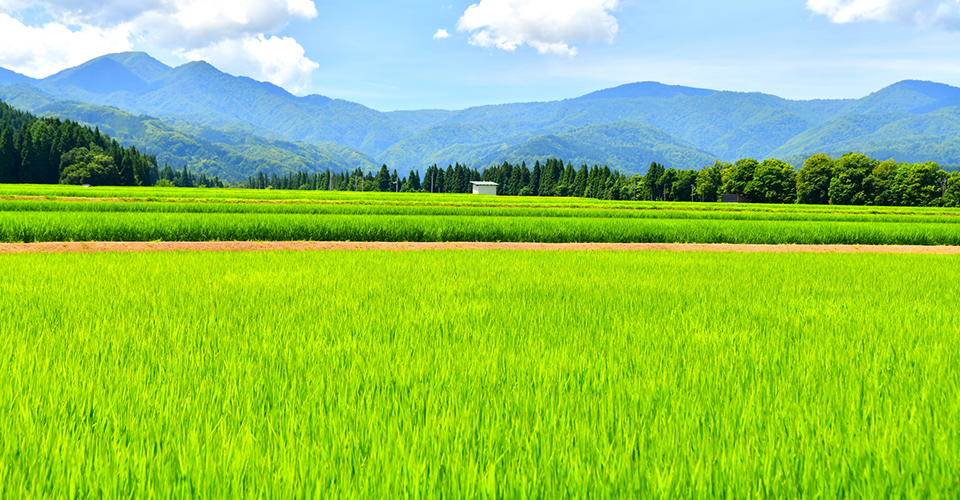
10 sightseeing spots in Niigata that you can enjoy in every season
Niigata Prefecture is famous for skiing in the winter, but there are also many events in each season! Spring with its beautiful flowers, autumn...
15 Natural and Cultural Attractions of Sado Island, Including the World Heritage Site Sado Gold Mine and Trekking!
Sado Island is a remote island off the coast of the Sea of Japan. The O-Sado Mountains, with its 1,000m-high mountains including Mt. Kinpoku, are a popular hiking destination.
Enjoy the scenic beauty of Sado! 30 places with history, beautiful scenery, and delicious sake
Surrounded by the sea on all sides, Sado has a unique history and culture. The Sado Island Gold Mine, which is registered as a World Heritage Site, and the historic Noh…
Search by area
Domestic
Search by keyword
- Solo Travel
- Girls' trip
- Family Trips
- Couple's trip
- Goshuin (temple stamp)
- History
- Shrines and temples
- Pilgrimage
- Art
- Music
- Famous Castles
- Spectacular views
- World Heritage
- Entertainment
- Gourmet
- Hot Springs
- Island Trips
- Cycling and skiing
- Festival
- History and Roads
- Souvenirs
- Museums
- Power Spots
- Night view
- Railway
- Mountain climbing and hiking