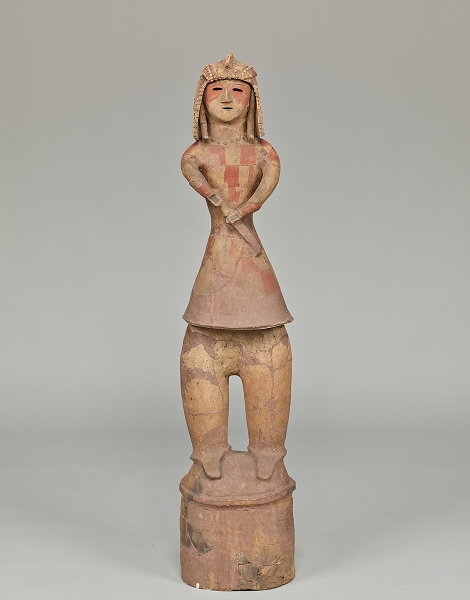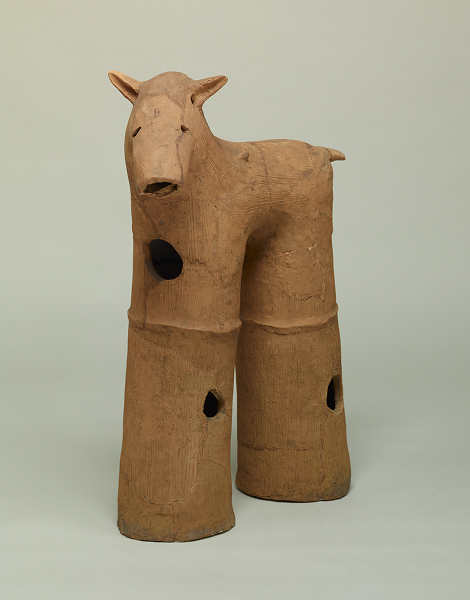



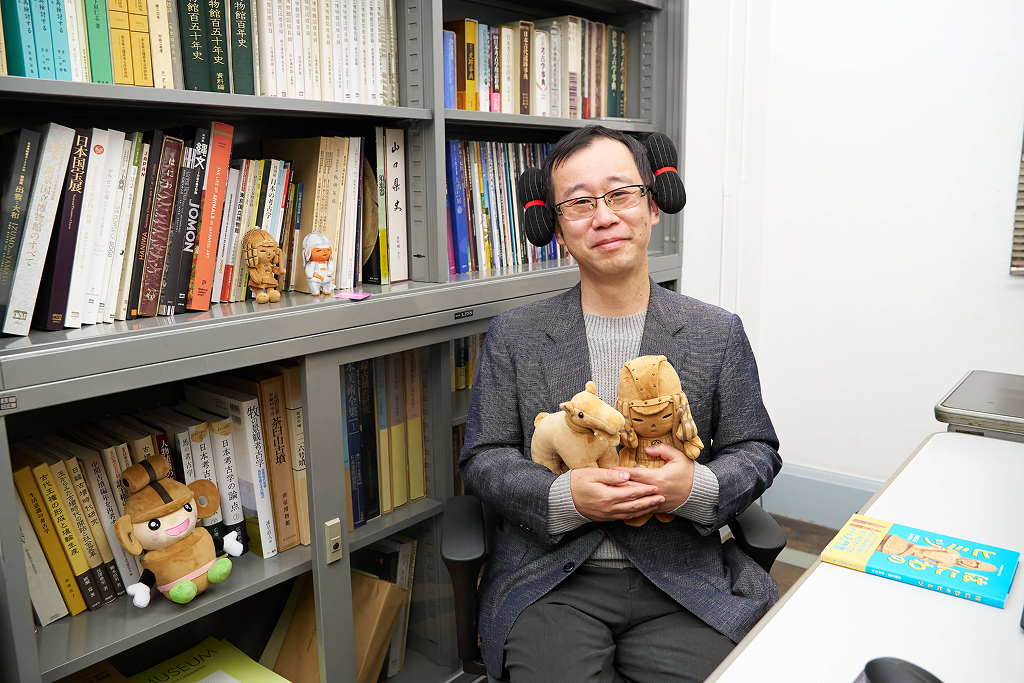
The 'troubled face' from 1,500 years ago is just too lovable.
Tokyo National Museum Researcher Kono Talks About How to Find Your Oshi Haniwa
公開日 / 2026.04.24更新日 / 2026.04.24

In fact, 'haniwa' is quietly gaining more enthusiasts among the public. The editorial team of 'Travel and Me...' asked Masanori Kono, a researcher at the National Museum of Tokyo and the mastermind behind the much-talked-about Haniwa Exhibition held in 2024, which attracted about 500,000 people, about the secret behind the popularity of haniwa.
From a history textbook to a "healing star."
The magical power of the indescribable expressions of Haniwa figures captivates adults.
Haniwa, unglazed earthenware figures made during the Kofun period, are something many people remember learning about in history class, with their endearing appearances and expressions. Surprisingly, these haniwa have been experiencing a quiet resurgence in popularity for the past few years.
A symbolic event is the special exhibition "Haniwa" held in 2024 at the Tokyo National Museum and the Kyushu National Museum. Amazingly, both venues recorded an unprecedented total attendance of about 500,000. Furthermore, festivals and events themed around haniwa are being held nationwide. For example, the "Kofun Fes Hanikotto" held at Imajozuka Kofun in Takatsuki City, Osaka Prefecture, attracts 30,000 to 40,000 visitors every year.

河野正訓氏より提供
What's unique is that this surge in popularity isn't driven by scholars or researchers, but by ordinary "Haniwa fans." More and more people are actively supporting Haniwa by exchanging information about them on social media, buying Haniwa merchandise such as plush toys and acrylic stands, and attending events.

河野正訓氏より提供
Recently, it seems that haniwa are being exhibited overseas, and their popularity has spread worldwide. Why are people so captivated by haniwa? To unravel this mystery, we spoke with Masanori Kono, a researcher at the Tokyo National Museum, who served as chief of the Haniwa Exhibition, handling everything from planning and supervising the exhibition to writing catalogs and supervising audio guides.
The person who taught me

His specialty was Japanese archaeology (mainly the Kofun period). Graduated from Meiji University in 2005, withdrew from the doctoral program at Kyoto University Graduate School in 2011 after certification for research guidance, and earned a PhD in Literature from Kyoto University in 2012. After working as a research promoter at the Institute of Ancient Studies at Meiji University, joined the National Museum Tokyo 2014. Currently, he is the head of the Archaeology Department at the Tokyo National Museum.
Haniwa, placed in the tombs of powerful figures, served to appease the spirits of the deceased.

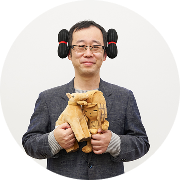
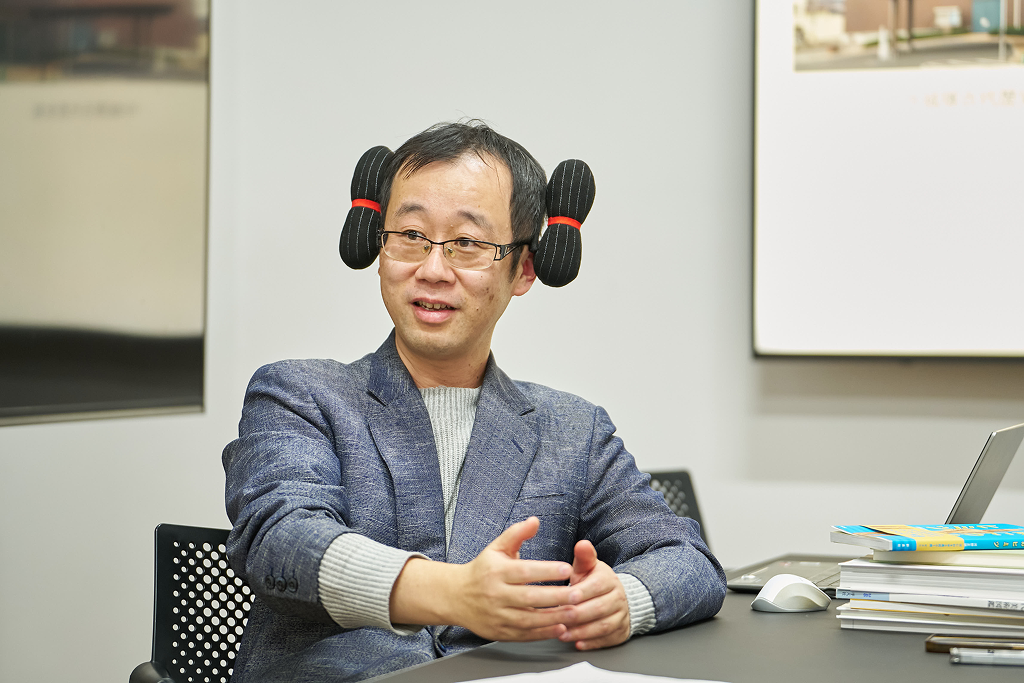
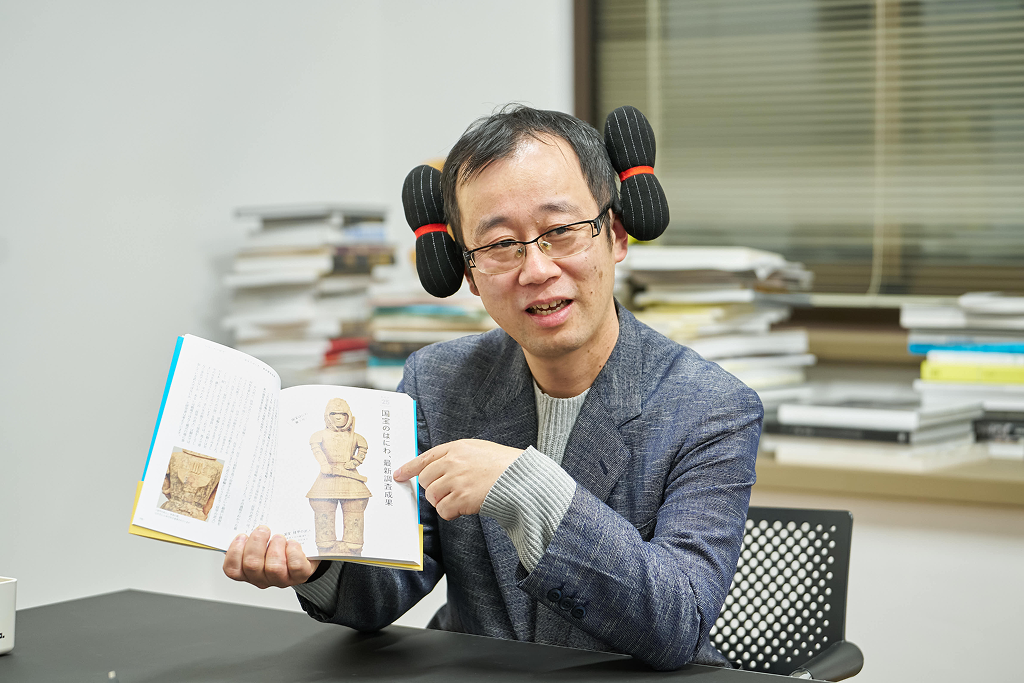
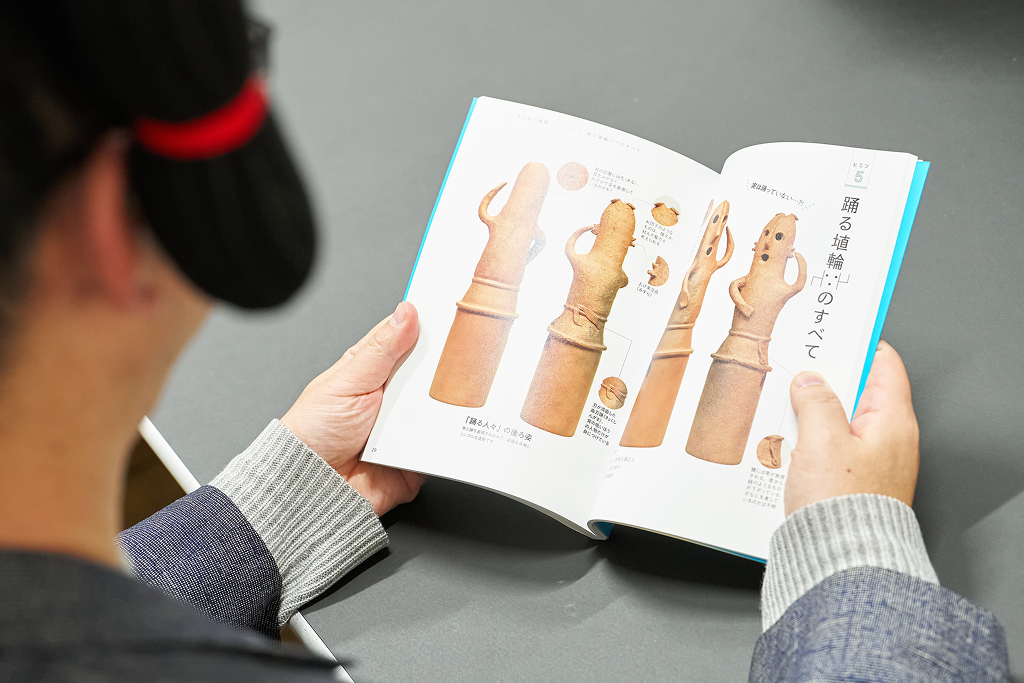
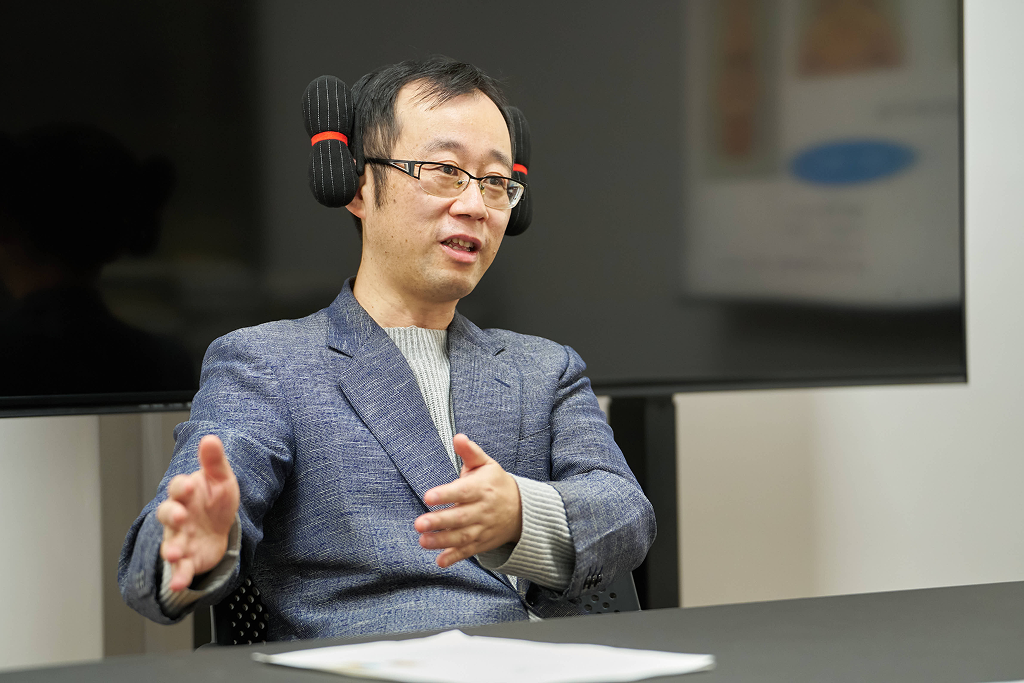
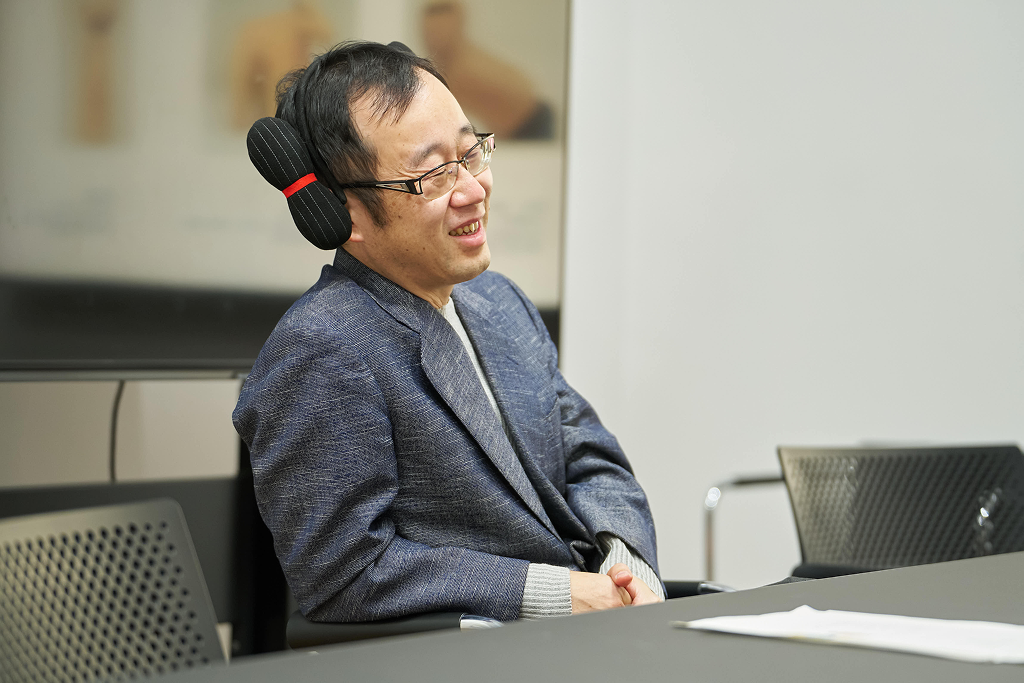
Professor Kono, please teach me a lot about Haniwa today. What is that dumpling-like thing next to your face?

This is a headband that recreates the "mizura" hairstyle worn by adult men during the Kofun period (mid-3rd to 6th centuries). We even sold it at the Haniwa exhibition!


You have a wide variety of merchandise! I can see why so many people feel a connection to the Kofun period. So, let me ask you right away, what exactly are Haniwa?

Haniwa are clay figures created during the Kofun period, a time when people sported the "mizura" hairstyle. They are often confused with "dogu" (clay figurines), but they are completely different cultural artifacts.

Could you please explain the difference between Haniwa and Dogu in more detail?

Clay figurines date back to the Jomon period, which began over 10,000 years ago, so they belong to completely different eras. Furthermore, clay figurines are generally unearthed from settlement sites, while haniwa are often found in kofun, which are tombs where powerful figures such as kings were buried. From this, we can infer that clay figurines were used in people's daily lives, while haniwa were placed on or around kofun and used in that way.


What role did Haniwa (clay figures) play in being placed in the tombs of powerful figures?

While there is a range of interpretations among researchers, I believe they were created to appease the spirits of the deceased. Furthermore, even within the broad category of appeasing spirits, the meaning seems to differ slightly depending on the form of the haniwa. For example, cylindrical haniwa are thought to have served as markers indicating a "sacred area." Other examples include the shield-bearing figures (tatemochibito) and chicken-shaped haniwa, which are thought to be amulets to ward off evil spirits from entering the burial mounds.

There are so many different kinds!

The Haniwa figures depict people and animals, both male and female, and represent a wide range of occupations. This diversity is part of what makes Haniwa so fascinating!
Excited, frightened... Haniwa figures with expressive faces

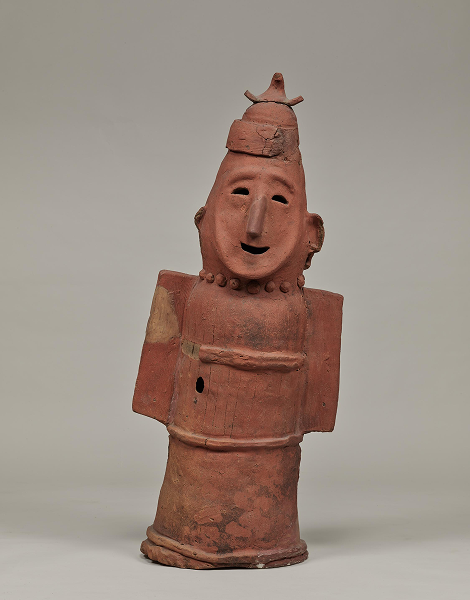
The shield-bearer that the teacher introduced earlier has a charming smile, but does this serve as a protective charm against evil?

出典:国立文化財機構所蔵品統合検索システム

The shield bearers were guards positioned around the outermost perimeter of the burial mounds, and it was once believed that their smiles had the function of warding off evil. Therefore, it seems that these smiles also carry the meaning of "intimidation."

That makes sense. There's something unsettling about that smile, making it hard to approach.

Yes. Their large faces and large ears, which allow them to hear even the slightest sound, are thought to serve a deterrent purpose.

I was surprised to learn that the expressions on the Haniwa figures have such meaning. What other expressions are there?

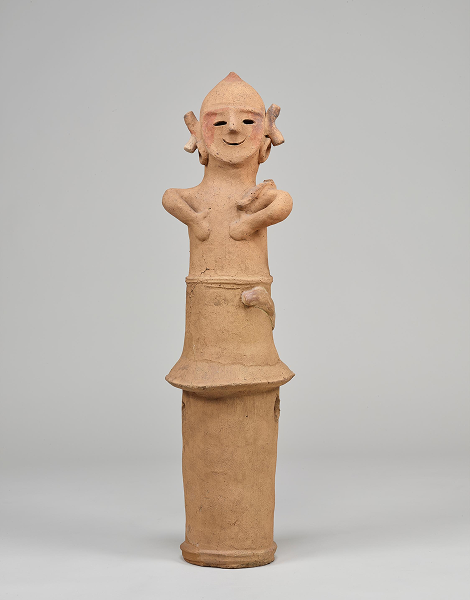
For example, the Haniwa (clay figure) "Man Carrying a Hoe (Excavated from Tumulus No. 104 in Akabori Village, Isesaki City, Gunma Prefecture)" has a very gentle smile, and there is a theory that it represents not only a charm against evil, but also a figure rejoicing in a bountiful harvest.

出典:国立文化財機構所蔵品統合検索システム

The haniwa (excavated from the Torizuka Kofun in Moka City, Tochigi) is also a samurai figure, yet it smiles. There is also a theory that although he used the sword, he was not fighting but was participating in a ritual (ceremonial). The red color applied around the eyes is also interpreted as ceremonial makeup.

出典:国立文化財機構所蔵品統合検索システム

A smile can have many different meanings, can't it?

Humans aren't the only ones with facial expressions. Even "animal haniwa" (clay figures depicting animals) exhibit expressions. For example, the following "deer-shaped haniwa (excavated from Tsukahara, Shimoyokoba, Tsukuba City, Ibaraki Prefecture)" has drooping eyes and a very troubled expression. Upon closer inspection, an arrowhead is lodged in its back, seemingly representing the sadness of being on the verge of being hunted...

出典:国立文化財機構所蔵品統合検索システム

There's a certain melancholy about it... But even that troubled expression somehow looks endearing.

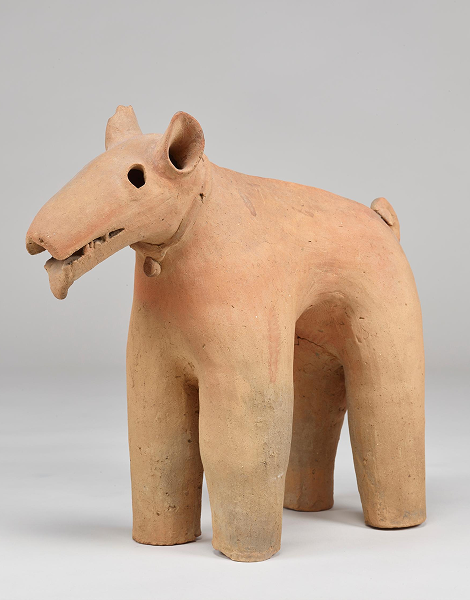
This 'dog-shaped haniwa' (excavated from Yamakofun in Takeshi Tenjin Isesaki City, Gunma Prefecture) shows its tongue and fangs sticking out, ears perked up, and an excited expression as if it could attack at any moment. Given its collar and bell, it is believed that this dog was a hunting dog kept by humans, representing hunting scenes.

出典:国立文化財機構所蔵品統合検索システム

It's fascinating how a story can emerge from someone's facial expression!

That's right! Since there are hardly any written records from the Kofun period, Haniwa (clay figures) are extremely important clues for understanding the lifestyles, values, and rituals of the people of that time.
The greatest appeal lies in the fact that interpretation is left to the individual, allowing for a rich and imaginative viewing experience.

As I listen to you speak, I can sense your love for Haniwa (clay figures) at every turn. Out of the many Haniwa out there, could you tell me which ones are your personal favorites?

It's hard to choose...... Tokyo but I chose my personal favorite from the haniwa held by the National Museum.
Professor Kono's ranking of his favorite Haniwa (clay figures)
[Human Figure Haniwa Category]

出典:国立文化財機構所蔵品統合検索システム
1st Place: Haniwa (clay figure) - A man carrying a hoe
This is my favorite piece. The rich smile is captivating, and the overall expression is rounded and "cute." Due to its expressive face, it is popular not only in Japan but also overseas, and has been exhibited in museums in Thailand and China.

出典:国立文化財機構所蔵品統合検索システム
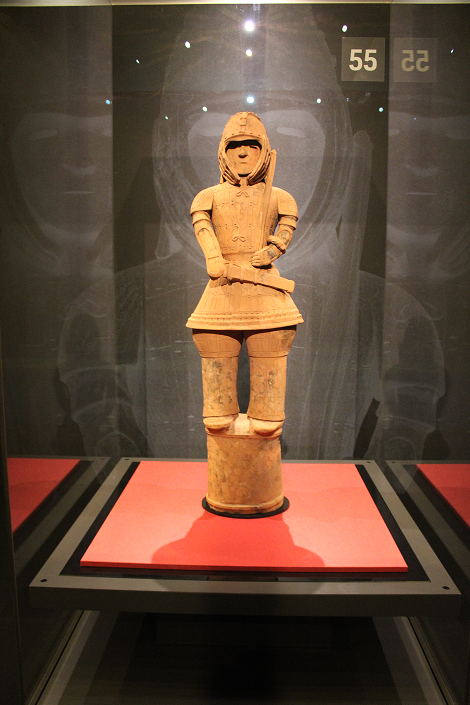
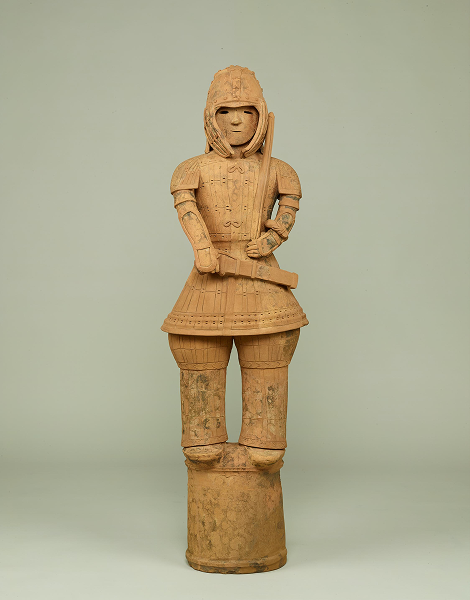
2nd Place: National Treasure Haniwa (clay figure) of a warrior in armor
This is the first Haniwa (clay figure) in Japan to be designated a National Treasure. I was involved in its large-scale restoration, which took about three years starting in 2017, and I have a deep emotional attachment to it, having nurtured it as if it were my own child.

出典:国立文化財機構所蔵品統合検索システム
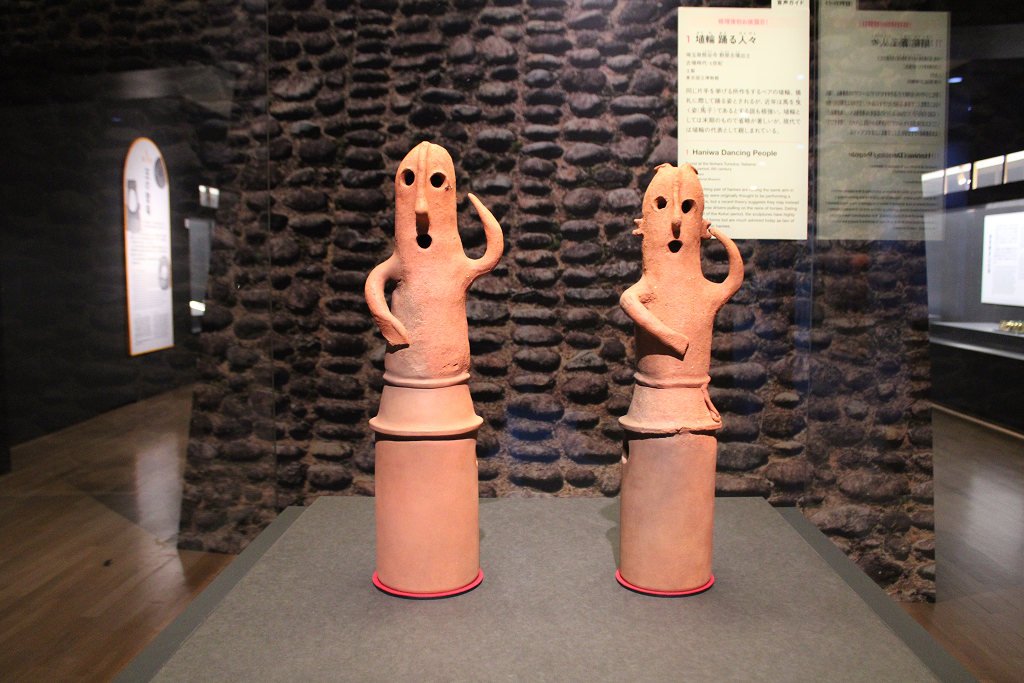
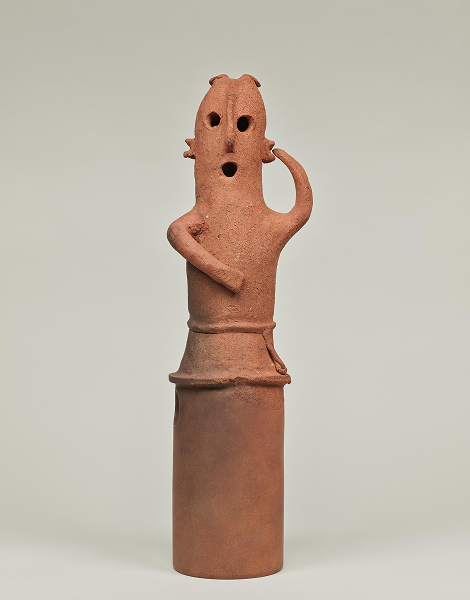
3rd Place: Haniwa Dancing People (one of them)
This is one of the most famous Haniwa (clay figures), and the "original mascot character." It is characterized by its extremely simplified and atrophied form, with eyes and mouths made of round holes. It is shrouded in mystery and is one of the subjects of my research.

[Animal Haniwa Category]

出典:国立文化財機構所蔵品統合検索システム
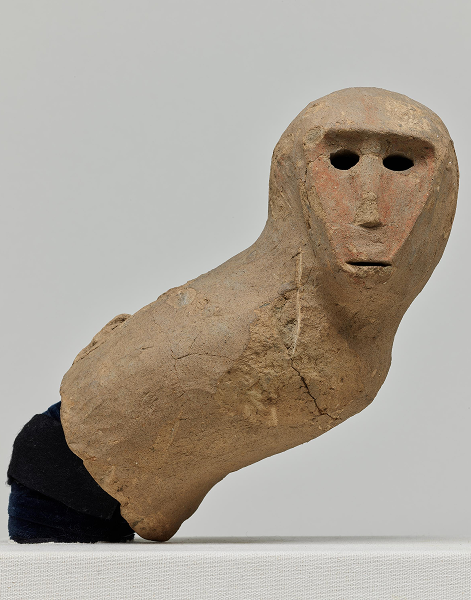
1st Place: Important Cultural Property - Monkey-shaped Haniwa (clay figure)
Among the rare monkey-shaped Haniwa figures, this one stands out for its particularly expressive face. The fact that it is facing sideways is interpreted as an expression of concern for the baby monkey it was carrying on its back (which has since flaked off).

出典:国立文化財機構所蔵品統合検索システム
2nd place: Dog-shaped Haniwa
This is one of the few examples of animal Haniwa (clay figures) with such skillfully crafted expressions. The presence of a collar and bell suggests it was a hunting dog owned by a powerful figure.

出典:国立文化財機構所蔵品統合検索システム
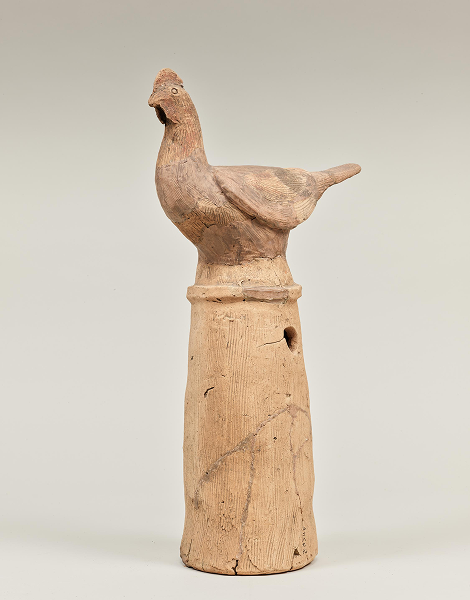
3rd place: Chicken-shaped Haniwa
At the time, chickens were believed to guide the sun in the morning and also to ward off evil spirits. While chicken-shaped Haniwa (clay figures) are generally often stylized, this piece is made very realistically, and its comb is painted red.

All the Haniwa are fascinating! I was surprised that the famous dancing Haniwa came in third place among the human figures.

The number one ranked "Haniwa Man Carrying a Hoe" is, for me, a "next-generation star candidate" following in the footsteps of "Armored Warrior" and "Dancing People." I want to nurture it carefully from now on, and I'm actively promoting it right now.


Hearing that they're in the middle of a promotion makes me sound like a producer at an idol agency.

There might be some similarities. One of my roles is to convey the value of Haniwa (clay figures) to the modern age. So when people ask me about my work at the museum, I answer, "I'm the one who takes care of the Haniwa," and they seem to find it quite amusing (laughs).

Finally, could you give us some advice on how to enjoy Haniwa (ancient Japanese clay figures)?

There's actually a lot we don't know about Haniwa (clay figures). Because there are almost no written records from the Kofun period, it's difficult to pinpoint a single meaning. That's why I think it's okay to enjoy them more casually, without overthinking it. For example, you can look at their expressions and imagine, "What is this person thinking?" or simply feel intuitively that they're "cute" or "cool." Even comments like, "They look like someone I know," are perfectly fine.


Is it really okay to have that much freedom?

Absolutely! What's more, the expression of a Haniwa (clay figure) changes dramatically depending on the viewing angle and lighting. Even the same Haniwa can look like a completely different person when displayed in a different location. Taking photos and posting them on social media, or having fun with their expressions like a game of wordplay, are all ways to enjoy them in this day and age. If you have the chance, I also recommend visiting the burial mounds and land where the Haniwa were unearthed. Experiencing the local scenery and atmosphere can sometimes bring back the expressions you saw in the museum. Haniwa are cultural artifacts that can be enjoyed by people of all ages, so please feel free to approach them with the same enthusiasm as if you were trying to find your own favorite.
*The Haniwa images in this article are sourced from ColBase (National Institutes for Cultural Heritage Integrated Search System). Depending on the exhibition status, some works may not currently be on display at the museum.
*There are various interpretations of the work, including the personal research insights of Masakuri Kono. For the latest exhibition information, please check the official website of the Tokyo National Museum.